oratory
by Ari Cordovero
We were halfway up the hill to Saint Joseph’s Oratory when I realized two things at once:
I was sweating through my dress, and his phone had buzzed six times for the same girl.
Late-summer heat had settled into the stone — into the steps, the wilting hydrangeas, the soft hinge of the knee where sweat gathers without escape. The basilica rose out of the slope with the unintentional holiness of old buildings: a green dome, stone ribs, a staircase cutting the hill like a spine.
He climbed as if the weather didn’t touch him.
Buzz.
Pause.
Buzz.
His phone shuddered in his hand like a second pulse.
“You can check it,” I said once, pretending I wasn’t counting.
He shook his head. “It’s just a coworker. She’s being neurotic about lab time.”
He’d mentioned her before — a postdoc in his lab. A figure I knew only in fragments: shared hours, shared language, an academic world that recognized him. She belonged to systems that did not include me.
Inside the basilica, the temperature dropped. Cold gathered first at our ankles, then climbed. Light filtered weakly through stained glass — reds and blues thinned by age, washing the walls pale. Rows of votive candles flickered, hundreds of small flames marking wounds people had decided to speak aloud.
Near the back, a wooden stand held an open ledger.
INTENTIONS / PRAYERS
The page was crowded with handwriting — bold, shaky, illegible — longing rendered communal.
His phone buzzed again.
I picked up the pen. I did not ask for answers or relief. I wrote one sentence:
Please let us have a family.
I closed the ledger halfway, as if folding the prayer inward could protect it.
“What did you write?” he asked.
“Nothing,” I said. “Just… thank you.”
He smiled, satisfied. His hand slid into mine, warm. The stone beneath my feet stayed cold.
On our way out, a couple knelt in a side chapel. She whispered through a rosary. He pretended to pray until his gaze slipped — quick, practiced. Then his hand snapped my cardigan shut at the collarbone.
“Come on,” he said. “You’re in a church.”
The heat that rose in me was old and automatic. I buttoned the rest myself.
Outside, the wind caught the hem of my dress. His phone buzzed again as we descended toward the street.
At the bottom, he glanced back at the basilica. “My mom would be happy I brought you.”
We reentered the city — cracked sidewalks, balconies strung with laundry, French and English tangling midair. Montreal softened him. His accent thickened, vowels widening as if his mouth remembered something his life had forgotten.
“I think every man on this street just looked at your tits,” he said lightly.
I laughed.
Then a fire truck idled at the corner, caught by the light.
Red washed over the street in slow pulses.
One of the men leaned out the window — not far, just enough. His eyes moved first, then his mouth, then the rest of him followed, like gravity had shifted.
I felt it register before I looked: the familiar tightening, the quick recalibration of my body in public space.
I kept my gaze forward.
The laughter came sharp, overlapping. I couldn’t make out words — only tone. Assessment. Amusement.
Beside me, his hand dropped from mine.
The light changed. The truck rolled on.
My skin stayed lit for a second longer, like heat clinging after contact.
Inside the room, he dropped his bag and sat on the bed, elbows on his knees.
“Do you have any idea what that feels like for me?” he said. “Walking next to you while men fucking drool?”
I said nothing. I changed clothes. When I turned back, he nodded once.
“That’s better.”
Buzz
Pause
Buzz
He pulled me toward him without asking.
The room narrowed to heat and pressure — his mouth bruising at my neck, hands firm enough to quiet whatever was still trying to speak. I let myself go pliant, the fight replaced by motion, the guilt reorganized into touch.
Afterward, my body felt emptied, orderly again. He lay back like something had been resolved.
I stared at the ceiling until my breathing matched his.
After he fell asleep, the screen glowed unattended.
The messages were not graphic. They didn’t need to be.
you seriously made my whole day yesterday
drink water
did you eat today??? A protein shake is not a meal mister!!
His replies were gentle, eager.
In the morning, he woke me by saying my full name.
“Did you go through my messages?”
I tried to answer. He cut me off.
“She’s humiliated,” he said. “She says she can’t even be friends with me now.”
He looked at me like I’d cost him something.
“You’re exhausting,” he added. “This jealousy shit.”
I said her name once. He recoiled.
“That’s abusive,” he said quickly. “You don’t get to control who I see.”
I shrank. Apologized. Focused on staying in my body.
He shook his head. “We never even had sex. She’s not attractive like that. Practically sexless.”
He laughed once, sharp and humorless.
“You were whoring yourself around Canada,” he said. “And then you want to act surprised that I needed someone else.”
I went still. Whatever I’d planned to say didn’t survive the sentence.
We spent the next few days moving around each other with rehearsed tenderness. He held my hand in public. Kissed me at the airport with an urgency that felt like absolution.
On my last night in the city, I stood in a gift shop downtown and turned a small glass ornament over in my hands. Inside it, two red cardinals huddled together on a snowy branch, angled toward one another like a promise being kept.
I wrapped it carefully, believing I was protecting something that would one day belong to both of us.
On the plane, rain traced paths of silver down the window.
I thought of Saint Joseph’s hands — the way they were carved, cupped, as if holding something fragile he hadn’t asked for.
My body was already doing the same.
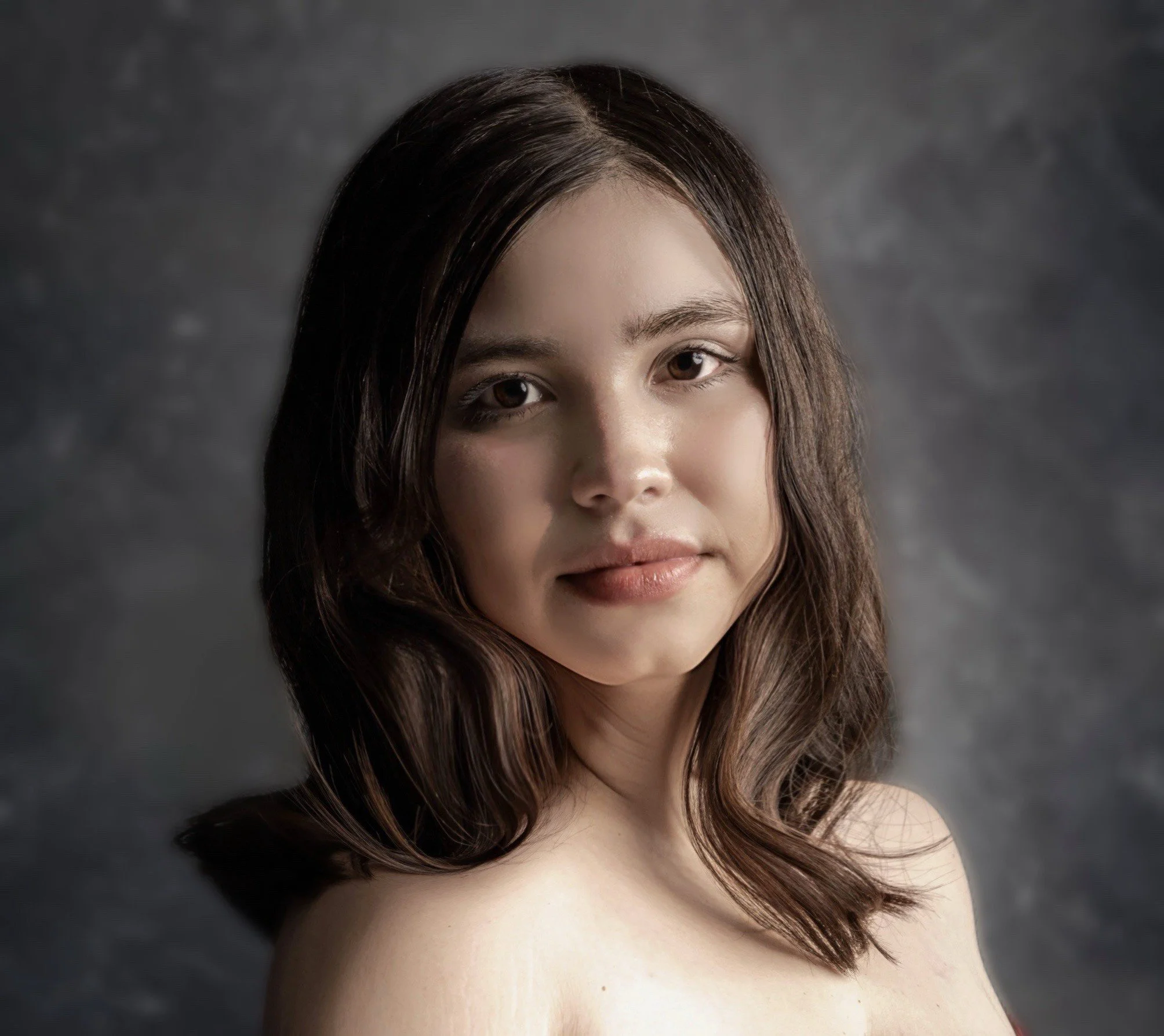
Photo of Ari Cordovero
BIO: Ari Cordovero is a writer from Colorado whose work examines lineage, intimacy, and the quiet things we inherit without noticing. She lives in the mountains with her daughter, Goose.