you help me feel less alone in this
by Nora L.S.
I'm standing on the sidewalk outside a party, circled among a group of people I’ve met only recently. Although the harshness of Vermont’s winter has relented, our breath is still visible. Red solo cups and a single cigarette are passed around by people who, more sober than they’d like to be, seem to like the idea of partying more than this party itself.
“So,” someone asks me, “How’s long-distance going?”
I laugh, eyes fixed on the pavement, not knowing how to piece together an answer that comes close to capturing the past six months my partner and I have been “doing long distance.”
It’s nearing the end of my first year of college, and I’ve heard that same question many times. Sometimes the person seems genuinely interested, sometimes they sound judgy. Generally, I avoided answering. I wasn’t interested in entertaining judgment masked as concern, but regardless, I could find no words to explain that counting down the days until I could see my partner again was nowhere near as hard as watching the person I was in love with struggle through unrelenting pain and fatigue, retreating into a shell, all via FaceTime and texts.
I wait out the awkwardness for a bit longer before I step out of the circle and text my partner: “Can you call me so I have an excuse to leave?”
Z and I met our senior year of high school, when we were both named captains on our debate team. I was equally intimidated and enamored with them: their quiet confidence; dark curls framing their face; the way they could talk endlessly about neuroscience, politics, or expressionist art. Naturally, I did my best to talk to them as much as I could without being pushy. Z, assuming I was straight, was only mildly responsive. As soon as I corrected that misconception, we were hanging out all the time, swept into a few exhilarating and nerve-wracking months where we were both so sure and so terrified of being wrong. They were gorgeous, tall, and insanely brilliant and I had no idea how I had gotten so lucky.
The initial nerves faded, but our excitement did not. When we went off to separate colleges, a 7-hour Amtrak ride apart, staying together was not a fraught decision. If it didn’t feel right, we’d reconsider, we agreed. But it never came to that. I’d look forward to the evenings when I could slip away from late night study sessions to FaceTime them, sharing stories of classes and concerts and the people we had met.
Z’s symptoms started with a simple cold. The cold itself was unremarkable. It went away with time but left persistent body aches and fatigue in its wake. In between classes and excursions with new friends, I was always checking my phone; worrying something was very wrong and also worrying I might just be worrying too much. But a couple months into the semester, they were struggling to walk to class; they needed to sleep all the time; I’d send my daily check-in texts, and the response was frequently I’m in so much pain. I didn’t know what to do or say, other than I’m so sorry.
Less than a year into our relationship, they received a diagnosis — fibromyalgia. It’s one of those diagnoses that leaves you with more questions than answers. While fibromyalgia is defined by chronic, widespread pain, there are no biometric tests. Instead, it’s diagnosed by ruling out any other possible causes. Though each chronic illness story is unique, the more I hear, the more they seem to echo each other. More common in those assigned female at birth. Frequently associated with PTSD. Initially dismissed as psychosomatic. Limited research. Experimental treatments, but no cure.
Fibromyalgia’s comorbidity with PTSD is well-documented but poorly understood. The summer before they got sick, Z told me about the abuse they’d experienced as a child. On more than one occasion, I awoke to them asleep beside me, shaking from a nightmare. It seemed unbelievably cruel that their physical pain could be a result of the trauma they’d endured.
The distance between us threw my powerlessness into high relief. I hated hearing their speech get slower from fatigue; seeing their frustration with a body that couldn’t keep up with their ambition; waiting for updates as I watched their digital dot on Find Friends float to the Mount Sinai emergency room– without being there to hold them, because all I could do was sit and bear witness to it all, 292 miles away.
Equally hard was watching Z navigate a world antagonistic to their needs: doctors who disregarded their pain, teachers who chose to prioritize attendance policies over accessibility, friends who mistook fatigue for flakiness, faceless insurance decisionmakers who denied them necessary coverage. One of the smartest people I knew was failing classes for reasons completely out of their control. It was all so ruthlessly unfair, and I had no idea what I was supposed to do about any of it.
Nearly a year after their symptoms began, we were on FaceTime again. It was fall and I was sitting in my dorm, the gray linoleum floors feeling even colder than usual. That day, like most days, they were in pain, their pixelated face taut as they rested against a pillow.
“Is there anything I can do for you? Please tell me if there is.” I said, knees clutched to my chest, begging for something concrete to fix, a solution to the helplessness I felt. But I knew the answer before I asked the question.
“No, not really,” they said, their voice weak and hollow with exhaustion.
“I’m sorry,” I said, trying to meet their eyes through my phone’s camera. “I think I ask that so much because it's easier than facing the fact that there isn’t a lot I can do to fix this.”
We were both quiet, then:
“You help me feel less alone in this,” they said. “That’s enough.”
I inhaled sharply, as if awoken from a stupor, stunned by the raw simplicity of their words.
I’ve held those words close ever since, breathing them in and out in the hard moments.
A comprehensive medication regimen, physical therapy, accommodations, and life adjustments have allowed them to regain some control and build up their physical activity again. But their pain, though not easily visible, has not gone away. Some people with fibromyalgia go into a kind of remission. Some people never do.
Later that semester, in the midst of another one of their medical scares, I sobbed in my dorm, having spent days oscillating between panic and numbness, convinced they were one of the increasing cases of young people diagnosed with gastrointestinal cancers I kept seeing articles about. They’d been to the emergency room four times that year already.
I didn’t tell them about this until much later, after test results showed no signs of life-threatening illness, because I hated to think of them concerned with managing my worry on top of managing their health. We were cocooned in their loft bed, finally home for winter break. I kept my gaze on the barren park and ice-crusted pond outside their window, trying to pass off my anxiety as a funny anecdote. It wasn’t working.
“You should have told me,” they said, lifting their head from my chest and reaching for my hand. “I don’t worry like you do. I could’ve told you I wasn’t going to die.”
Many times, Z has urged me not to keep my fear to myself. I want to know how you’re doing, they always say. I’ve finally taken their word for it.
I started opening up to friends, but many people didn’t seem to know what to say to me. I didn’t blame them. All online resources I could find on the subject of “dating someone with chronic pain” were for people at least in their 30s. I feel like I’m dealing with married people problems, I’d joke. When they tried to comfort me, I saw the uncertainty on their faces, grasping for the right words– a feeling I was intimately familiar with.
I envied my friends, whether they were on-the-market or partnered. I wanted the lightness they seemed to carry, and I was resentful that many people didn’t have to watch their lovers go through something like this until decades together. I often still am.
Once, a therapist told me, “You know, part of me feels like Nora should be going out, living life, being young.” I furrowed my brows, not sure why she was speaking in the third person or what I was supposed to say to that. But I wanted to be madder at her than I was.
I do go out, I wanted to say. I still get to have fun. I knew that wasn’t really what she meant, though.
“Sure, this was not how I would have chosen things to go. But they definitely didn’t pick to have all this happen to them either,” I said. She didn’t say much, just tilted her head and nodded. Whether this was some sort of admiration or just yielding to my stubbornness, I still don’t know.
In spite of everything, Z still looks into my eyes and asks how life could possibly be this wonderful, and I agree. I’m never not grateful for the magic of first love: cooking together, making out under disco lights and trying not to fall asleep on each other's shoulders on the train ride home, waking up the next morning to each other's sleepy, smiling faces. They are always excited to see me, somehow never tired of my ramblings, and get me in a way few others do. And I have never doubted that they would show up for me in the same way I have.
I have no idea what the future holds, but as our sophomore year ended and we were swept up by summer’s warmth, the easy days began to far outnumber the hard ones. On the easy days, I lay with them in the sun while they played with my hair; read while they sketched; kissed them in the amber light on the dance floor– all while hoping the walk wasn’t too long; that they could get a seat on the subway home.
On the hard days, I wiped their tears and wished I could take it all away, imagining a world where nothing bad had ever happened to them.
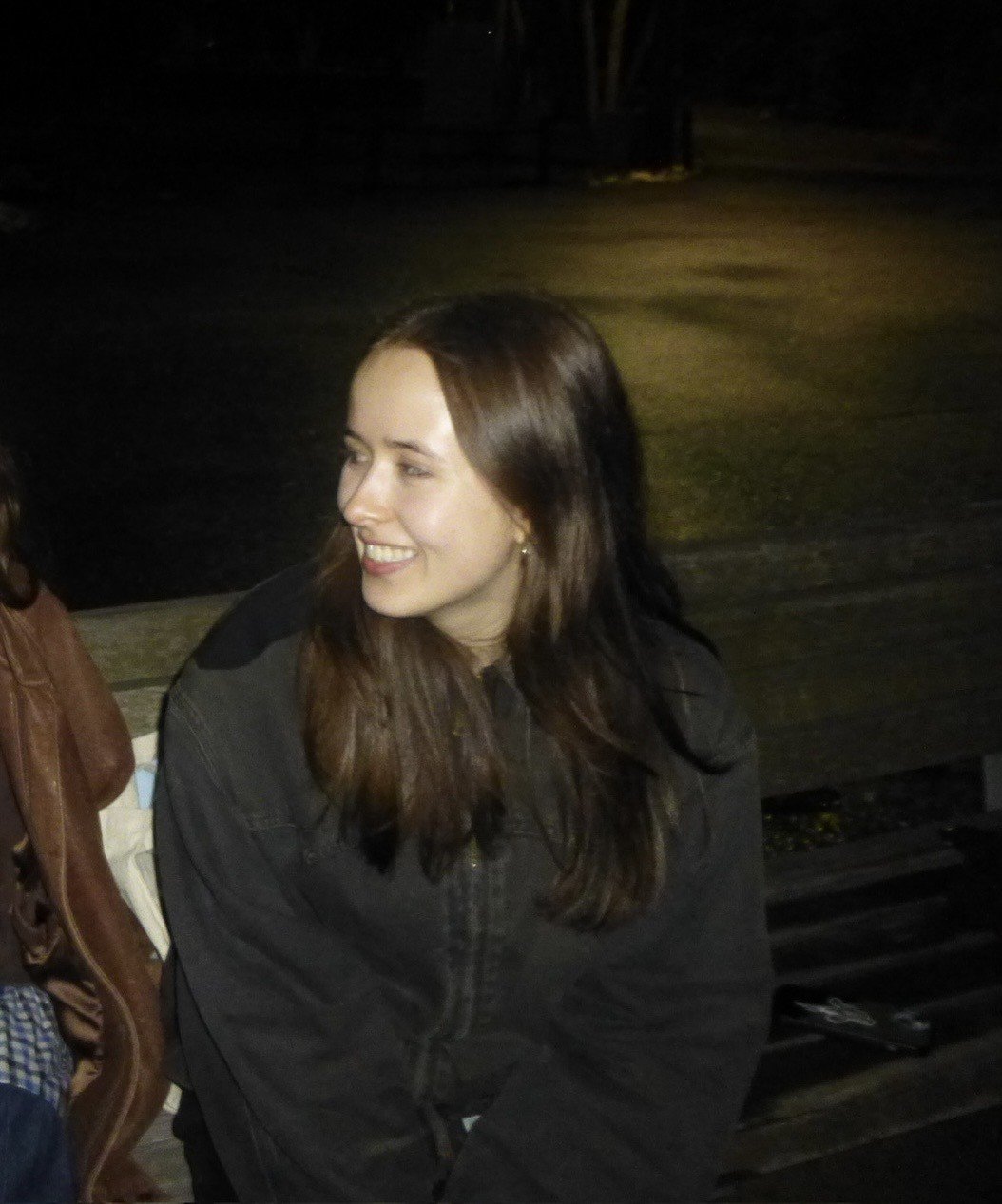
Photo of Nora Sissenich
BIO: Nora L.S. is a New York City native and junior at the University of Vermont, where she serves as Features editor of The Vermont Cynic.