by Liza Shaub
My mother sat at the head of the dining room table in a fancy upholstered chair, until nearly the end of her life. She never formally made our home handicap accessible, and she never relinquished the title as the matriarch at the center of our household. ALS took many things from her, but it never took that chair.
I think a lot about that chair now, since Eric Dane died.
Dane, the actor best known for playing Dr. "McSteamy” on Grey's Anatomy, announced his ALS diagnosis in April 2025. At 53, he died ten months after that publicized announcement. In the time between his diagnosis and death, he sat across from Diane Sawyer on Good Morning America, slowly walked the halls of Congress lobbying for research funding, and joined the board of an ALS nonprofit. He was bold, generous, and brave in a way the world could witness. And then, just like my mother, ALS took him.
My mother would’ve disapproved of Eric succumbing to a victim of the disease and seeking more spotlight from it. As you can probably guess, my mother's cries when it came to ALS were quiet. For years, most people in her life didn't even know her real diagnosis. She hid behind a “Chronic Lyme Disease” prognosis for as long as she could. Though she was diagnosed in February 2004 with ALS, the disease announced itself earlier through the aftermath of a tick bite. I don’t know why she didn’t want to own the title. But I think she assumed it would protect her children.
There was one script for the room: she was fine, it isn’t serious, and please don't make a fuss.
She never used the word terminal. She presented her illness the way some people present a bad cold: inconvenient, manageable, and nothing worth harping on. And everyone around her, like my father and her friends, followed her lead, like the way you follow the lead of someone who has decided, with great conviction, how a room is going to feel.
But Eric was out there naming it. He named his pain loudly, and I am grateful for it. He raised money and awareness around a topic our family could never mention with the same casualness. He did what my mother, in her quiet bravery, could not bring herself to do.
As muscle weakness turned into something graver, my mother started to slur her words a few months after the tick was pulled off of her body. My father and my godmother were the ones who said out loud what no one wanted to say: this had to be something more. They were right, and I imagine some part of my mother knew it too, just like Dane knew something was off when his hand weakened. It wasn’t from texting too much.
At age 62, Mom passed away after fifteen years living with the disease. Still today, the average life expectancy after an ALS diagnosis is two to five years. Eric Dane didn't even see one year after his own diagnosis.
My siblings and I tried to fill that gap that our mother left behind in a thousand different ways. While our mother was still living, we started a fundraiser in her honor for the ALS Association. We raised hundreds of thousands of dollars, though she barely acknowledged it. Her denial ran so deep that even our public love for her didn’t warrant much recognition. She decided who she was in this story, and it wasn't a dying Southern lady. It was a capable mother, and our home’s center of gravity. She was a ferocious woman in an upholstered chair at the end of a long table. That was her advocacy as she ran a household of four children from behind a screen as her body failed her. All while staying seated.
Sometimes, I wonder if I would’ve preferred my mom to act how Eric did: forward and vulnerable. And then, I have pondered, since watching Eric Dane's family rally around him in those final months, what would have happened to his family had he lived another decade. Fifteen years is a long time to fight. My father gave everything he had for nearly five years before it became too much to bear. The disease almost tore my family apart. Not because we loved each other less, but because I believe grief that cannot be named also struggled to be shared. Unshared grief pops up like a balloon being pushed under water.
Eric Dane's family had ten months. And they had a public story, which is its own kind of structure that gives shape to hold the pain.
Our family had fifteen years and layers of secrets we are still unraveling to this day.
My siblings and I walked my mother to the finish line. Even in her final days, we saw her as the woman at the head of our table. Eric Dane said he wanted his legacy left to his two daughters to be marked by grace and dignity. I thought about my mother when I read that.
What I realize now is this: ALS does not care how you handle it. It does not reward the vocal or punish the silent. It could take you at 53 like Eric, or 62 like my mother. It doesn’t care if you have the genetic component that affects roughly 10% of patients, and it doesn’t care if you decide to undergo the genetic testing like Eric or deny the testing like my mother.
It could take fifteen years or ten months, but either way it leaves behind children who try to make sense of what they witnessed. I may not have the same public footage of my mother’s voice recorded on Good Morning America, but I have my own powerful visuals, almost all of them with her in that chair sitting at the head of her table like nothing in the world could stop her. It’s a permanent image.
I have a memory of a woman who refused to show weakness in front of anyone. I understand now that she was telling us something in silence. That she was still my stubborn, controlling, graceful, competitive, classy, and always smiling mother. The disease could have her body, but it could never have her place in our family. Not while she still had breath to fill the room.
And I would not trade that image for anything.
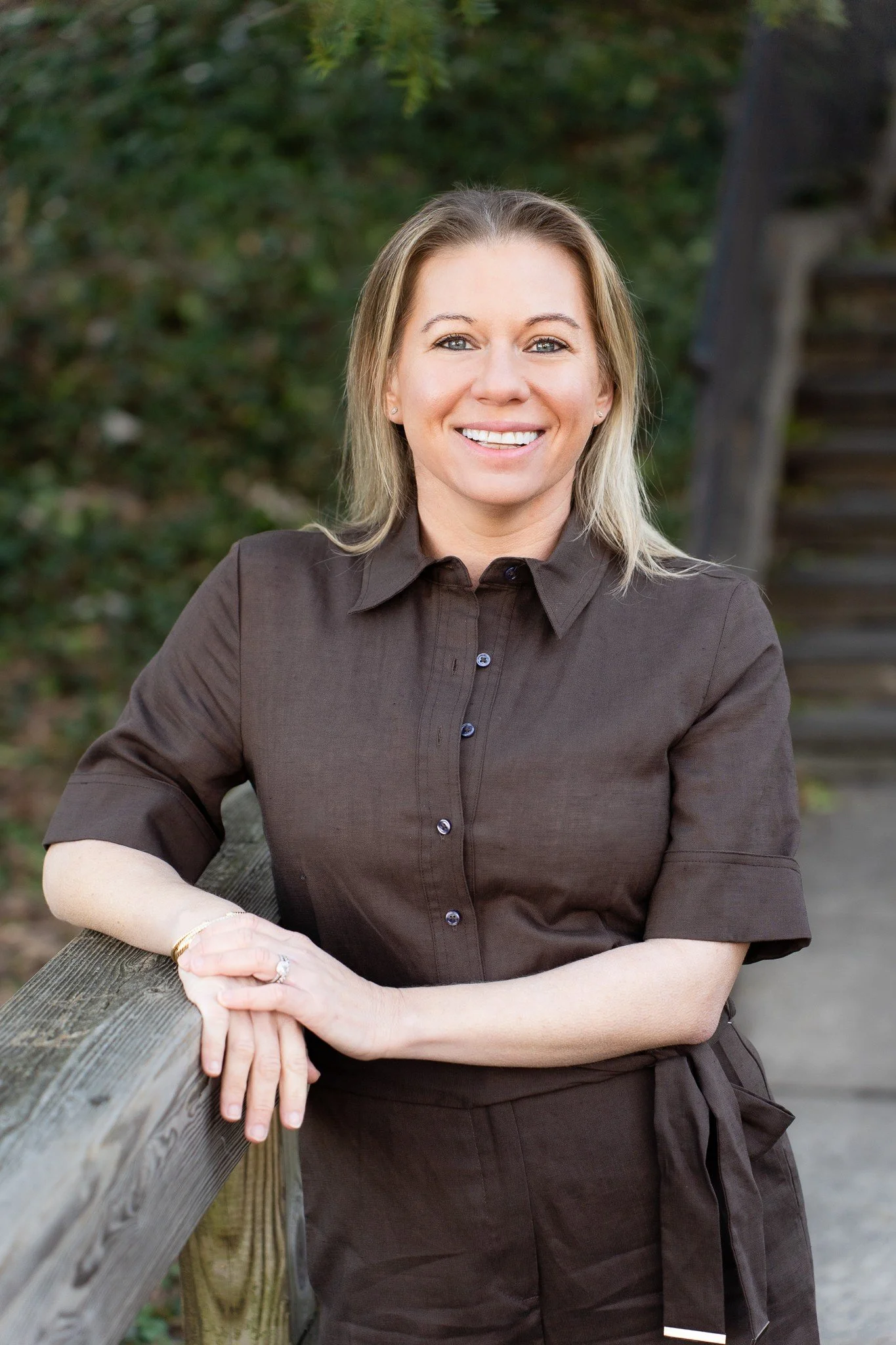
Photo of Liza Shaub
BIO: Liza Shaub is a full-time writer based in Baltimore with a BA from UVA. Her work has appeared in Business Insider and is slated for the May edition of NOVUS Literary Arts Journal. She's the founder of The Iron Horse Party, an annual fundraiser that has raised millions of dollars to fight ALS.