me, myself and murderers (how i lived with two people who went on to kill)
by Julie Duck
Some people collect vintage records or Barbie dolls. I collected broken people. For years, I told myself it was compassion, that everyone deserved a kind friend, someone to validate their existence and lift them up from the depths of despair. What I didn't realize was that my need to rescue others was leading me straight into the arms of danger, twice putting me under the same roof as future murderers.
The pattern started in my teens when I began befriending the abandoned neighborhood kids after their first round of rehab; the broken ones living in boxes at the back of their grandmas’ back yards. Need food? I’ll feed you. Need money? I’ll be your wallet. I became so enmeshed in dismal lives that I lost myself in their chaos. My lack of boundaries extended through a long marriage, boyfriends who befriended Jim Beam rather than Bill, and a guy living a fifth wheel dream while downing homespun pot brownies in a San Diego trailer park. Swearing I would never again be with an addicted, unemployed man living in a tent or his mother's garage, I found myself engaged to the most amazing man I'd ever met. He also turned out to be severely mentally ill, an addict, and violent. I'll call him Matt.
The red flags weren't subtle. They were billboard-sized warnings that I ignored. Each concern was compounded by the next. Within months of meeting Matt, I lost my good credit, my financial standing, my mom’s trust, and physical custody of my young son. I also lost peace and any trace of tranquility as Matt showed me who he really was. He spent his days smoking weed bought with my money, then chastising me for not giving him free reign to my bank account. He started withholding affection. One night, he mentally checked out and spray-painted gang slang on the garage walls before stabbing them with scissors and tearing up a box spring with his bare hands. I hid in our bedroom, door locked, pepper spray ready. Leaving was necessary, but like many women in bad situations, it took several tries to make it happen.
The first time I left was after Matt woke up from a Xanax binge and broke down our bedroom door to “talk” to me. I got a domestic violence restraining order after that and had law enforcement remove him from the house, but not before the officer told me, “You need to pick better men.”
The second time, Matt was psychotic, unresponsive with black, absent eyes as he ransacked his mother's house and chased me, my son, and his own children out the door. He was put on 5150 and 5250 holds and diagnosed with bipolar and schizoaffective disorder. Just hours before he was discharged from the psychiatric hospital, I packed my car and left.
But I went back a third time. It was summer, my mother was dying of cancer, and I was desperate for loving touch. After receiving his hundredth come back to me, I love you text, I reached out. Matt swore he was medicated, seeing a psychiatrist, and taking online courses to become a counselor. We spent three weeks together before I found him at 4 AM, standing in the middle of the living room, eyes closed, hands trembling over his mouth, body swaying as he mumbled incoherently. When I asked what he was doing, he said something about not being able to sleep and collapsed on the couch. I went back to bed.
An hour later, I found him in a trance in front of the living room window for all the neighbors to see. In that moment, watching this man who had once held my heart, I saw that he was still battling addictions and mental health issues. I couldn't stand him. More importantly, I finally understood how dangerous he truly was.
After I left Matt for good, the next level of chaos began. He stalked me relentlessly. "I'm going to keep seeing you whether you like it or not," he declared. He threatened to show up at my workplace to force conversations about our relationship. He found my personal blog and sent menacing messages. He located me on a dating site, accusing me of not holding up my end of the relationship bargain and that nobody could love me like him. His mother got involved, sending Facebook messages and texts about how I should "adult-up" and talk to Matt "like a grownup." Sometimes he used her phone to text me, pretending it was her until he had my attention. Disturbing videos and pictures came through in the middle of the night, with threats that he was going to take care of things for good if I didn’t engage with him.
Even with a restraining order and several police reports filed, Matt persisted. Through alias social media accounts—my way of keeping tabs on his whereabouts for my own safety—I learned he was seeing a new woman. She looked like me but with pink hair, and they were planning to move to the desert and start a new life, even as he continued scaring the shit out of me.
The stalking abruptly halted in June 2018. I prayed that Matt had given up and moved on with the new girlfriend.
On June 29, I left work early due to nausea and stopped at the store for 7-Up and crackers. That's when I received a strange call from the number 111111111. I let it go to voicemail, then listened to a detective asking to question me about my "past partner." When I called back, he asked me to meet him at a CVS three miles away.
As I approached the CVS, terrified and clutching pepper spray and my restraining order, I wondered if this was real or another of Matt's elaborate schemes to get to me. Under the shaded eaves of that drugstore, I saw the badge and business card that confirmed something bad had happened. Had Matt died? That wouldn’t be a surprise. But it was worse.
Matt had murdered the girl with pink hair.
It could have been me. It probably would have been if I had gone back a fourth time.
The realization hit like a physical blow. Combined with losing my mother earlier that year, my psyche plunged into a deep depression. Between 2018 and 2020, I spent my time in therapy, learning about the why's of my choices, what normal looked like, how to let things go, and what to embrace for a steadier future. Not everyone lives with, or loves, someone who goes on to kill. Did that make me special? No, it made me feel weird. But I thought I had learned my lesson about the people I allowed into my personal sphere.
I was wrong.
Long before the murder, after one of my departures from Matt, I had moved in with a single mother 15 years younger than me. I’ll call this one Marlena. She was attending massage therapy school and baking edibles to pay the bills after her ex left her with their lease. Seemingly stable and responsible, Marlena looked great on paper and in person. Finally, I had a safe place to sleep and regroup.
But the crazy followed me from Matt’s to Marlena’s home. My bedroom door had no lock and the frame was broken. She’d scream at her kids, and particularly her three-year-old, slamming the door in the little girl’s face more than once (presumably also the reason why my bedroom door was broken). The neighbors wouldn’t let their children come over to play. And she let her estranged husband, “Carl,” the littlest girl’s father, stay over because he’d received a government refund and she wanted him to buy her stuff—even though she’d accused him of child molestation. Two weeks into living with Marlena, I was forced to mop floors before she’d let me leave the house. She berated me for not cleaning to her standards and purchased a bottled water subscription under my name. Her dog urinated in my room. Once, she locked eyes with me while holding a bottle of my organic salad dressing, dropped it deliberately, and said "oops." She constantly entered my room to take inventory of my belongings.
Within three weeks, I was sleeping with a hammer and knew I had to get out. Ironically, I returned to the crazy I knew. Once I was back with Matt, I told Marlena’s landlady what had been happening. With my evidence of the dog, she was finally able to get Marlena evicted.
Fast forward to the pandemic summer of 2020 when I received a late-night text from that landlady. It contained news that made sleep impossible: Marlena had shot and killed Carl on her doorstep in Texas.
He had won custody of their daughter after the molestation accusations were proven false and was at Marlena’s home to pick her up. Instead of letting him take their child back to California, Marlena shot him in the stomach, then in the back when he was down. It was captured on video, and she was convicted and sentenced to 45 years in Texas prison.
Murder had risen again like a twisted fate. Was I unconsciously choosing people who would give me the same disturbing experience? It took more therapy, self-exploration, and surrender to release my need to understand the why of these parallel experiences. Living with two people who could have made me their victim broke open my appreciation for both life and intuition in ways I never expected.
Both times, I knew what I was getting into. I saw how Matt treated his neighbors and listened to his stories about running with a gang and selling drugs as a teenager. I let Marlena yell at me about paying to get her gas turned back on before I had even moved in. Even with strong gut feelings, I wore a self-imposed blindfold and moved forward with both people, and with insane consequences.
When we see warning signs and ignore their potential effects on our lives, we accept the risks and whatever results they bring. And somewhere in all of it, there are lessons that can help us grow. I’ve grown over the last decade and learned that my compulsion to rescue broken people was really about my own brokenness—my desire to feel needed, to matter, to save others. True compassion doesn't require putting yourself in harm's way, and that sometimes the kindest thing you can do for someone is to maintain healthy boundaries.
Most importantly, I learned to trust my instincts. That sick feeling in my stomach, the way my body tensed when Matt's eyes went black, the unease I felt sleeping with a hammer in Marlena’s house, these weren't random anxieties. They were my intuition warning me.
The awareness of what I’ve experienced lives in the back of my mind wherever I go. It's not paranoia, but rather wisdom earned through surviving experiences that could have ended very differently. Some people's darkness is not meant for you to illuminate. Some broken things are not yours to fix. And sometimes, the most life-saving thing you can do is simply walk away at the first gut reaction.
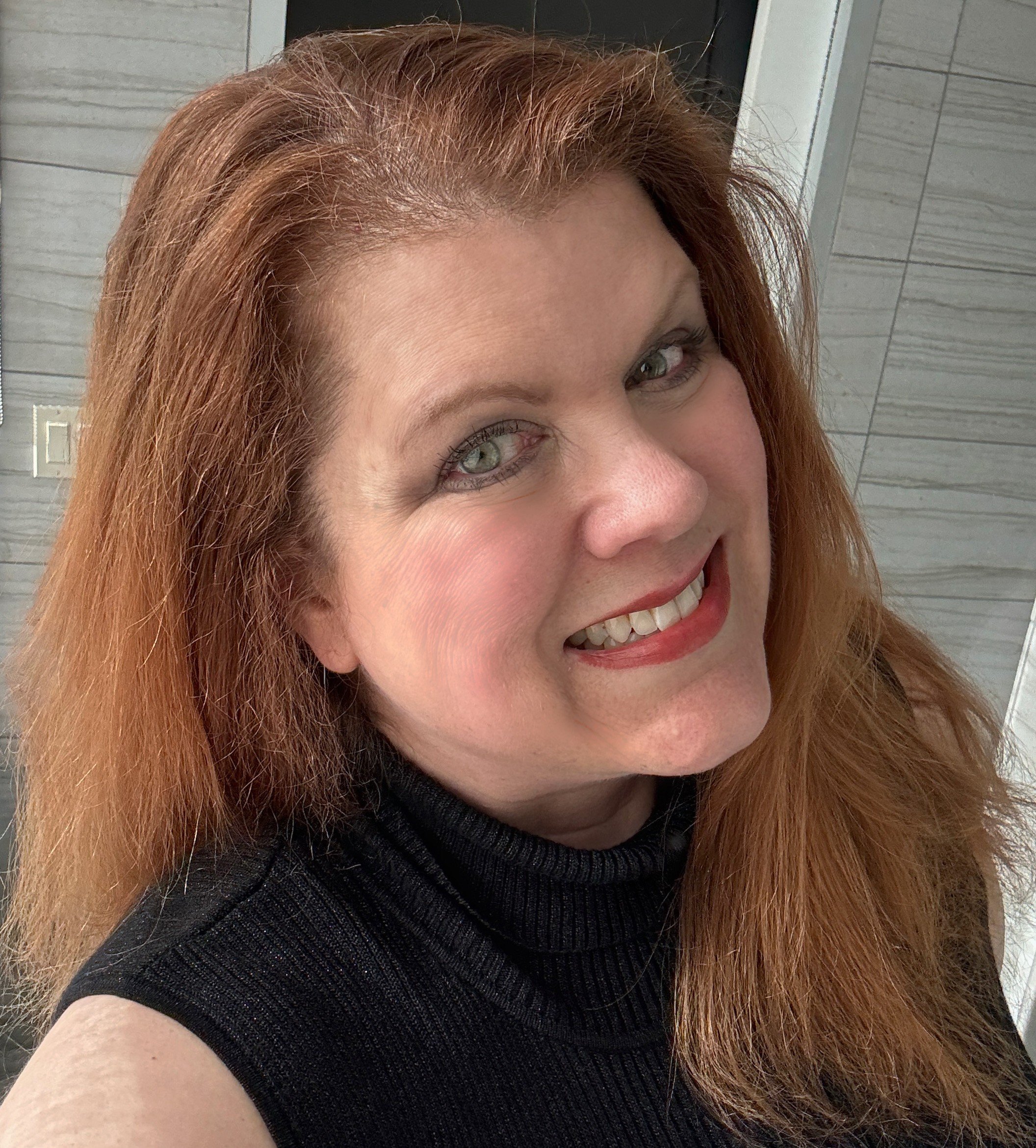
Photo of Julie Duck
BIO: Julie Duck is the author of the young adult novel A Place in This Life and other YA fiction titles. She is currently working on a memoir that explores relationships, survival, and the patterns that lead us into and out of dangerous situations.