chosen descent
by Zary Fekete
I sit on the same bench at the train station whenever I can. It faces the stairs, not the tracks. This is deliberate. The trains arrive and leave whether I watch them or not.
Around three in the afternoon, the station changes its temperature. Not the weather…something subtler. The crowd thins. The students have already passed through. The commuters are still elsewhere, inside offices that smell like recycled air. The station takes a breath.
That’s when he appears.
He steps onto the platform with the caution of someone entering a room they’ve known for a long time. An elderly man. Small. Stooped. His back curves forward as if the air itself has weight. He does not use a cane. He does not pause to orient himself. He simply begins crossing the platform.
Other people flow around him in clean arcs. Phones up. Earbuds in. Shoes engineered to move quickly across surfaces like this one.
The man takes his time.
He walks past the escalator and toward the stairs. He grips the railing once, briefly, not for balance so much as acknowledgment. Then he starts down.
His descent is slow. Intentional. Each step placed as if it matters that it is this step and not the next. I can see the crown of his head moving downward, bobbing slightly, the way a buoy marks a depth no one else is measuring.
I stay on the bench, watching only until his head disappears below the platform edge.
This gives me a kind of peace I don’t know how to explain.
In the country where I grew up, old age arrived with equipment. Walkers. Wheelchairs. Cars idling in front of curb cuts. Someone else always responsible for the motion.
Here, this man still rides the train. He still enters and exits public systems on his own terms. He still chooses stairs.
I don’t know where he’s coming from. I don’t know where he’s going. I don’t know if this is wise or stubborn or simply habit. I don’t need to.
I think about how much of my life has been engineered for ease. How many ramps I’ve taken without noticing. How often I’ve mistaken friction for failure instead of proof of contact.
The man does not reappear. He never does. He is absorbed by the station’s lower levels, by corridors I don’t see, by a city that continues without my participation.
When the next train arrives, people gather at the platform edge. Their shadows overlap. Someone bumps my knee. Someone apologizes without looking at me.
I stay seated.
The joy I feel is small and unshareable. It does not ask me to improve. It does not promise a lesson. It does not tell me what to do next.
It is only this:
that someone older than me still chooses the long way down,
and that I am here to witness it,
and that, for a moment, that feels like enough.
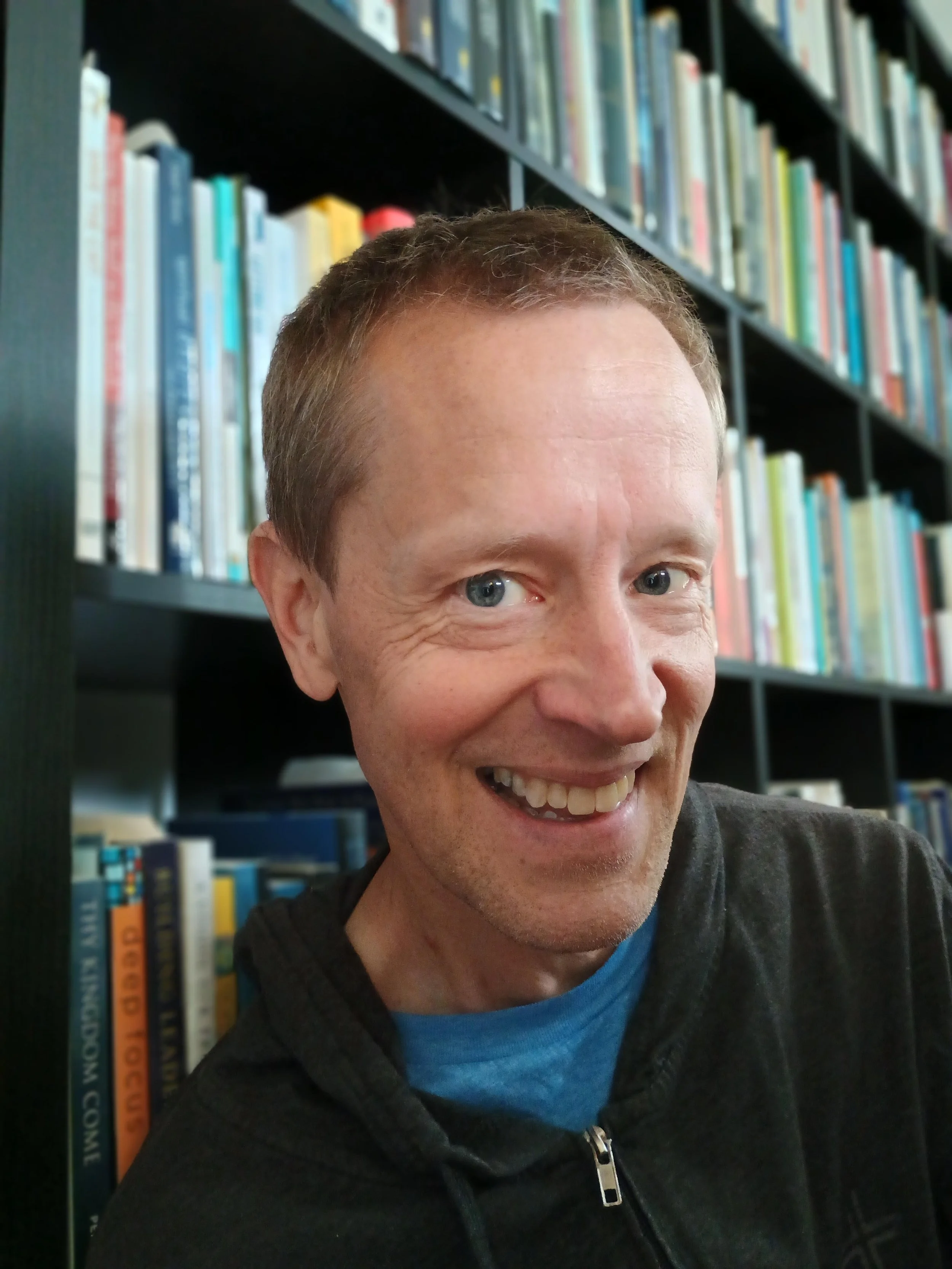
Photo of Zary Fekete
BIO: Zary Fekete grew up in Hungary and currently lives in Tokyo. He has a debut novella (Words on the Page) out with DarkWinter Lit Press and a short story collection (The Written Path: A Journey Through Sobriety and Scripture) out with Creative Texts. He enjoys books, podcasts, and many many many films. Twitter and Instagram: @ZaryFekete Bluesky:zaryfekete.bsky.social