the phone call
by Swetha Amit
The shrill ring shattered the café’s quiet hum. It sliced through Mira's calm state of mind like a tsunami. Her hand trembled slightly as she picked up the receiver. It was just a customer calling to ask for a reservation. Her voice shook. She stammered. After a few minutes, she put the receiver down. She reached for a glass of water. Her lips quivered, and a light shiver ran down her spine. She looked outside. The waves at Cowell Beach were mellow and blue. Families built sandcastles and dipped their feet in the water. Squeals and giggles echoed across the beach. But it was the ringing phone that kept reverberating in Mira's ears. It made her heart flutter like a trapped bird, and it delved into the fabric of her darkest memory.
Faint images of the clatter of the cutlery, the murmur of voices, and those sympathetic looks directed at her replayed in front of her. It was a chilly November evening eight years ago when she was just about fourteen. She had been absorbed in her painting of fall colors on her canvas. Her father was out on his usual evening walk. Her mom and grandma were in the kitchen, preparing pumpkin soup. The phone suddenly rang loudly, piercing through the calmness of that fall evening.
"Hello?" she heard her grandma answer the phone.
Mira detected a tension in her grandma's voice. There was a sharp inhalation, a strained guttural sound, followed by a scream. The telephone receiver clattered onto the wooden floor. The next thing she knew, Grandma and Mom grabbed her. They drove to a street just off the Foothill Expressway. It was close to a trail that Mira and her Dad often hiked. Once, they saw a Coyote chasing deer. Another time, it was a deer and its little one. Her dad mentioned that he was always afraid the deer would be run over by the car.
Some cops stood there with serious expressions.
"A car," they said. "Case of drunken driving. Sorry."
Her dad was covered in a white sheet on a stretcher. Her dad, the anchor of her life, the one whose advice she always relied on, the person who mediated misunderstandings between her and her mom, the one who was patient, calm, and understanding during her turbulent adolescence. The scream stayed locked in her throat. She opened her mouth to swallow air instead. Who would she go on those hikes to spot deer now? To whom would she show off her paintings? Who would she talk to about camping and stargazing? Who would she play ping pong with now? It couldn't be, she bit her lip. She wanted to believe it was all a bad dream—that she'd wake up and find her dad in the hall watching a 49ers game on TV.
A ghostly silence settled over that house. She lost interest in math and science. Her grades slipped. Her unfinished painting gathered cobwebs. Her sessions with the therapist were filled with silence, sometimes tears, and occasionally her talking about her nightmares of hearing the phone ring. The therapist listened empathetically. Mira’s grades improved. Her friends supported her. But she drifted apart from her mom and grandma.
Her mother threw herself into work to support the family financially. The distance between them widened. It became impossible to bridge. Grandma stayed with them, but Mira felt the lack of connection. Her Grandma’s practical advice to move on didn’t seem to resonate with Mira’s emotional nature.
Eventually, Mira graduated from high school, moved out of her home to attend college, earned a degree in nutrition, and found a job at the café, where she waited tables and sometimes managed the place. She moved from the house in Los Altos, where her mother and grandmother still lived. She rarely visited.
Now in the busy café, Mira's hand still clenched her glass of water. Her heart raced, and beads of sweat formed on her forehead. Every time the phone rang, it left her with a lingering sense of dread. Mira forced herself to breathe. The chatter of customers returned to her awareness, along with the clink of cups and the whir of the espresso machine. The receiver was back in place, and the phone was silent. She took a sip of water, her hand still trembling.
The sensation of water trickling down her throat felt so calming. She tried to remind herself that the café was a safe, happy place. She was now a grown woman, not a teenager whose world had been shattered by a single phone call. Outside, she watched the ocean—the foamy waves crashing on the sand, the seagulls swooping down and soaring in the sky. Happy laughter drifted through the air. The phone rang again. She jumped, startled by the sharp tone. She picked up the receiver and mumbled a hello. Another customer. She took a deep breath, glancing at the ocean, the seagulls, and the sandcastles. She wiped the sweat from her forehead with the back of her hand. This time, her voice sounded smoother and more confident.
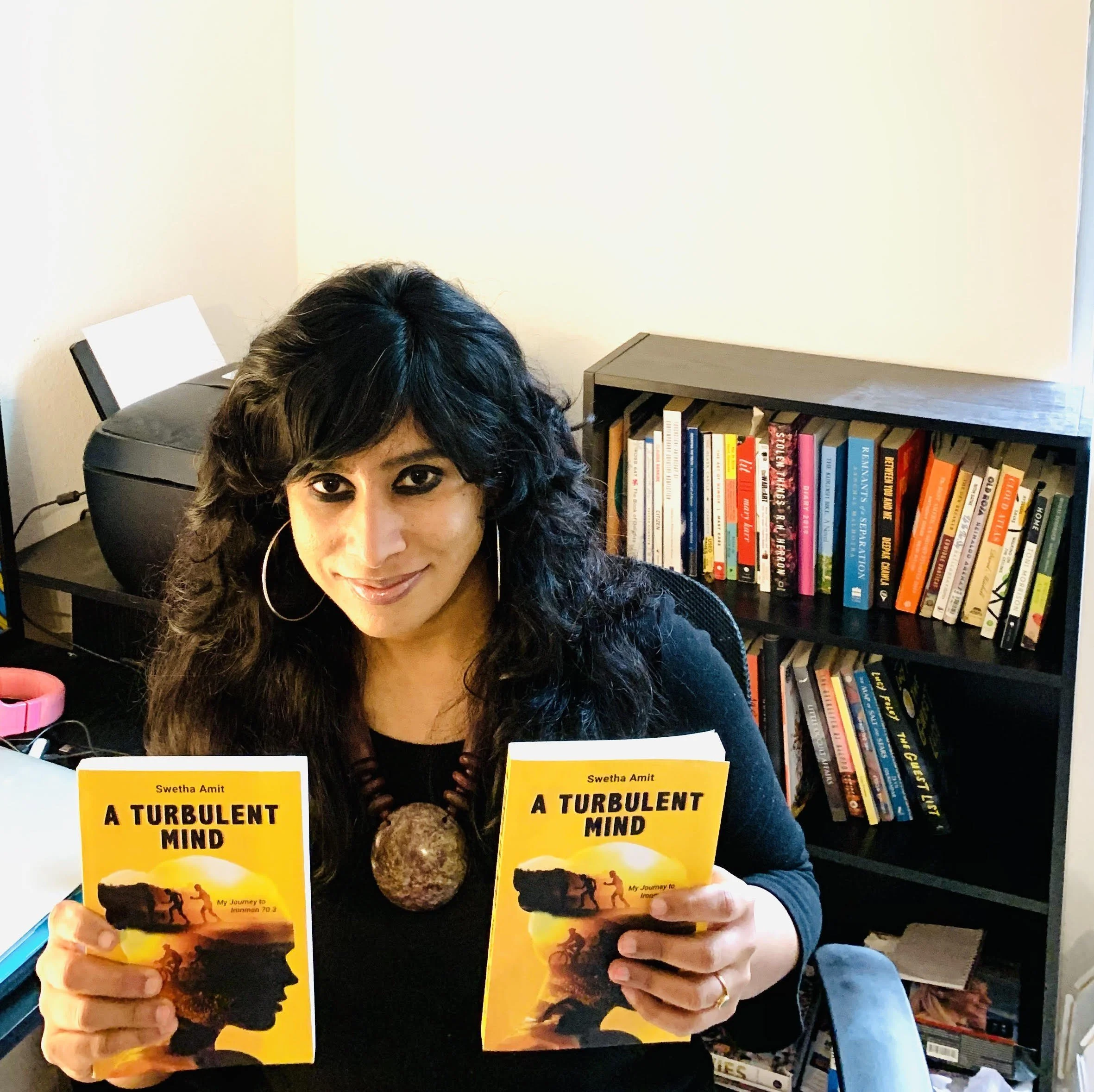
Photo of Swetha Amit
BIO: Swetha is an MFA Graduate from the University of San Francisco. The author of a memoir, A Turbulent Mind, and three chapbooks. Her words appear in Had, Bending Genres, Ghost Parachute, Gone Lawn, Cream City Review, and others. A member of the Writers Grotto, her stories have been nominated for the Pushcart Prize, Best of the Net, Best Small Fiction, and Best Microfiction.