sundays are longer
by Lucian Cubric
Waking
The dog wakes before the alarm, as he always does. Usually, by this time, they are outside. He runs beside his master through dim streets, past runners who come from the other direction. Each carries his or her own brief scent — grass, soap, sometimes dread — passing over him like a change in weather. Some bring dogs, and their calls echo off the road in short, nervous bursts. The air is alive then, full of sweat and asphalt and moving feet.
But today the sun is already up, and they are still inside. The alarm rings, stops, and rings again, the silence between each one long enough for the dog to start hoping. The man doesn’t move. He lies still on the couch where he celebrated with his friends the night before, turning only to shout a word that makes the sound stop briefly. It’s one of those days again.
Sunlight floods the apartment, pale and without warmth. It passes through the tall windows along the balcony and settles over everything — the living room, the kitchen, the dining space — without finding anything soft to rest on. The walls are white, the corners sharp. Paintings line the far wall, large and tasteful, the kind chosen for rooms that need color but not meaning.
Forty stories below, the city hums faintly, a low electric sound that matches the air-conditioner’s steady whir. A breeze slips in through the balcony door, held open by a folded piece of cardboard. It moves through the room like something half-alive, carrying the smell of the world outside and the faint sourness of the one within.
Boxes still stand by the wall — the same ones from when they moved in six months ago. Their tape has lifted, curling away like old skin. A thin, silver cutter rests on top of one, exactly where it was left. The dog remembers the sound it made when his master sliced a box open. Shhhh, a dry rasp of cardboard fibers surrendering one by one. He didn’t like that sound.
He looks toward the couch. His master is still there, eyes open, fixed on the ceiling. He slept there, the bed in the next room still pristine. The air is thick with old oil, damp food, something sweet beginning to rot. The apartment is open, no walls to hold the smell back. It moves through everything, slow and sure, until the whole space smells the same.
The dog waits for his master to say the word leash. Nothing. He moves closer and presses his nose to the man’s cheek. The skin is warm and the smell sour. His master flinches and turns toward the backrest of the couch.
Something changes in the air — a taste, a weight. The dog steps back, nails clicking on the cold, grey tiles. One leg lifts off the ground. The hair along his spine rises; his tail folds tight. A coldness under his skin, his stomach twisting. He knows this feeling.
There — on the man’s back.
A familiar shape.
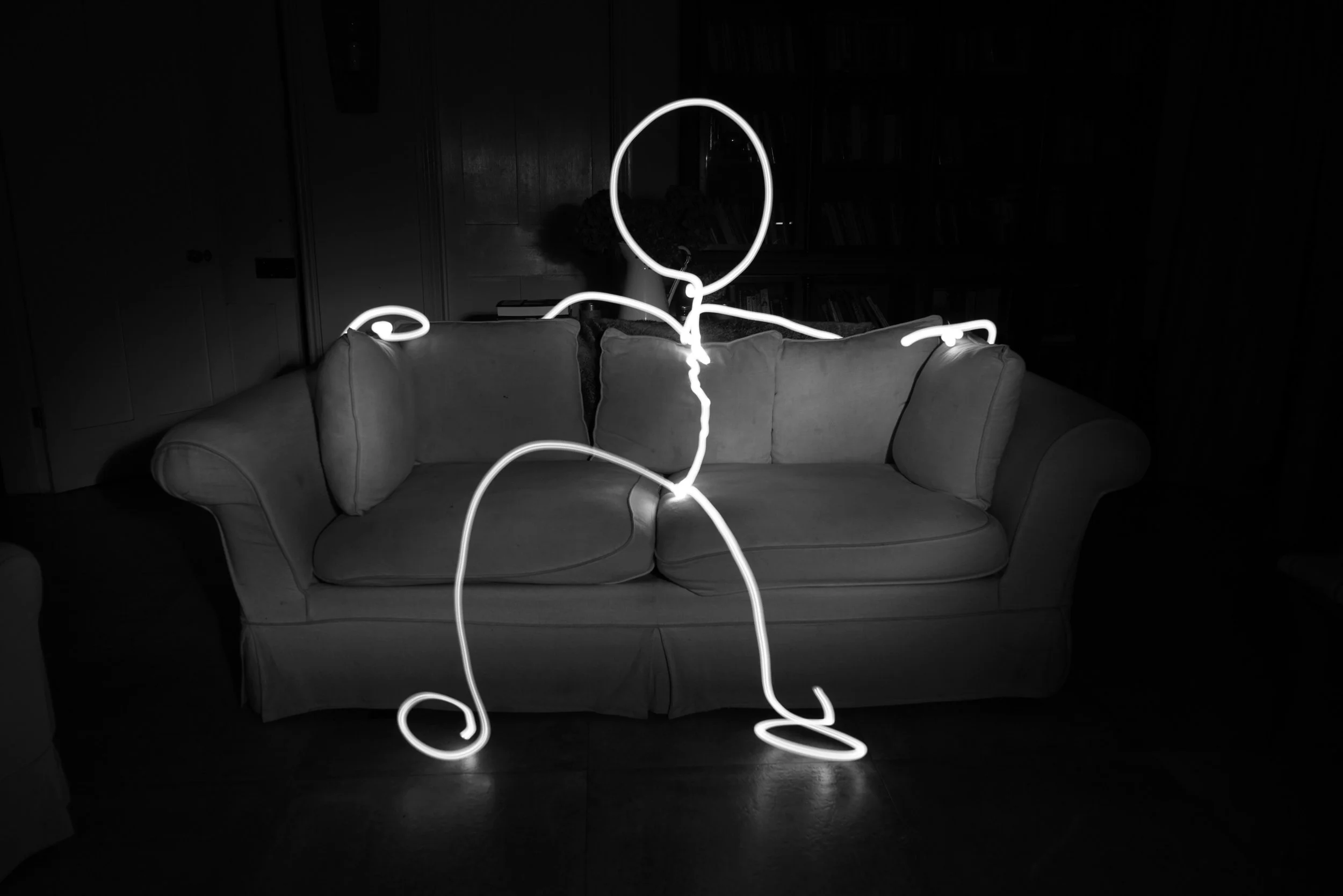
A dark shape, unnaturally bent. Half a body, clinging close. It rises and falls when the man breathes, as though feeding on his breath.
The dog lowers his head and lets out a sound, deep and soft, not a growl — the kind meant to warn but not wake. The dark shape doesn’t move.
The master stirs, groans, and reaches for his phone. As he does, the dark shape leans over his shoulder, as if to see what the master is looking at. His thumb moves rhythmically.
Swipe up. Swipe up. Swipe up.
His eyes empty.
Living
A ding breaks the stillness. The dog’s ears lift, his head tilting. The master picks up his phone.
“Great job on closing the account!!! Couldn’t have entrusted it with anyone better. Take a well-deserved break! I hope you’re feeling proud of this major accomplishment.”
For a moment, he considers responding, but his fingers don’t move. The screen dims. He opens it again and scrolls — pictures, faces, food, news.
After a long pause, he stands, shoulders rounded, the dark weight settled between his shoulder blades. The phone glows in his hand. He keeps swiping, every motion an effort.
On the table lies a small black notebook. He lifts the ribbon in its center; it opens to the last page with words, written a month ago.
“Why do you need to know the answers to the big questions? Why do you need to keep asking what this is all for? Maybe there are no answers. Or maybe they come only when you’re older.”
When he finishes reading, he shuts the book gently, as if it might bruise. A sigh leaves him, thin and brief.
From the table, he drifts toward the kitchen. Cold air spills from the refrigerator when he opens it. The shelves are full. On the door, photographs: a beach, a birthday, his parents, a row of photo-booth strips.
The dog follows, keeping distance, eyes fixed on the shape clinging to his master’s back. He waits for it to release its grip before he attacks.
He’s seen the shadow twice before. The first time, it stayed for three days, and they didn’t leave the apartment at all. He was still a puppy then, small and soft and stupid. The second time, there was blood and the air smelled sharp, like iron. The woman who used to sleep here shouted, cried, and took the master away. The master was gone for a long time and came back alone. The dark shape was smaller then. Now, it has settled into his master the way dust settles, filling every pore on his skin and crevice of his muscles.
The master’s stomach growls. With a dull thud, the refrigerator closes, the master taking nothing. He fills only the dog’s bowl. Metal clinks on tile. As he bends down, the dog sees a scar along his arm — thickened skin, folded neatly into a line. Healed but remembering.
The phone rings. A woman’s voice fills the room, bright and close.
“Mom,” he says, putting her on speaker.
The dog knows that voice — the one who fed him when the master was gone. He barks once. The woman laughs, calls him a good boy. He barks again.
“I can’t chat now,” the master says. “I’m eating.” He ends the call.
The apartment hums again. The dark weight, faint during the call, regains its footing across the man’s shoulders.
Rest
Evening slides in unnoticed. The light from outside turns from white to gold to gray.
The master wanders through the apartment, circling listlessly. He rinses the plates and bowls in the sink but doesn’t finish the job.
From above, faint thumps of running feet. Children. The ceiling vibrates.
He looks up, jaw tightening. “It’s Sunday,” he says under his breath. Then louder: “Shut the fuck up!” His voice startles the dog, who lifts his head but doesn’t bark. After a moment, the noise fades.
He turns to the shelf by the window. A bonsai sits there, perfectly proportioned, miniaturized, disciplined by years of human will. But it’s dead. The twigs are brittle and hollow, incapable of flexing. The leaves, once green, are brown and curled, clinging only out of habit.
He runs his thumb along a branch; it crumbles at his touch. Still, he waters it carefully, drop by drop, until the soil darkens. A faint smell of earth rises and fades.
He steps onto the balcony. The dog pads after him, stopping at the doorframe. Below, cars slide through the streets, tiny and bright. The master leans forward, elbows on the rail, chest a little over the edge. The air lifts the side of his hair still flattened from sleep. He spits down and watches the pale drop disappear, caught by the wind, carried away.
Back inside, the dog noses through his basket and brings over a toy—soft, chewed at the corners. He sets it beside the master’s foot and rests his chin on the man’s knee. Over the master’s shoulder, the dark shape wavers, folding in on itself, as if the sight of the dog unsettles it. The master’s hand moves absently to the dog’s head, thumb circling the temples, slow and gentle. For a moment the room seems lighter.
Then, the hand stops. The man stands and opens the bedroom door.
“Stay here for a bit,” he says. His voice is soft, almost kind.
The dog hesitates, paw half-raised, tail low. He looks up. The yellow light from the living room glints in his eyes. The master meets the gaze and smiles—small, tired, meant to reassure. The dog’s tail moves once, uncertain but hopeful. He walks into the room and looks back before the door closes. The latch clicks.
Inside, the bedroom is dark. The dog lies by the door, nose pressed to the narrow crack of light beneath it. His breath is slow, audible, the sound of air sliding against the wood. Outside, the apartment hums, then quiets. Everything holds still.
A small sound follows, wrong from the start.
Shhhh.
Softer this time, almost mute. Shorter. A brief wet whisper of something meant to stay together, being forced apart.
The dog’s ears twitch. He stares at the strip of light. It wavers, then narrows as something moves across it. The yellow light bends, breaking into fragments on the floor as the dark shape slides beneath the door—flattened, spreading, then rising as it gathers itself into the room.
The dog moves back. His stance stiffens, legs braced, muscles tense. His ears angle forward. His breath quickens. The air smells faintly of iron.
He whines once, sharp and pleading.
Then he barks—to wake.
The dog doesn’t understand; he only calls.
The shadow stands full, solitary and motionless before him, as if listening.
The dog keeps barking. The sound rolls through the apartment, then out the balcony door, to a world unaware, uncaring.
BIO: Lucian is a Manila-based writer exploring the quiet drama of everyday life and the unspoken emotions that run beneath the surface. “Sundays Are Longer” is his first short story.