trichotillomania, or every little girl learns how to be ashamed
by Sia Mehta
When I was little, my mother figured out that I had trichotillomania, but she never told me. She just told me I worried too much, and I had to stop pulling out my eyebrows.
Trichotillomania–(for those whose anorexic-adjacent best friend doesn’t own a DSM-5): A disorder that involves recurrent, irresistible urges to pull out body hair. The urges involve pulling out hair from the scalp, eyebrows, or other areas of the body. Symptoms include compulsive hair pulling and hair loss, such as bald patches on the scalp. Social and work functioning may be affected. Treatment options include counseling and medications, such as antidepressants.
It started when I switched schools in the fourth grade. I was nervous and angry, not because I was happy at my old school – where I was in fact very much alone, and played with imaginary friends at recess after my only friend moved to Santa Monica – but because I was afraid of change. It was more comfortable for everything to stay put. Just like when we renovated our house when I was thirteen, and I cried over the loss of the dark wooden floorboards that had housed my first steps.
My mother forced me to switch into the gifted program, which ended up being to my benefit. I was happier there, I was challenged in school, I stressed my 8-year-old brain out so hard that I’d stay up until midnight working on poster-boards about giraffes. I even made friends, some of them white, a feat I’d rarely achieved previously. Blond and white. Maybe that was when everything began.
There was a girl named Olivia Lovelace. Should I use her real name? It doesn’t matter; I’m sure she doesn’t read very much. Lovelace; and she was as beautiful as her name. Sweet, round-cheeked, blue-eyed. A little smile. She wore purple tutus and Justice t-shirts. She once asked me how I was born, if I didn’t have a dad; I didn’t understand the question, because I was little, and I hadn’t learned about sex yet. Olivia Lovelace, of course, was all-knowing. My assumption was that all it took for a baby to be born was for a man and a woman to be in the same vicinity. I answered, shyly, that my uncle had lived in our house around the time I was born. Olivia Lovelace laughed at me, and I didn’t understand why. When I finally did understand, the shame I felt was unbearable, and I’m sure that I agreed with myself to make shame characterize my life from that point forward.
Shame is what I felt as I anxiously pulled out my eyebrows while mulling over schoolwork or eggs at the breakfast table, on the schoolbus looking out the rainy window as a blond girl introduced me to The Beatles and Nicki Minaj on her iPod Nano, in the dark 2000s classroom where my entire world was contained. My mother noticed that my eyebrows had disappeared when she looked at me, really looked at me, as she took me to the One of a Kind show in Toronto, Ontario. The One of a Kind show is a warehouse filled with exotic and decisive creations, all for expensive sale, by artists around the country. My mother has always been worldly, but not always gentle.
She begged me to stop pulling them out, because it looked strange and ugly. People could tell, she said. People would notice, she said. And then what would they think of me? I was eight years old, and I had never felt shame so rich and furious. A fury that unfolds into oneself; dives back from the brain, through the nose, into the chest with a shove. Picture me; one long black braid, no eyebrows, dark eyes, pale brown skin. It was winter. In 10 years, perhaps those same features would make me beautiful. But when you are eight, and you have no eyebrows, you have to blame yourself.
I stopped, slowly. Which is to say – I still did it, but less, to the point where it would become less noticeable. My mother bought me a book titled “How To Worry Less – a book for Kids.” It was about watering worries like tomatoes, and I was smart enough to know that what I felt was more than a worrying problem, and that tomato metaphors would do me no good. But I was not brave enough to voice my ridicule of the book. So I became sneaky instead. I pulled out eyelashes, of which I had many to spare. And eventually, people stopped noticing. My eyebrows grew back. I turned nine years old.
But irreversible damage had been done. I’d begun to care about what I looked like. I’d realized I had a face that others could see; that others pictured when they thought of me or heard my name. And once you reach that point, there is no going back. It designs the rest of your life; it teaches you how to view yourself and those around you; it magnifies everything. Your body is no longer yours.
I’m certain this moment of essential change is different for everyone. But the turning point for me was eyebrows.
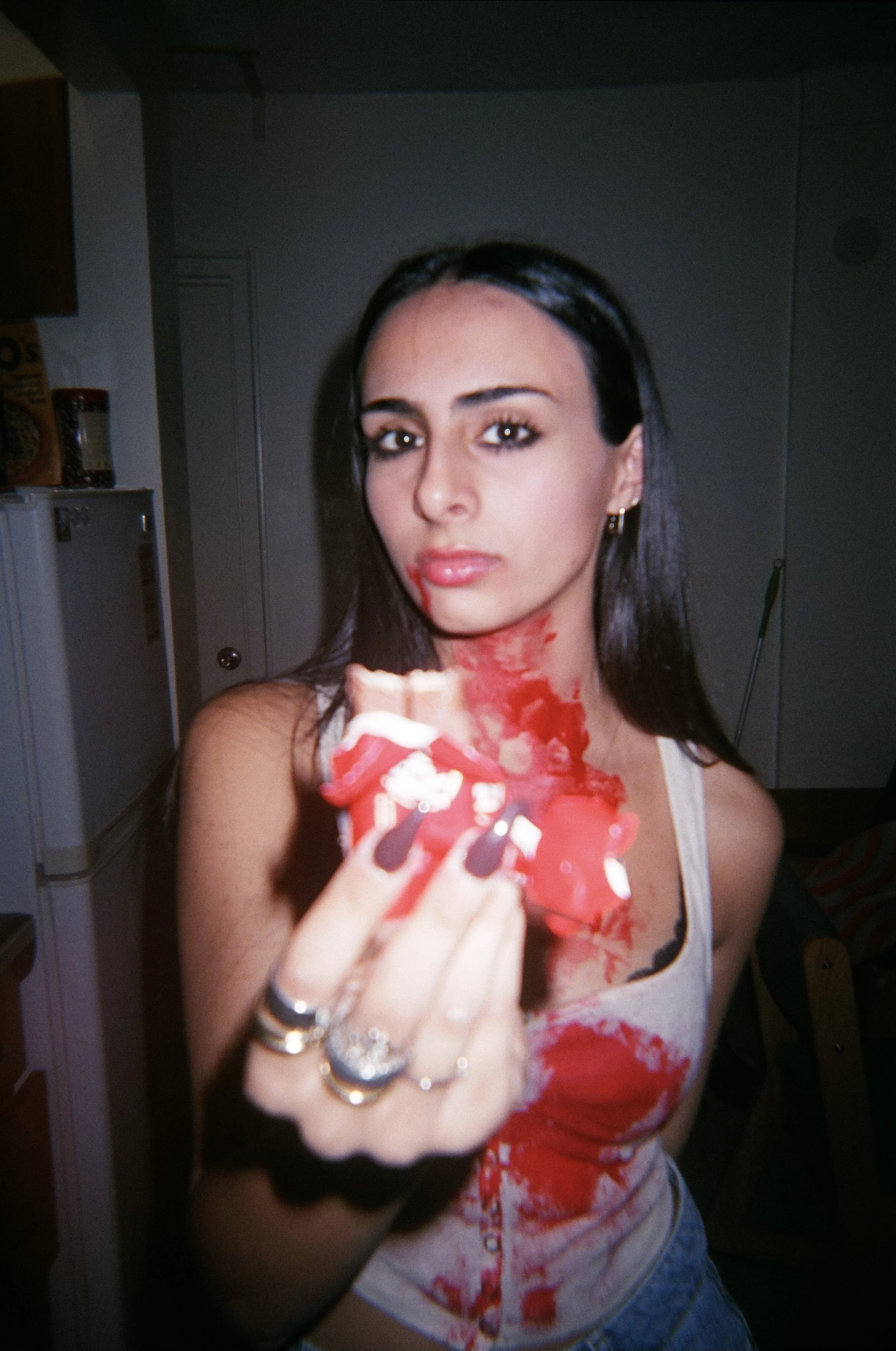
Photo of Sia Mehta
BIO: Sia Mehta is a New York City–based filmmaker, writer, and producer whose work centers on the dichotomy of femininity, women of color and underrepresented voices. She explores youth and grief through intimate storytelling across documentary, photography, narrative film, and writing. Sia has worked with the Toronto International Film Festival, Stay Gold Productions, Lincoln Center Film and CineFrance programming, and is a member of New York Women in Film and Television.