by Mohsen Askari
The day began the way many days begin, without ceremony, without any promise that it would be remembered. Istanbul was a muted gray in the early light, the Bosphorus barely distinguishable from the sky except for the slow churn of ferries cutting the morning open. Michael sat in the passenger seat beside his wife, watching the road with a tension he pretended was caution but knew, if he were honest, came from a deeper place: the uneasy awareness that he lived his days as if something essential might slip if he let his guard down.
He tried to look at his phone but couldn’t. The tunnel was approaching, and he always felt that silent tightening inside him when concrete closed around the car. It wasn’t fear exactly, but something close to it, a recognition that he existed in a body that could be disrupted by the slightest, stupidest event. He had spent enough years pretending to be solid. Now he was simply aware.
At school, the morning settled into its familiar rhythm. Grammar practice with sleepy nineteen-year-olds at Boğaziçi University. Zero conditional, first conditional. If you heat water, it boils. If it rains tomorrow, I’ll stay home. Sentences meant to teach predictability, as if the world obeyed neat rules. As he spoke, he felt a strange echo inside himself, a faint resistance to the simplicity of if–then. Life did not unfold that way. Not his life, not anyone’s. Still, the students listened, some with genuine curiosity, some with the blank patience you reserve for duties you don’t fully understand but must complete.
Yet even in that mundane classroom, something warm flickered in him. The pleasure of a student’s sudden comprehension. The quiet industry of pens moving across notebooks. The small, earnest effort of learning a language that was not theirs. Teaching was never heroic, but there were days when it felt like participating in a small, stubborn hope.
Lunch passed in harmless chatter. He laughed at a colleague’s story without really feeling the laughter. His body was tired. Not exhausted, but tired in the way a violin string is tired when it has been tuned too many times. He told himself he would rest when he got home. He knew he wouldn’t.
The final class ended, and the campus exhaled into its usual evening dispersal. Students filed out, some into the arms of friends, some into earbuds and solitude. He walked to the car, thinking of the tunnel they would pass through again, and felt a brief longing for escape—absurd, because escape to where? The city held him the way a shoreline holds waves. Not tightly, but continuously.
At home the light was different. Softer, amber, the kind of light that makes everything feel slightly nostalgic even while it’s happening. He placed his bag down. He changed clothes. The day should have ended gently.
But fragility has its own timing.
He lay down for a moment and noticed the pillow was damp near his ear. He touched it absentmindedly, and when his fingers came away red, something inside him lurched. He sat up too quickly, the room tilting for a second, the edges fuzzing. Not a serious danger—not fatal, not dramatic—but enough to remind him of the thin walls between functioning and falling apart. He felt the way a leaf might feel detaching from a branch: surprised by its own weightlessness.
The dizziness passed. The blood slowed. He stood, slowly, like someone rehearsing being alive.
Later, he drifted between screens, clicking through distractions with a kind of mechanical tenderness, as if each tab might hold the version of himself he had misplaced. A video of an eccentric doctor surfaced, someone who seemed to live slightly outside ordinary human rhythm. Watching him, Michael felt an unexpected kinship. Some people moved through life in the wrong frequency, too fast or too slow, or simply too differently to blend with the world’s default tempo. He knew that feeling. He’d lived it for years without knowing its name.
He talked to his uncle on the phone. Words passed between them that felt both meaningful and insufficient, like trying to describe water with a handful of sand. When the call ended, he sat at his desk, intending to work, to write something, anything. The intention was real. The work did not come.
Outside, the city leaned toward night. The lights across the Bosphorus spread like a thin constellation. He watched them with the quiet sense that life, despite its turbulence, always contained another layer, a hidden vibration beneath the visible world. The day had been simple. Ordinary. A sequence of tasks and bodies and conversations. Yet within it he felt a subtle pull, a low humming presence he couldn’t fully grasp.
Kadkani once wrote that some days “pass through you like a whisper you didn’t catch.” This day was like that. A whisper. But a persistent one.
He thought of rhythm again—not productivity, not ambition, not even discipline, but rhythm. That elusive alignment between the inner world and the outer one. For years he had tried to chase it through achievement, through effort, through self-reproach. But perhaps rhythm wasn’t something to conquer. Perhaps it was something to tune into, like a distant radio signal that grows clearer the more still you become.
He sat there a while, the city humming through the window, and let the thought settle.
The day was ending. Nothing monumental had happened. Nothing that would impress the people who think life is measured by public victories. But something quiet had shifted. A small realisation, almost too faint to articulate.
Tomorrow, he would take one deliberate step. Not toward productivity. Not toward perfection. But toward that thin frequency beneath the noise—the one that felt like his own.
And maybe, he thought, that was enough to begin.
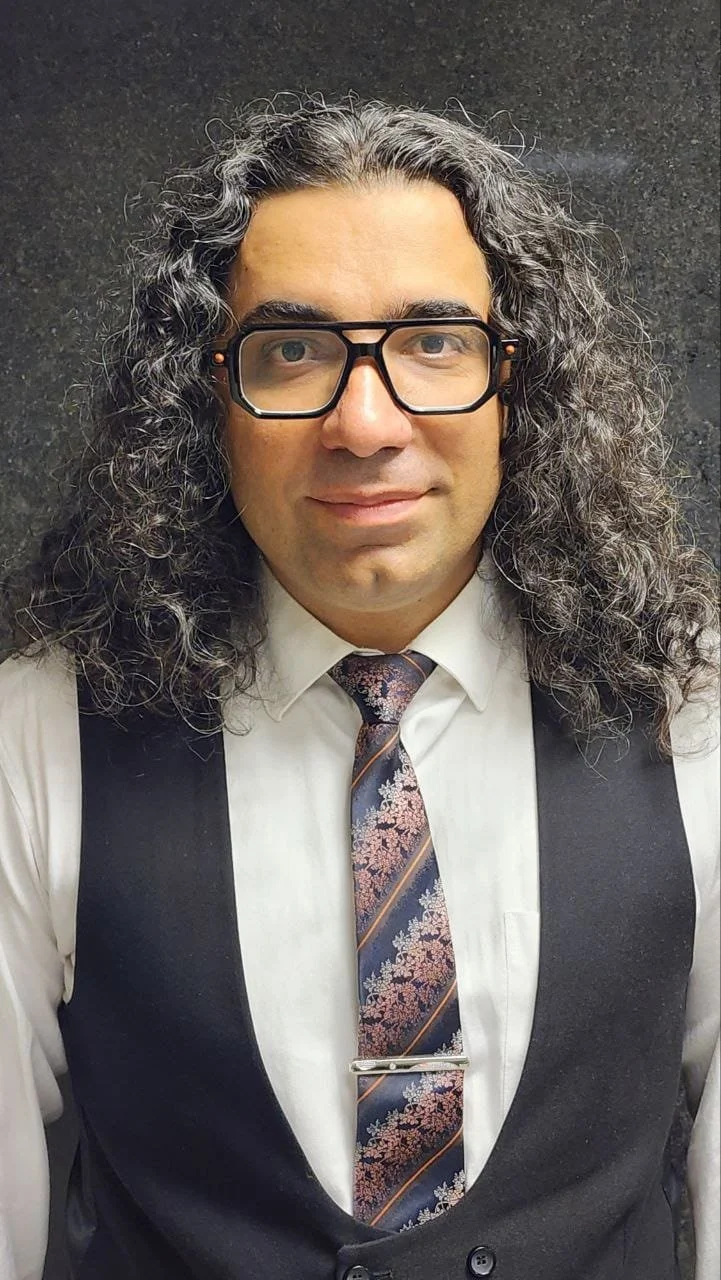
Photo of Moshen Askari
BIO: Mohsen Askari, also known as Michael, is an English language instructor and researcher based in Istanbul, where he currently teaches at Boğaziçi University. With a background in English language and political communication, his work explores the intersection of language, education, AI, philosophy, literature, culture, and politics. Alongside his teaching and research, he writes reflective prose that explores the intersections of everyday life and contemporary social questions.