the brownsville code
by L.F. Graubard
Brownsville raised me on ghosts.
Pogrom scars passed down like bad blood.
My mother came out of Kyiv by way of Ellis Island, carrying the old‑country fear that authority never arrives to help — it arrives to punish. In Brooklyn, that turned out to be true.
Brownsville ran on codes.
Murder Inc. ran the neighborhood out of Rosie “Midnight Rose” Gold’s candy store—hitmen sipping egg creams before they stuck ice picks in skulls. Ask anyone who grew up there: the lesson was simple. Never snitch. Not on enemies. Not on friends. Not on yourself. The cops didn’t save you. If anything, they finished the job.
The neighborhood was decaying even then. Jews drifting out, projects rising, gravity doing its work. The lesson wasn’t bravery. It was endurance. Stand straight. Leave no trace. Learn which doors close without a witness.
Sugar was my first drug. Egg creams, chocolate halvah, two at a time—the rush, the chatter, the crash. Same neural tracks that later welcomed heroin like a long-lost friend. My body learned early how to substitute comfort for meaning.
Barney Ross came out of that same world—boxing champion, war hero, morphine in the Pacific, heroin back home. He kicked at Lexington, the old Narco Farm. Proof that hell could spit you out if you fought hard enough.
I didn’t know I’d end up there too.
Different war. Same battlefield.
Lexington. Hospital duty.
I conned my way in. Told Norris, the case manager, I had medical experience. He knew I’d been pinched for impersonating a doctor. Truth ranked low at Lexington—below staffing needs. He shrugged and waved me through.
The hospital looked like a museum curated by despair. Stainless steel everywhere. Whirlpool tubs that belonged in a black-and-white movie. Exam tables shaped like confessionals. The work was half janitorial, half metaphysical. Lemon disinfectant strong enough to erase fingerprints and memory.
The old men taught me what aging really costs. Some would trade a hundred orgasms for one painless piss. Or a clean, unassisted shit. When functions disappear, they become priceless.
I watched them stare into mirrors like strangers waiting for a cue.
What the fuck happened?
Hope lingered anyway. It always does. Without it, nobody would survive the night.
They drifted—half here, half gone—until someone wheeled them out or zipped them up. Expiration wasn’t abstract. It was scheduled.
Sometimes I wondered which version of me would make it that far — the liar, the junkie, the sax player, the Brownsville kid who survived by accident. You can outrun the neighborhood, outrun the dope, outrun the feds — but you can’t outrun the body. It catches up like a debt collector.
When someone coded, I ran halls with a rattling crash cart, interns barking orders, nurses moving like a firehouse drill. Another day in the valley.
One of the patients was Joseph Bonanno.
Yes—that Bonanno.
Eight months for obstruction. The FBI had gone through his garbage. Power decays quietly. He arrived in a rusted wheelchair, older but sharp, elegant in the way real authority ages—controlled, watchful.
I wheeled him to therapy. Took vitals. Sat with him when the dayroom got too loud.
“You look like a smart Jewish boy,” he said once.
“Buy my book.”
He owned factories, trucking companies, a funeral parlor in Brooklyn. I asked if he’d ever thought about installing a crematorium.
“Good idea,” he said.
For a moment, I saw the man the world once feared.
I told him I thought I’d met his son years earlier. He stiffened, so I told the story.
Traveling band. Two-week gig in Reading, Pennsylvania. Democratic Social Club. Mob front. Old men with expensive women hanging on their arms like Sinatra had come back.
We watched the Kentucky Derby together.
“Secretariat,” I said.
Joe’s eyes flickered.
“That was special,” he said.
A horse running like it remembered something the world forgot.
Our drummer called him Joe Bananas. I apologized. Joe split a commissary peanut butter cup and slid me half. Communion.
Later I asked him about Yorkville—Bund rallies, Nazis waving flags like it was Berlin instead of New York.
“Ugly days,” he said.
Then leaned in.
“Fifteen men. Ordinary clothes. Hands in pockets. Storm in their eyes.”
No bodies. Just broken pride.
“Lansky,” he said, “was the last man I knew who could weaponize dignity.”
Months blurred. Death moved on little cat feet—alarms, gurgles, a gasp at 3 a.m. I pushed wheelchairs and watched bodies fail in slow motion.
Every time someone coded, memory stacked itself: Brownsville, Lexington, Bonanno, Secretariat—all collapsing into one long charge from the back of the field.
We’re built from scars that don’t belong to us.
And we carry them anyway.
When Bonanno left for Arizona, he shook my hand—stronger than expected.
“You tell good stories,” he said.
“And you listen.”
He didn’t say thank you. Men like him don’t.
When he rolled away, the ache hit—losing someone I never really had.
They say men like Bonanno live forever.
Turns out they just die slower.
And you carry the pieces.
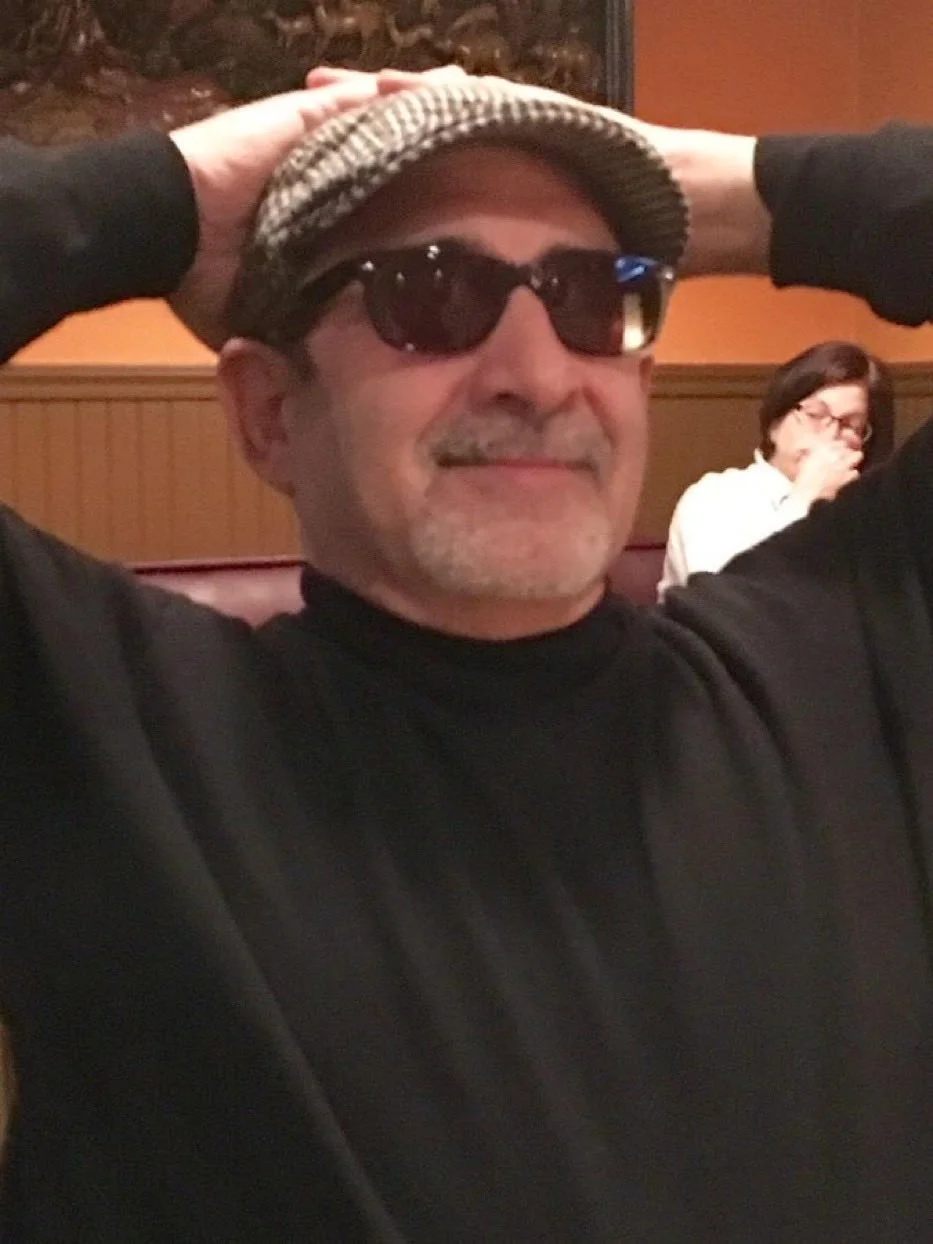
Photo of L.F. Graubard
BIO: L.F. Graubard writes existential-noir creative nonfiction and fiction about addiction, institutional absurdity, and the American shadowlands. His work appears in ExPat Press, and his story “The Insecticide Parade” is forthcoming in SmokeLong Quarterly (March 2026). A former jazz musician, he writes at the intersection of trauma, dark humor, and revolt.