jakarta jog
by Zary Fekete
My first jog in Jakarta begins quietly, as if the city has not yet remembered how large it is.
I step out from the hostel in Cikini and onto a boulevard still damp from last night’s rain. It is only a little after five-thirty. Jakarta, they say, is one of the largest urban conglomerations on earth…a sprawling constellation of cities that have slowly grown into each other until it is hard to say where one neighborhood ends and another begins. Thirty million people or more, depending on where you draw the lines. Yet at this moment the scale of the place hides itself. The city is still drowsy.
A jog like this is a way of asking the city how it wishes to be known.
A few men lie stretched across benches and concrete stoops, enjoying the final seconds of sleep before the day rises with the sun. One sits up as I pass. We make eye contact. He nods gently, places his right hand over the left side of his chest, and bows slightly. It is a greeting that seems to come from somewhere deeper than politeness. A gesture that says: I receive you with my heart.
I nod back, raising my own hand to my heart, unsure if I have performed the ritual correctly.
I wonder, as I continue down the boulevard, whether this is something one learns or something one is given.
The cats appear almost immediately.
Jakarta seems full of them. Small, rain-damp, wandering creatures with tails like punctuation marks curling through the early light. In some cities stray animals carry a sense of danger or neglect, but here the cats seem quietly accepted. A shopkeeper pours a little milk into a plastic lid. Another man scratches the back of a gray kitten who climbs onto his shoulder as if it has always belonged there. The animal’s tail is bent in several strange angles, but it flicks eagerly back and forth, proud as any palace cat.
In a Muslim culture cats carry a different reputation. Clean animals. Gentle companions. No one seems surprised by their presence. They drift between the feet of pedestrians like small ambassadors of the morning.
A turn down a narrow street and suddenly the river appears.
It is not a grand river the way a map might suggest. It moves through the neighborhood like a long thought, winding and slow, carrying the faint smell of the city’s pipes with it. This is part of the Krukut River system, one of the many waterways threading through Jakarta’s dense kampung neighborhoods. In a city that floods easily and expands endlessly, these canals are both lifelines and boundaries.
Children huddle beneath small gazebos along the bank, their faces illuminated by the soft blue glow of cell phones. The sound of electronic game music spills into the humid air…no different from the sounds that drift out of bedrooms in Beijing or Tokyo or Minneapolis. Even here, beside a sluggish tropical river, the same digital worlds are unfolding.
What surprises me are the bridges.
They are not official bridges, but they are everywhere. I see small pontoon-like walkways that residents have assembled themselves. Wooden planks, metal sheets, bamboo poles lashed together. They stretch across the water at unexpected angles, shortcuts built by people who decided the city’s official paths were not enough. A man walks across one carrying a sack of vegetables. Another pushes a motorbike carefully over the narrow boards.
Jakarta has adapted itself just like the river. It bends.
Along the banks, garbage piles against the concrete walls like small accidental sculptures. Houses lean forward over the water as if eager to feel the cooler breeze rising from the current. Laundry hangs from windows. Someone is already boiling noodles over a small flame.
For a moment it feels like the river is less a boundary than a conversation between two sides of the neighborhood.
Five-thirty is the perfect hour for a jog here. Soon the sun will climb high enough to erase every shadow. Near the equator, noon has a peculiar cruelty. The sun stands directly overhead and the streets lose their depth. Buildings flatten. The heat presses down with an almost physical weight: 100 degrees and climbing.
But early morning belongs to the sleepers, the sweepers, the street vendors preparing their carts.
And to a jogger.
Chickens scatter from my path in feathery bursts of irritation. One finds refuge in the lap of a small child who cannot be older than three. The boy sits cross-legged on a doorstep with the calm authority of someone who has all the time in the world.
Every few blocks a mosque appears, immaculate and bright against the waking streets. Someone is sweeping the courtyard with slow deliberate strokes. The gates are open. They seem to remain open always, as if the building itself is quietly reminding the city that prayer is never very far away.
The man with the broom sees me. Again a hand to the heart, this time with a deeper nod. Eager, I follow suit.
Later the call to prayer will ripple through Jakarta’s concrete corridors, echoing from one loudspeaker to another. But for now there is only the soft scratch of brooms and the murmur of early conversations.
The traffic begins to gather.
Motorcycle taxis…Grab drivers in their unmistakable green jackets…start weaving through the streets like schools of fish navigating a coral reef. Jakarta moves on motorcycles. Tens of millions of people flowing through a city that feels less like a place and more like a living organism. When I want to cross the street, all I do is step forward, and instantly the motorcycle river parts and begins to flow around me.
Some of the riders are heading toward glass towers in the financial district. Others toward malls that seem to multiply endlessly across the city. Jakarta is Indonesia’s economic heart…banks, factories, government offices, trading companies…all pulling people in from satellite cities like Bogor, Tangerang, and Bekasi. Every morning the population surges inward like a tide.
But here along the river the rhythm is slower.
A man finishes his tea and looks up as I pass. Again the hand to the chest. Again the slight bow.
This time I do not hesitate. My hand rises more quickly. No more imitation. I now recognize both the man and the greeting.
The city is waking. Thirty million lives preparing to unfold. Yet for a moment the river holds the quiet together…the cats slipping through alleys, the children under the gazebo, the improvised bridges gently swaying as neighbors cross.
Jakarta, the enormous city, pretending for a little while longer that it is still just a neighborhood.
And for a moment, running through it, I feel as though I have been briefly admitted into its heart.
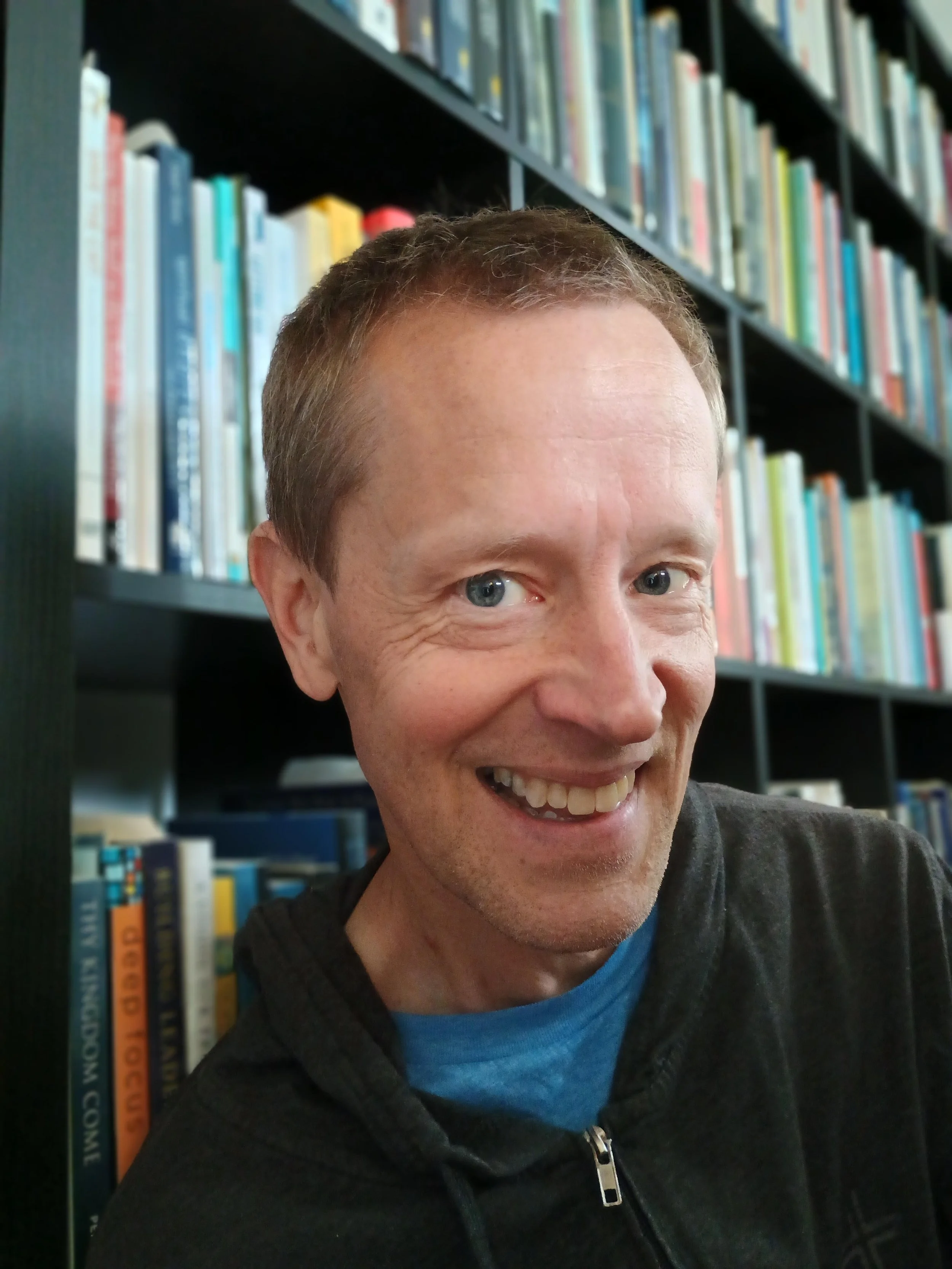
Photo of Zary Fekete
BIO: Zary Fekete grew up in Hungary and currently lives in Tokyo. He has a debut novella (Words on the Page) out with DarkWinter Lit Press and a short story collection (The Written Path: A Journey Through Sobriety and Scripture) out with Creative Texts. He enjoys books, podcasts, and many many many films. Twitter and Instagram: @ZaryFekete Bluesky:zaryfekete.bsky.social