by Lamont Neal
I didn’t know exactly what I was looking for when I began tracing my maternal lineage. That side of the family was rooted in rural Ohio. They and the largely white families surrounding them lived on small farms, often supplementing their diets through hunting and holding additional jobs to make ends meet. Though my mother has spent most of her life in cities, she still carries her country upbringing with her. Her mixed ancestry is unmistakable. Growing up, I often had to explain to classmates, “No, my mom isn’t white.” Barely five feet tall in her younger years, and a little less now, she built an entire career as a nurse, a profession far more physical than many people realize. Perhaps the two greatest things I inherited from her are my love of books and an understanding that the African American experience is broader and more varied than the urban narrative that’s held the microphone for so long.
Growing up in a small town in southeastern Ohio, I always had a sense that this side of the family had been free for a long time. But I hadn’t paused to imagine what that freedom looked like before the Civil War. Like many, I assumed emancipation was the starting line, that they migrated northward, found more hospitable land, and settled into liberty.
But the deeper I dug, the more contradictions surfaced. One free person after another. Landowners. Literate heads of household. People living outside the bonds of slavery long before 1865. And alongside that freedom, a clear mix of African and European ancestry. DNA matches confirmed it, some relatives had no idea they carried African lineage. Others had always known it, felt its impact in their lives daily.
Most of these paths began in Virginia, winding through the Appalachian corridor and into Ohio. But before that, I found fragments, stories of indentured servitude, early slavery, and the emergence of free people of color. One woman, born in colonial Maryland in the early 1700s, transitioned from servitude to freedom and raised children, including one (Basil Norman) who would later serve in the Revolutionary War. Their lives, documented in census records and military rolls, raise questions. Did they feel patriotic? Did they believe in the promise of the country they fought for?
There were others, individuals born in England who crossed oceans and racial boundaries to become part of the free Black population. Families living in Massachusetts and Ohio in the late 1700s and early 1800s, listed in census records as “free colored persons,” living among white neighbors. Their names appear in official documents, but their stories are harder to find. Still, they lived, loved, endured, and family spread far and wide from their roots.
These weren’t anomalies, they were part of a quiet lineage of freedom, often erased or misunderstood. And yet, freedom didn’t guarantee paradise. It didn’t guarantee safety or belonging. These ancestors were better off, yes, but they weren’t fully embraced. Their freedom came with caveats, legal, social, spiritual. They were the early recipients of discrimination in housing, employment, and marriage. The canaries in the coal mine. You have your freedom, now can you have your dignity?
One couple, photographed in the late 1800s, stood proudly together, a free Black man and a white woman orphaned young. Their children were often listed as “mulatto,” not Black. That photo is bold, a quiet defiance, a vision of love across boundaries. It reminds me that freedom isn’t just legal status. It’s the ability to choose love, to build family, to be seen.
Even now, I wrestle with what freedom means. Emotionally, socially, spiritually. I’ve had access to education, mobility, and voice, but I’ve also felt the weight of being defined, confined, and questioned. My ancestors lived far from the urban centers that often define Blackness. But their awareness of identity was deep, layered, and unyielding. I still bristle when people try to define Blackness as a monolith. My family’s story refuses that simplicity.
And then there are reminders that freedom without access is just another form of limitation. One man, listed in a mid-20th-century census as a Black laborer in southern Ohio, had a personal estate value of $150 and was unable to read or write. He was free but not equipped. Visible, but not empowered.
Perhaps I’m not so very different from my free ancestors.
I’m free from many of the modern shackles that replaced the iron ones. I don’t live in poverty or in neighborhoods punished more for their demographics than their reality. The industries and employers haven’t fled my area, forcing me to travel long distances just to survive. I wasn’t denied a good education due to a lack of funding and a shortage of quality teachers.
I enjoy privileges, not as stark as the difference between slavery and freedom, but certainly the comforts of a more secure, more navigable life. Still, like my free people of color ancestors, I live with the knowledge that the space between safety and suspicion can collapse in an instant. It only takes one fool with a gun to decide I look suspicious. One bad police officer to decide I don’t belong in the neighborhood I’m walking through. That’s all it takes to remind me how quickly I can be stopped, questioned, or worse. I enjoy my privileges, but part of the deal is that they must often be enjoyed quietly, and they’re always contingent. My education means little if I’m not allowed to speak before others have already made up their minds. “Micro-inequities” might be a buzzword, but they’re also a daily reality.
Free people of color often don’t get included when speaking of the broader African American narrative. They are an appendix entry of people how followed their own trajectory, navigated their own path.
They were free, but not always safe. Visible, but not always valued. They were free in this country to enjoy the privileges of their time, freedom of motion, freedom to marry, freedom to own property, and freedom to pursue some level of happiness. I’m still exploring what that freedom meant, meant and what it didn’t.
What does my better off state mean today and what does it not? Because even today, even after all this progress and advancement, I am occasionally reminded that sometimes that freedom still comes with an asterisk.
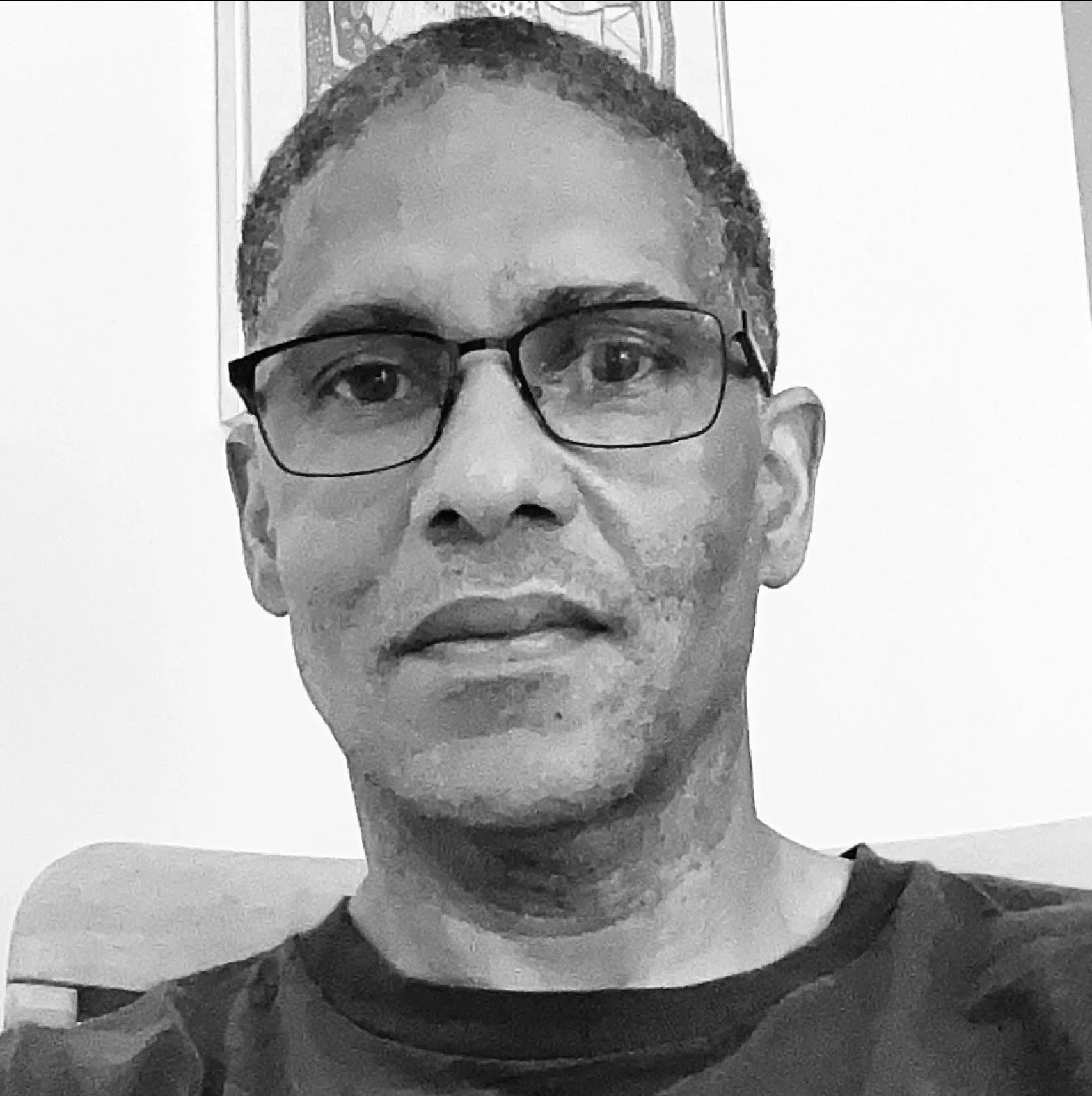
Photo of Lamont Neal
BIO: Lamont Neal is a memoirist, philosophical storyteller, and African-American father whose writing explores identity, transformation, and emotional legacy. His memoirs For Chloe and A Thinner Life capture moments of profound self‑discovery, from a nine‑year weight loss journey as a metaphor for reclamation to letters written to his daughter about love and inheritance. An I.T. professional with degrees from Truman University and the University of Missouri–St. Louis, he is also a lifelong student of history, martial arts, and boxing. Through his work, Lamont shares his journey of self‑discovery, believing he is not alone, and that others may find resonance in his story.