by Cat Dixon
Death Anniversary
It wouldn’t matter if it was the 5th or 6th,
anniversaries weasel up to the table,
knock down the Thomas Kincade wall calendar,
and strip me bare. I lack tool or prayer to fix
the torn valve or repair all that has gone unstable.
My children, no longer children, flounder
like kits in a bucket held by a gardener.
No, that’s my hand on the hose and my arthritic knees
in the swampy grass. My aim’s to set them free
as if tender breath should be recalled by the loaner.
Requests I Wish I Would Voice Before My Mother’s Thanksgiving Visit
Don’t comment on my weight. Yes, I’ve been walking each day, outside or on the treadmill. Yes, I’m still vegan. I eat a lot of humus, spinach, and beans. The fat clings to me like a baby monkey to her mother and I won’t starve or inject myself to get this monkey off my back.
Don’t comment on my hair. Yes, it’s frizzy. Yes, it’s thinning. This brown cloud, tormentor ever since I can remember, refuses to be tamed and I won’t spend hours blow drying and straightening it with heat only to damage its strands into brittle webs that appear to be one breeze away from disintegrating.
Don’t comment on my face. Yes, the age spots continue to bloom like spreading mildew in a pond. Yes, the skin is dry and flakes off my cheeks and chin and speaking of it will not prevent its avalanche. Yes, even at this age I still have acne. No, I didn’t have time to cover it up with Clinique.
Don’t ask why my daughter’s face, neck, and arms are red—her eczema flares at this time of year and its growing leather patches are unstoppable. Yes, she’s been to the allergist and dermatologist and we’re waiting for insurance approval for the shots which will cost thousands—perhaps they’re golden tubes unlocking the Midas touch.
Don’t ask why my son isn’t here. You know why.
Don’t ask why I haven’t called more often. You know why.
Don’t ask if I’m happy. You know I’m not.
Every Day I Have Lunch with Anton
His white cardboard box,
labeled with his name
and the funeral home logo,
does not list his birth or death
dates so there’ s no way
to know his age, but his
cremains were here in this
office before I started. His name
isn’t familiar. There’s no
way to know how long he’s
been sitting at this table
or how many people have
shared their lunch hour
with him—breaking bread
with an abandoned man
whose family has left him
with no urn, no vault, no home.
It’s not my story to tell, but I was downtown
on 13th and Nicholas, to visit Hot Shops,
a local arts center—three stories full
of paintings, knitted scarves, fragile vases
and baubles, pretty earrings and greeting cards.
The parking lot was full, so I went a couple
blocks north and found dozens of tents, boxes,
and lawn chairs; clothes strung up in tree branches.
It was February and against the cold: large
black trashcans full of fire—people huddled
around them, and I thought naively why are they
camping here in the middle of the city, but no,
this was their home—a few hundred feet
from the Siena Francis House and just blocks
from the artists and sculptors who sold
their work to those rich enough to spend
their money on decorative bowls for dining
room cabinets or large paintings to hang
in long hallways leading to master bedrooms.
I hesitated, but I did leave my car and walk
past the people. They said nothing, held no signs,
but one man—probably close to my father’s age—
made eye contact, and I noted his were blue.
His bushy eyebrows were speckled with pepper,
his gray gloves held a 20-ounce Pepsi bottle,
and his dark green coat was unzipped—perhaps
the zipper had come off its track or his bulky
sweater and hoodie made the coat too tight.
What could I do? Go home and forget
my artist friend I had promised I would
visit today? Run to this man and give him
the $40 in my wallet, apologizing for owning
a coat that fit? Perhaps take the trash littering
the grass, set it on fire in the can, and ignite
my hair, my clothes—a blaze; protest the city
that would rather spend $400 million on a three-mile
streetcar than build decent shelters or address
the mental health and addiction epidemics?
Of course, I did nothing. Of course, I walked by,
turned my head and attended the art show.
Of course, I bought a trinket and took it to my car,
and then home to place it on the shelf
on the living room wall, where it would gather dust,
and eventually—decades and decades later—
it would be sold at an estate sale organized
by my daughter or chucked into a rented dumpster
as she cleaned out the mess of my life and house.
All hail death that ends the hum and drone of dust
and extinguishes guilt and sorrow until it doesn’t.
All hail wind that fuels the fire in trashcans.
All hail snow that covers heads and tents in white.
O, such a heavenly sight.
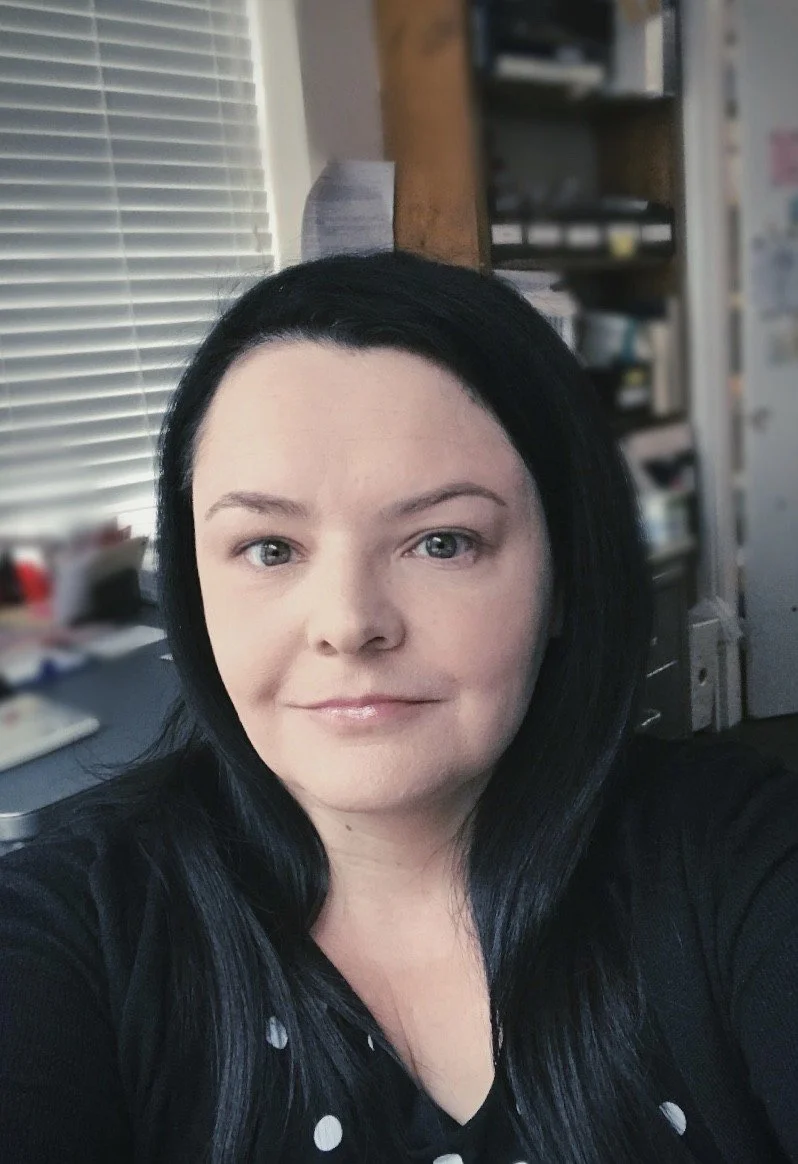
Photo of Cat Dixon
BIO: Cat Dixon is the author of What Happens in Nebraska (Stephen F. Austin University Press, 2022) along with six other poetry chapbooks and collections. She is a poetry editor with The Good Life Review. She works full-time at a funeral home and teaches creative writing part-time at the University of Nebraska, Omaha.