by Neil Randall
One ferry crossing in the dead of night.
Many furtive, darting eyes scrutinised them in the dark, cramped confines of a cargo hold. Alien bodies pressed tightly together, potent sweat, stale urine, fresh human waste. Whispered words, slow yet perceptible movement. Threatening, ever nearer. He held her close to his chest, and told her not to worry.
“Don’t worry.”
Choppy waters. A raging storm. Thunder rumbled overhead. The flimsy vessel buffeted by high winds and powerful waves. The illegals struggled to keep their balance. Groping, clasping, filthy hands fell all over them, with despairing not malicious intent – or so they hoped.
Ten hours later.
They were herded off the boat. Pushing and shoving, the captain barked at them in different languages. A sliver of light from a half-moon glinted off the barrel of a machine-gun. She gasped. Again, he held her close, and told her not to worry.
Their connection met them on the beach.
“This way. The van is waiting for you.”
Two border crossings in twelve hours.
A bumpy, uncomfortable ride over rutted, uneven roads. Cold, shivering, huddled close together for warmth. Tepid water from plastic bottles. Hard, stale bread. Sporadic sleep. Juddering awakenings. Raised voices. The van slowed to a stop. Broken English. The side door flew open. Bright light from the morning sun dazzled their eyes.
“Get out, get out,” demanded a tall, imposing border guard with a machine-gun hanging from his shoulder.
They did as instructed.
Feet scrunched against snow-covered ground. Eyes blinked and slowly adjusted to the startling daylight, the wintry scene, vast barren fields blanketed brilliant-white, far-off snow-dusted mountain ranges. Behind them, a long queue of vehicles. Exhaust fumes drifted on a light yet chilly breeze.
“Passports.”
The driver interceded, stepped forward. “No, no, these travellers do not need to show any documentation. Come, my friend. I have something for you. A gift. From one brother to another.”
A case of vodka. A brown envelope bulging with American dollars.
Other guards strolled over. Opened a bottle. Passed it around. Tangled breath cast cobwebby patterns in the air. Laughter. Long, hard. Cigarettes lighted. Impatient car horns honked. Guards cursed and flashed obscene gestures. Continued to drink, smoke, laugh, joke.
Another long drive.
Colder still. Sleep wouldn’t come easy. Drifting in and out of consciousness. Holding each other tight all over again. Flaky lips, dry mouths, rumbling stomachs.
Another stop.
More voices. No demands to exit the vehicle this time around. The jingle of bottles clinking against each other. More words, conversational, convivial. Peals of laughter. Footsteps. The driver’s side door opened and slammed shut. The engine rumbled back into life.
A much shorter drive.
Twenty or thirty minutes, only over far rougher ground, even than before. Undulating. Steep ascents. The engine struggled. Tubercular rasp followed by a clunking change of gear.
The van rattled to a stop. The doors up front clicked open and slammed shut. Padding footsteps. The side door eased open.
“Come, come,” said the driver, smiling and beckoning them to disembark. “We arrive. We at camp now.”
One overnight stay in a forest.
Flickering flames from a campfire. Big pot of food, simmering away. Delicious, meaty aromas. Other men patrolled the clearing on all sides. Armed. Statuesque. Off in the distance, the rumble and pounding of artillery shells. Every now and then, a massive explosion lit up the night sky.
“Ah, friends. You arrive at last.” A big man approached them, bushy beard, open arms, dressed in military fatigues. “It is, I, Tomaz, your tour guide. In a moment we will serve you some wholesome food. I expect you are fatigued and ready for a good meal. Alas, the journey was never going to be a pleasant one. You are, after all, embarking on a far from standard vacation.” He threw back his head and laughed. “Please, sit down, relax.”
Heat from the fire. Delicious hearty food warmed them from the inside out.
“We are approximately ten kilometres from the city centre,” said Tomaz, in between forking up pieces of rich delicious meat into his mouth. “The military situation is precarious to say the least.”
“The rebel insurgents, you mean?” he asked.
“No, no, no.” He wagged the forefinger of his free hand from side to side. “Do not believe everything you read in press or see on television news, especially in a so-called ‘civilised’ country such as yours. The guerilla units and separatist armies are killing and destroying with the full knowledge and consent of the government. This region is now completely lawless. There is no rebel uprising, just civilians being slaughtered, en masse, each and every day. You know the history of our region. If you didn’t, you wouldn’t be here. Blood feuds, centuries-old territorial disputes, religious differences. We’ve always been a melting-pot of belief systems. For a time, a powerful leader kept things under control, and we lived in a degree of harmony.”
“And now?”
“Now?” Tomaz hunched his shoulders and placed his empty bowl on the ground. “You will see for yourself tomorrow. I’m sure the city streets, while in ruins, will offer everything you need – and more.
“The Good news. The items you requested to make your vacation memorable have arrived safely.”
“Here?” he asked.
“No, no.” Tomaz shook his head. “Naturally, we couldn’t risk high-ticket items of that nature falling into the wrong hands. Everything has been transferred to your accommodation. Which, I might add, is under twenty-four-hour, around the clock guard.”
“Excellent.”
“Better still, you have an incredible vantage point of the historic market square – or what is left of it. Each morning, civilians gather there to receive aid – food parcels and medicines. Each morning, the guerrilla units open fire on them, indiscriminately. The locals have no choice – either starve, die of a minor infection or ailment, or risk a bullet to the back of the head.”
“Where do the units come from?”
“All over the place. They hide in the shells of former restaurants and cafes, semi-decimated residential blocks, just like the one you will be staying at, or perform deadly ambushes from the back of military vehicles. As I said, you will see all of this for yourself.”
“We look forward to it. And would like to thank you most sincerely for all your help. It’s not every day that you’re presented with such a unique opportunity.”
“You are most welcome.” Tomaz got to his feet. “But we must rest up now. We move out at 0600 hours. Grab some sleep. You have an incredibly busy day ahead of you tomorrow.”
One (brief) night under the stars.
Sleep came easy now. They were both exhausted. The flames from the campfire burnt down to barely glowing embers. A wolf howled. The guard on watch nudged a colleague awake with the toe of his boot. A change of shift. The forest was dark and silent.
One ten-kilometre drive in the back of a military jeep.
The main highway into the city was in a terrible state. Burnt-out vehicles. The twisted debris from a helicopter, presumably shot down. Abandoned tanks and armoured cars. The road surface rutted and broken up by heavy shelling. Corpses in varying degrees of decomposition, some no more than charred, barely recognisable human remains.
“This damn civil war has raged on for three long years,” Tomaz said over his shoulder from the passenger seat up front. “The infrastructural damage alone will take many generations to put right. But what it’s doing to the hearts and minds of the people will never be fixed. Believe me. Hatred breeds hatred.”
At the main checkpoint, they were hailed down by a guerrilla unit in military fatigues and red berets. On recognising Tomaz, they lowered their semi-automatic machine-guns, and saluted him. Getting out of the jeep, he handed the men a bottle of clear spirit and another brown envelope stuffed with banknotes.
“We go to market square,” he said to the guards. “You can provide escort?”
They nodded.
A few moments later, two riders on military motorcycles appeared. One of the riders gestured for Tomaz’s driver to follow after them.
The further they ventured into the city, the starker the devastation. Many buildings reduced to rubble, others windowless shells, only partially demolished. Broken concrete and twisted metal piled up at the sides of the road. Raggedy, dirty-faced children rummaged around the wreckage; pitiful street dogs with ribs protruding through their moulted, scabrous coats scampered off in fright when hearing the rumble of approaching engines.
“Here we are,” said Tomaz, as the jeep and the motorcycles pulled over to the side of the road. They were parked outside a block of flats, remarkably well-preserved from the bombing raids and incessant shelling, especially in comparison to the rest of the buildings close by.
“Follow me.” Tomaz marched over to the main entrance. “As I’m sure you appreciate, we will not be able to use the lift. This building has no electricity. The sixth floor, unfortunately.”
Check-in at destination.
There was no furniture in the apartment. Most of the windows – glass and frames – blown out during the fighting. The once varnished floorboards cracked and broken in places, exposing zigzagging sections of pipework and cables. The peeling walls and ceilings covered in ugly brown and green stains. A horrible, pervasive damp smell hung in the air.
“Please, do not be dismayed by the state of the place,” said Tomaz. “It is perfect for your needs. Come this way. Let me show you the terrace.”
The terrace, a relatively small, narrow space of around ten by six feet, looked out over the ruins of the market square. The cupola of the main church had been blasted away, as had one whole side of the building, the clock tower just a pile of bricks and rubble, the stores, restaurants, and cafes, empty shells, some with boarded-up windows.
“As you can see,” said Tomaz, making a sweeping right to left gesture, taking in the entire square. “You couldn’t wish for a better location. This is exactly why our premium package is so sought after.
“Now, let us return to the main living space. I will show you the equipment you requested.”
The driver crouched in the centre of the room and opened a large, reinforced suitcase.
“Here,” said Tomaz, ushering the guests closer. “We have provided the Kalashnikovs you asked for, with more ammunition than you will ever require. Two Uzi-sub-machine guns, though they may not be particularly effective from this range. High-calibre hunting rifles. Hand grenades. Tear gas. Service revolvers. Binoculars. Two pairs. Military fatigues. And the pièce de resistance – your very own rocket launcher.” He lifted it out of the case and balanced it on his shoulder. “Lightweight, easy to use, yet state-of-the-art and incredibly destructive.”
He handed the weapon to the couple.
“Now, I know you are fully aware of the risks involved. If you get picked up by the authorities and arrested, you are very much on your own. There is nothing to trace you back to me or my associates, bar this walkie-talkie device.” He waggled it around in the air. “If at any time you feel under threat, or want to terminate your vacation with immediate effect, contact my people through this channel of communication. If we can help you, we will most certainly do so.
“All being well, you will be collected from outside this apartment at 0500 hours in seven days’ time. There is a chill box in the kitchen area, full of basic supplies, more than enough to sustain you for the duration of your stay.
“I will leave you now. I do hope you enjoy your time in our wonderful country.”
War tourism – Day One.
The couple changed into the camouflage gear, blackened their faces with shoe polish, put on standard armoured military-issue helmets, and loaded the Kalashnikovs. Click, clack.
“All set,” he said, grinning and squeezing her hand. “Let’s reconnoitre the main target area. But it goes without saying that we shouldn’t open fire until other hostile actors on the ground attack the civilians first.”
“Roger that, Lieutenant.”
They walked out to the terrace, ducked down low on their haunches, peered over the rail, and surveyed the empty market square.
“No sign of any activity, Lieutenant.”
“Patience, Corporal. We’re playing the long game, remember?”
The first civilians arrived in the market square shortly after eight a.m. Predominately, a group of hunched-over old women in peasants’ rags and with kerchiefs covering their heads, pushing shopping trolleys over to the site of the former clock tower, followed by a raggedy band of children, the likes of whom they’d seen on their approach to the city centre.
“Sir, have eyes on relief vehicles,” she said, following their progress through binoculars. “Three large container trucks. Looks as if there’s two operatives in each cab – a driver and a passenger. White-coated. Possible Médecins Sans Frontières.”
The three vehicles pulled to a stop. The operatives disembarked. Leaping to their feet, the old women and children raced over to rear of each truck.
“More civilians on the move, Lieutenant. Dozens are making their way across the square now.”
Before he could provide visual confirmation, the first volley of machine-gun fire broke out from the other side of the street, cutting down a great swathe of civilians as they attempted to reach the aid workers.
“I’d say that’s our cue to join in, Corporal. Take aim, fire when ready.”
More gunfire sounded from ground level. More civilians fell in crumpled heaps; others tried to shelter behind the trucks. But to no avail. Shooters were situated all around the market square. Nowhere was safe.
“Let’s do this thing.”
They opened fire from their sixth-floor vantage point, cutting down a dozen or more old women and children. Within seconds, the corpses and bodies of those severely injured were piled two or three deep in places. Blood pooled across the broken concrete. Some of the wounded tried to crawl for cover, dragging themselves acorss the debris. Still, machine-gun fire rattled out from all over the square. Armed guerrillas could be seen moving in closer to the civilians and aid workers, peppering the sides of the trucks with incessant volleys of fire, tearing the canvas covering asunder, bursting the thick tyres, and shattering the windscreens.
“Launch a grenade, Corporal. I’d say we’d have a good chance of inflicting maximum casualties now.”
Ducking down, they both picked up a grenade, removed the pin, and tossed the deadly projectile into the heart of the scene of carnage.
Boom! Boom!
One of the containers burst into a fireball of orangey flame; civilians and guerrilla fighters were thrown meters into the air; limbs and heads blasted from torsos, high-pitched screams rang out, thick smoke billowed, chaos, pandemonium.
They turned and stared deep into each other eyes, chests heaving, big wide ecstatic smiles plastered across their faces.
“This is what’s it’s all about, darling.” They kissed passionately. “There is no thrill in the world like it.”
“So exhilarating! I’ve never felt so alive!”
“Let’s get back to it. We haven’t even started yet!”
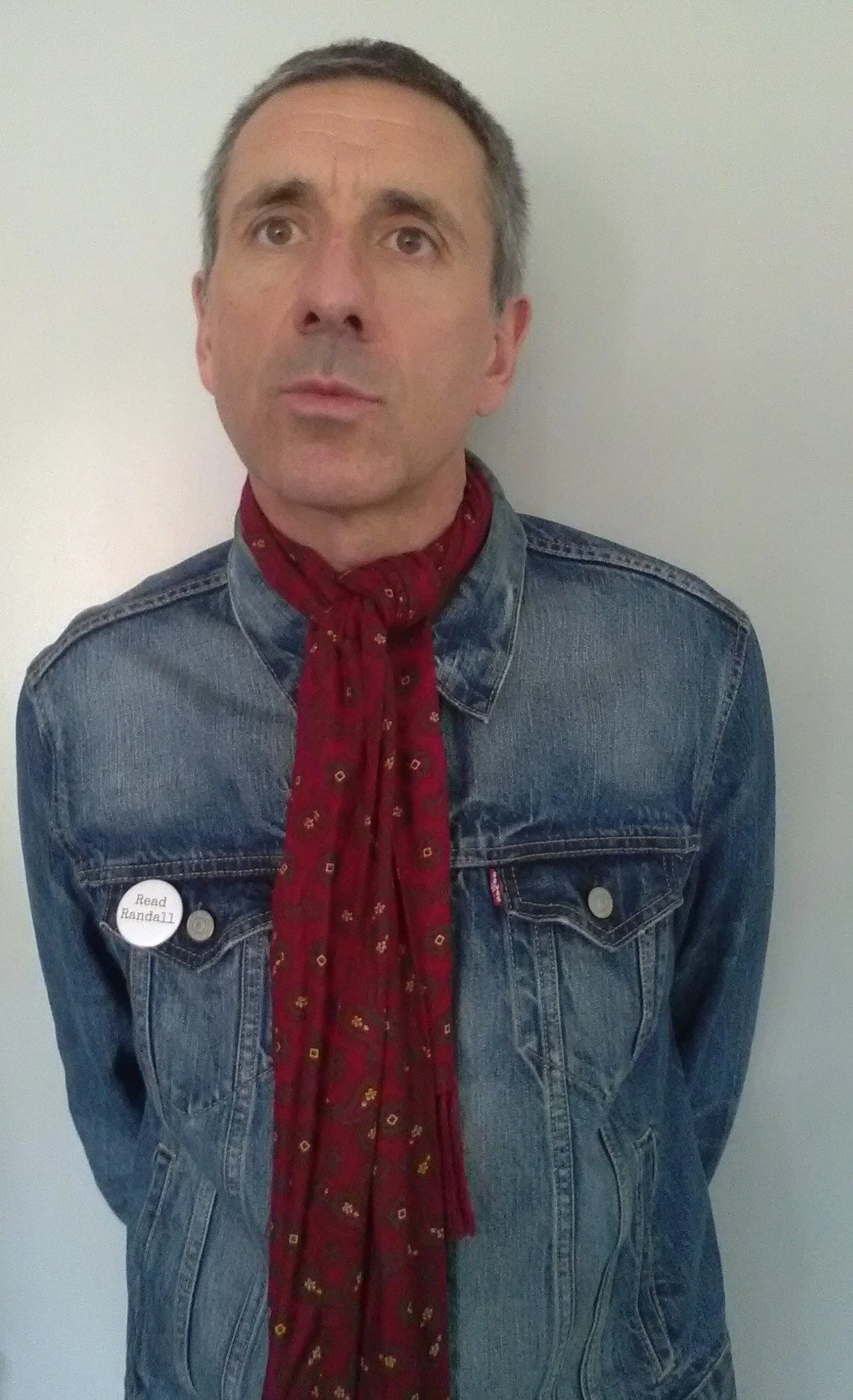
Photo of Neil Randall
BIO: Neil Randall is a novelist and short story writer. His latest books, The Professional Mourner (Dark Winter Press) and The Belgrade School Shootings (Alien Buddha Press) were released in May of this year. His shorter fiction and poetry have been published in the U.K., U.S., India, Australia, and Canada. Further news and samples of his work can be viewed at: https://narandall.blogspot.com/, including links to his new online review show Randall Reads…where the author reviews a book each week that made a big impression on him, and help shaped him as a writer.