matches
by Alex Pugsley
“Your father thinks he’s so smart. Sending us all over creation. Do I know where the Malton airport is? Not bloody likely. But your father, I’ll have to put him on a shorter leash, if we ever see him again.”
Will’s mother was in the front seat driving and shouting at his father, almost as if his father were with them, as if his father could hear. Will was in the backseat, knowing his father had done nothing wrong, though she was blaming him, shaming him, trying to tame him, maybe, but the leash she mentioned was in her head, just as his father’s bad behaviour was in her head, as so many things were in her head, ghostings of trauma from summers long gone.
“I suppose we could visit your Grampy in Oakville,” his mother said, rolling down her window. “Would you like that?” She spat into the street. “See that old tyrant?”
They were lost. They’d been lost for over an hour and were somewhere in Etobicoke. They had become lost when his mother took the Lakeshore instead of the QEW. They had stopped at a series of motels, the White Swan, the Sunshine Motor Court, the Hillcrest—names which Will collected in memory—and from the Hillcrest his mother had telephoned the housekeeper to let her know, should Will’s father call, that they would be late, but that was some time ago, thirty minutes or more.
They were on the Queensway now, where Will stared longingly at Tom’s Dairy Freeze, a window-serve shop that sold ice cream where once his family had been happy, but he knew not to talk of ice cream now, with his mother in this mood.
“Are we going west?” she asked. “The lake is south, I know that, but I don’t see the lake. And where’s the sun? Do you see it?”
When she had been released from hospital, back in March, Will had been told not to “rattle” her, that was his father’s word for it, and so he had tried, on this entire drive, to be quiet, and quietly supportive, but his mood was deteriorating. Four years ago, when he was six, he had been an impulsive little boy, prone to temper tantrums, smashing things, crashing things, but he had changed himself, contained himself, and now often saw himself beside himself, as he saw himself now, as if he was a boy in the backseat screaming.
“Mommy’s going to smoke again, Sweetheart,” she said. “But I’ll leave the window down.”
She tapped a cigarette against the steering wheel and with her right hand pushed the car lighter into its socket. When the lighter popped out, she took it and lit her cigarette on its shining red coils. There was something frantic about these motions, something that reminded Will of the week she got out of the hospital, when, driving the Impala, she had stopped and started so fast it was as if she was making the car dance. That was his father’s phrase for it: “Mum’s making the car dance.”
Will sat silently, miserably, overwhelmed by the smell of his mother’s cigarette, the gasoline fumes from the overheating engine, and a feeling that his underwear was dampening with sweat. All of this filled him with car sickness and he was about to cry out when his mother jerked the car to a stop at the Canadiana motel.
She flounced out of the Impala—headscarf, batik blouse, bell bottoms—and to Will it seemed as if his mother had miraculously transformed into a sprightlier version of herself. She moved toward a man, the motel owner, whose stance and demeanor suggested unsavouriness. Will decided the man was a pickpocket, Will had a morbid fear of pickpockets, and even though he was relatively far away, Will transferred his wallet from his pocket to his right sock. Then, to be safe, he tugged at his pant cuff to make it look as ordinary as possible.
Outside, as the smirking motel owner was relighting Will’s mother’s cigarette, an airport limousine pulled up, sunlight winking off its windshield, and Will’s father appeared, bravely smiling, as if this glorious afternoon, family reunion, and roadside get-together all matched each other in splendour…
This is a story of Rosedale and the Republic of Rathnelly. It takes place in the 1970s with music by Joni Mitchell and designs by Milton Glaser. Think Shearling coats and beaded curtains, wooden golf tees, Chargex cards, Farrah Fawcett’s swimsuit, Black Cat Bubble Gum, The Electric Company, and, in restaurants and motel lobbies everywhere, vending machines dispensing packs of cigarettes and books of matches. Will’s parents smoked Benson & Hedges. His father was a senior executive for Bongard, Leslie & Company, an investment firm, and always travelled with two suitcases, one filled with clothes, the other with cartons of cigarettes. When the cigarettes were smoked and this suitcase empty, Will’s father would pack it with gifts for his family. From London, he had brought a Laura Ashley dress for Will’s mother and Clarks lace-up shoes for Will.
“What do you think, sport?” his father asked. “They’re a little big but they’re for school next fall. Now how about bringing up some wood for a fire?”
The cords of hardwood and bundles of kindling were down in the basement in the old coal room. The basement was unfinished, it was full of earthen smells and musty cobwebs, but Will was glad to help his father set the fire, it was something they did together, Will packing the canvas carrier bag with kindling and split logs, heaving it up the basement stairs to the living room, and his father kneeling to build the fire.
Into the fire irons Will’s father would place bunched-up pages from the newspaper, arrange the kindling in a square, and top it all with split logs. This assembly his father would light with one of the long wooden fireplace matches kept in a tall box on the mantle.
In later years, when Will recalled that house on MacPherson Avenue, he would remember with great fondness its design and arrangement—the polished silverware in the top drawer of the mahogany credenza, his mother’s cashmere sweaters folded in tissue paper in an upstairs closet—but it was those long wooden fireplace matches, their matchheads elegantly various in hues of scarlet, lavender, and lime, which best evoked for him his childhood and a sense of what he might become.
His new shoes were saddle-brown with dark laces and, after dinner and The Price is Right, Will carried them upstairs to his bedroom and set them on the closet floor next to his Puma sneakers, rubber boots, and sheepskin slippers. He liked to keep things orderly. He shined his shoes, folded his clothes, and always laid-out the next day’s outfit. Tomorrow, he would wear his newest jeans and his favourite polo shirt. It was soft-knit cotton, cornflower blue, with a shirttail much longer in back than front. Will had good thoughts when wearing this shirt.
Tonight’s pajamas comprised a bright blue top and navy blue bottoms. He had a companion pair in butterscotch and brown which, for some reason, he had worn only once.
He turned down the covers, got smoothly into bed, and, for a few minutes, counted the repeats in his toy soldier wallpaper. Then he switched off the bedside light. As he gazed at the green glowing numbers of his clock radio, wondering at all the shifting songs it contained, he wondered, too, at the changing scenes of the day, the expedition in Etobicoke taking on a folkloric quality. It was folklore his father would want him to disregard, and an afternoon his mother would probably not remember, and, as he fell asleep, Will began to wonder if it had really happened at all.
On Thursdays, Consuela the cleaning lady came. She wore a starched white tunic and was always kind to Will. He often followed her from room to room, watching as the bathroom became immaculate—soap-catch wiped of gunky residue, mirrors gleaming, sinks spotless. Downstairs, Will liked the look of the vacuumed rugs, the spruceness of the baseboards, the freshened bookshelves, the tidied magazines, the smell of cleanser in the air.
In the kitchen, he admired the dampness of the just-mopped floor, the black and white tiles like beautifully alternating realities. Thursdays were like starting anew, as if everyone had been given a fresh start.
Today’s cleaning was in advance of a visit from Mrs. Stanhope. There was a variety of mothers in Will’s life—Mrs. Stanhope, Mrs. Bristol, Mrs. Janssen, Mrs. Whitmore, Mrs. Willard—but, by most accounts, Will’s mother was the most gifted. She had been a model, an opera singer, a poet. She spoke of coloratura, wind spirals, and Edna St. Vincent Millay. She was doing her nails now, in her new Laura Ashley dress, while sitting on the burgundy sofa—the same sofa that Will’s father had paid to reupholster when, a few years before, Will had madly smashed it with the claw-end of a hammer.
“How are we today, Sweetheart?” his mother asked in a musical voice. “It’s just Mrs. Stanhope coming. But I asked her to bring Seth.” She regarded the nails of her left hand. “I’m so glad you have friends. Friends are wonderful, aren’t they? Friends are God’s way of apologizing for families.” She shook gaily with laughter. “Wear your new shoes and a nice shirt!”
Seth Stanhope was three months older than Will and a close friend. He was a deeply quirky child. He could make machine gun noises. He had read The Hobbit three times. When, by coincidence, both boys had been given LifeSavers storybooks for Christmas, Seth suggested they collect and trade LifeSavers wrappers. So far, Will had accumulated Five-Flavours, Clove, Lemon, Orange, Wild Cherry, Butter Rum, Butterscotch, Root Beer, Cryst-O-Mint, Spear-O-Mint, and Stik-O-Pep. Will did not have Pep-O-Mint, a flavour of special interest because of its dark blue wrapper, and he was willing to trade four Butterscotch wrappers for one of Seth’s Pep-O-Mints.
But Seth brought no wrappers with him today and Will could tell, from Seth’s generalized indifference, he had no interest in LifeSavers anymore.
Instead, Seth sported around his waist a utility pack—like those worn by the Canadian Ski Patrol—but seemed reluctant to mention it, although, more than a few times, Will saw Seth admiring himself in the full-length mirror on Will’s closet door.
Will was trying to decide how to ask about the utility pack when his mother called him down to the living room.
Downstairs, his mother was mid-story with Mrs. Stanhope. “It was this mousey little teenager at the Cricket Club and do you know what she said? ‘God, I hope I look that good when I’m thirty-three.’ And I said, ‘Honey, you don’t look this good now!’”
“Oh, Roxanne,” said Mrs. Stanhope, laughing and flicking her cigarette ash into a crystal ashtray. “You’re terrible.”
“Well, it’s the truth,” said Will’s mother. She sipped from her rosé and turned to her son. “There you boys are. Tell me, angel. What’s the Whitmore boy’s name?”
Will scratched his nose. “You mean David?”
“David. That’s it.”
“Billy,” said Mrs. Stanhope, studying Will. “You’re so grown up.”
“Paulette, please,” Will’s mother corrected. “No child of mine is called Billy. It’s William.”
“William?”
“William Wycroft.”
“That’s quite the moniker,” said Mrs. Stanhope. “Roxanne, his shoulders are so broad.”
“Aren’t they?” said Will’s mother. She drank from her rosé. “But what was I saying? Oh, yes. The Whitmore boy. To hear he’s struggling at school is not a surprise. Tad and Betty Whitmore, well, there’s a marriage for you. If you can call it that. But you can’t. Tad’s got a wandering eye and Betty drinks. And any family that would give their child a minibike for his birthday is a family in need of serious psychological attention.” Will’s mother made a beatific smile. “It’s all so cyclical.”
She turned to her son and pointed at the sunlit windows. “You boys go play in the backyard. Mother wants to have private time with Mrs. Stanhope.”
The backyard, under Seth’s studious gaze, seemed to change. Pathways of grass, hollows in tree trunks, the dynamics between hibiscus—all of these seemed to alter in Seth’s imagination and, when he spoke of a scenario they might follow, it seemed more than possible that the boys would discover a cavern or buried rocket ship or a tunnel to an underground city.
“Because—the rose bushes?” said Seth, racing in a circle. “The rose bushes are teleportals. If you touch them, you’re teleported to the next one.”
“But if I touch them,” said Will, chasing after Seth, “I cut my finger on the thorns.”
“Exactly!” said Seth. “You have to disconnect your central nervous system so you feel no pain. How are you supposed to survive a deep-space journey if you’re in constant pain? You can’t.”
At the back of the yard there was a gap in the fence.
“Look!” said Seth, pointing. “A rip in the space-time continuum. Want to go?”
“That’s the railway tracks.” Will watched Seth slink through the fence. “I’m not supposed to go there.”
“We’ll be like eleven minutes,” said Seth. “It’s broad daylight!”
Noticing a speck of blood on his finger, Will wiped it on a fence-post and followed Seth through the fence.
It was not easy walking on the railway tracks, the crossties were very closely spaced, and Will and Seth shifted to the crushed stone beside the rails. For a few minutes, Seth scuffed his loafers in the crushed stones, coating his toe-caps with dust. Will wore his new Clarks lace-ups and, because their just-bought sheen troubled him a little, he scuffed his shoes, too.
They crossed over the rail bridge at Avenue Road. Will had never been up here before, the change in vantage point was superbly liberating, and he watched in amazement as vehicles of all kinds whizzed back and forth on the street below.
When they were looking down at the traffic, Will asked, “What’s that around your waist?”
“A survival kit,” Seth said matter-of-factly. And then, as if reminded of its importance, Seth swung the utility pack so its zipper faced front. “I’m going to summer camp,” he explained. “There’ll be overnight hikes. Canoe trips. I might get lost in the barrens. Hey—” Seth shooed away a deerfly. “Want to see something?”
As Seth unzipped the utility pack, he made a little sound effect—bwee—and then, when he took out a signaling mirror, he made another—dook-dook-dook.
Will watched as Seth caught and redirected the light of the sun. Will was deeply impressed—he’d never seen a signaling mirror—and, even when Seth showed him an emergency whistle, penlight, and orienteering compass, it remained Will’s favourite.
The kit was fascinating. It was about real survival, not in the pretendings of outer space, but in the practicalities of forests and fields and cliffs. And, as they turned to go back to MacPherson Avenue, Will had a feeling that, in some crucial way, he was being left behind.
“Want to see what I discovered?” Seth asked. He took a box of Eddy Buffalo matches from his utility pack.
“Sure,” said Will.
Seth picked out a match and struck it on the box’s lighting strip. Very quickly, he fast-balled it down the tracks. The match’s swift passage through the air prevented it from fully igniting but, after it hit and bounced off a rail fastener, it burst into sudden flame.
“Holy frig,” said Will. “Show me how to do that!”
As Seth was pulling out another match, there was the sudden honking of a car horn. It sounded in three parts, like a pre-arranged signal, and its effect on Seth was immediate. He sprinted toward it, stumbling on the crushed stone, falling to his knees, and dropping the box of matches.
Before Will could reach him, Seth was up and running, scrambling down the embankment, and vanishing through the gap in the fence.
“I think—” Will grabbed the box of matches and chased after Seth. “I might be a robot!”
Will’s father was delighted that Will wanted to attend summer camp and within days they had brochures from Ponacka, White Pine, and Tanamakoon. In his bedroom, Will sat studying two-tone photographs of tuck shops and tetherballs and wilderness out-tripping. Although wilderness out-tripping was for teen campers, Will decided it was best to start assembling his own survival kit now and, because his mother had mentioned an afternoon shopping trip, he came downstairs.
His mother stood over the kitchen sink. Her new Laura Ashley dress was immersed in cold water and with various cleaning agents she washed at a rosé stain on the bodice.
Staring closely at the stain, she rinsed it under the faucet, slowly spinning the dress sideways, and then pulled on its side-zipper. The slider snagged before the top-stop. Frustrated now, she pulled on the caught slider but succeeded only in tearing the zipper’s tape away from the dress fabric.
Dropping the dress, she grabbed the edge of the sink and clenched it, as if the act of clenching would somehow stop the scream from rising up inside her, but a scream did rise up inside her and, even as she tried to suppress it, it shook through her chest and shoulders and directed itself hysterically toward the ceiling. Then she slumped forward and, with a sudden sideways movement, braced herself on the countertop.
Will stood in the hallway, unmoving and impassive, as if he had witnessed such episodes before, which he had, and then, as unobtrusively as possible, he began quietly edging backwards, hoping the curve of the hallway would soon block him from view.
But his shoe-heel banged on the staircase behind him and his mother, her face full of torment, twirled to regard him.
“Your father just got you those shoes!” she said. “And now they look like what? Something a hobo would wear?”
Will stayed silent.
“You need,” said his mother, frantically striding toward him, “to be taught a lesson.”
She slapped Will in the face, grabbed him by the wrist, and wrenched him into the kitchen. Then, opening the basement door, she thrust him down the steps.
“And you will stay locked in that basement, William Wycroft,” she said exultantly, “until your father comes home. And then you will have to answer to him. Is that understood?”
It had happened again. Will was in shock. One side of his face was throbbing with pain and his cheek already numb. He stared at his bruised wrist. Although he was staring at his wrist, he wasn’t really staring at his wrist. Because it wasn’t his wrist. It could be anyone’s wrist, really, anyone who might be in a basement. Just as he was here. But not here. He might be anywhere. He was the boy in the backseat screaming. He was the boy in the basement numb.
The box of Eddy Buffalo matches Will spied in the coal room—had he left it there?—and he was grabbing the box and stuffing it into his right sock when he heard the Impala crunch on the gravel of the driveway. His father was home and Will would be punished for scuffing his shoes. He didn’t mean to do it. But no one would listen now. He wasn’t really there.
Very quickly, he clambered atop the wood pile, pulled open the coal chute, and climbed up the inclined passage, scraping his face and ribcage, and ripping his favourite shirt. He burst outside and broke into a run, Seth’s box of matches rattling in his right sock.
He scampered through the backyard in a sort of terror and ran through the gap in the fence and up along the railway tracks. The next few minutes were a blur of chalky gravel and dust and Will would scarcely remember taking the box of matches from his sock and lighting and pitching match after match into the traffic on Avenue Road, their red match-heads bursting into flame thirty feet away, but he would certainly remember, when, in passing clumsiness, he set fire to the entire box and all the matches exploded in his hand, alarming him, harming him, but at last charming him, for this afternoon would lead to a medley of adventure when he became a fanatic who stole blasting caps from construction sites, ping-pong balls from rec rooms, and aerosol cans from neighbourhood basements, tossing them all into open fires to watch them smash and pop and one night, indeed, in the Rosedale Ravine, he would pack the perforated chest of his Talking G.I. Joe with flash powder, douse its uniform in lighter fluid and throw it—tomahawk-style—into a discarded mattress soaked in kerosene, the mess burning very brightly, shooting flames into the summer sky, a blazing speck Will would watch disappear into the night, into its own next day, just as he would disappear into his own next days, beyond the complicated weeks of the house on MacPherson, and of course he did not know he would create all these days and weeks again, over and over, in the distant turnabout of his adult life.
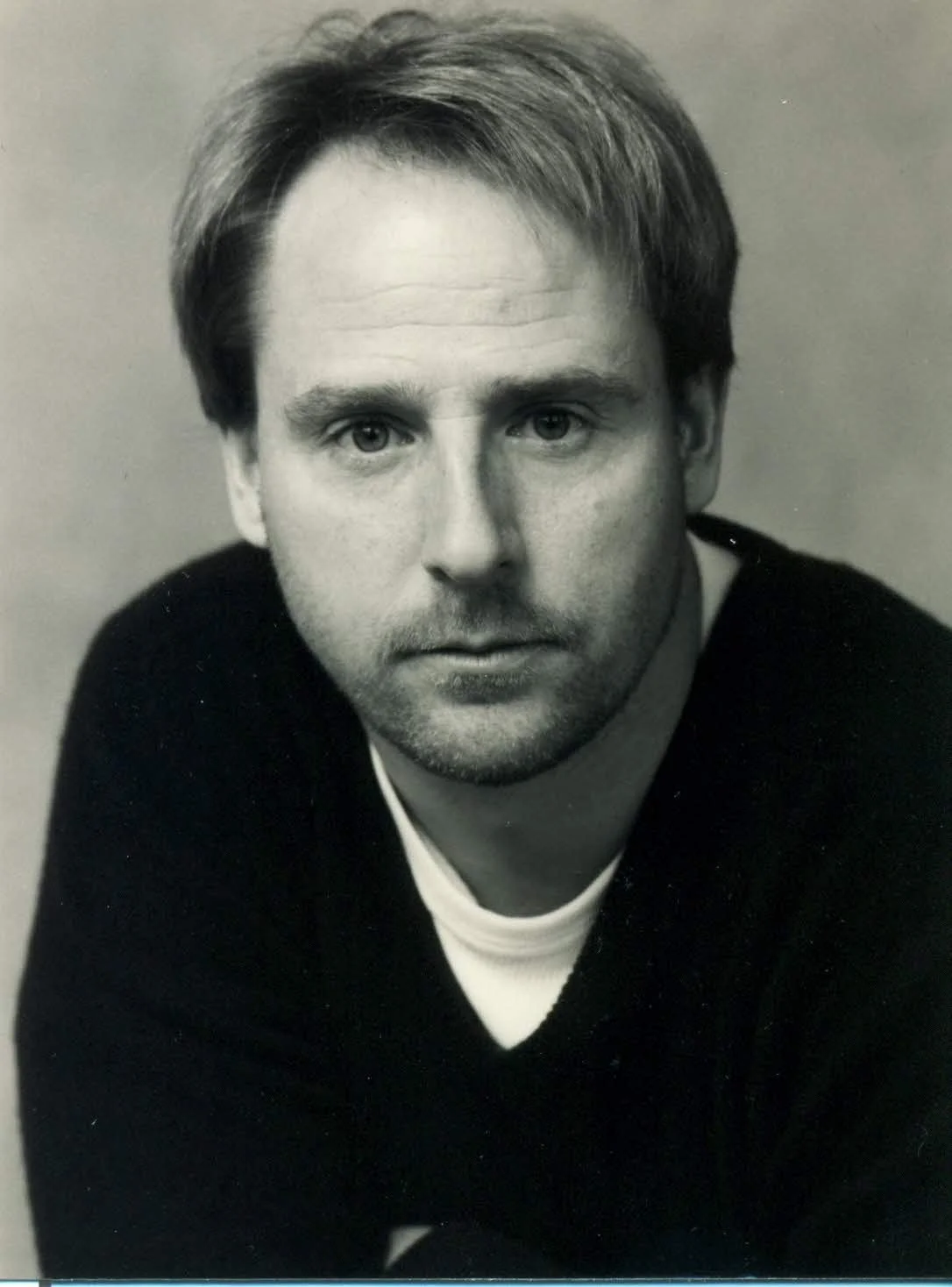
Photo of Alex Pugsley
BIO: After the publication of his first novel, Aubrey McKee, Alex Pugsley was named one of CBC’s Writers to Watch. His first story collection, Shimmer, was nominated for the ReLit Award. His most recent novel, The Education of Aubrey McKee, was long-listed for the Toronto Book Awards. His next book, Silver Lake, the third in a multi-part series, will be published in May 2026. More info: www.alexpugsley.com