it was a hard light, but it’s alright now
by J.L. Tyrrell
I. Morning
This morning the light came through the blinds the same as it did then. Hard, white, pitiless.
I sat at the edge of the bed and waited for some noise to mark the day, but none came.
No flags on porches.
No anchors choking up on television.
No hashtags, no sermons.
First time I can remember.
Twenty-four years since the towers fell and already it’s gone to dust. That day was so perfectly blue. Severe clear. And then it never was again.
The country has new fevers now.
People hurry to work, drink coffee, stare at their phones.
But the day still lives in me.
It plays again each morning; the light finds my face.
II. Light
I woke in the dark, and the nurse came in.
She pulled the string on the blinds and the light struck like a blow.
Outside the trees leaned in a slow wind, their leaves whispering secrets against one another.
For a moment I was back there.
Iraq.
The road silvered by heat, air tasting of metal and fuel.
The dog on the shoulder stiff as driftwood, ribs showing through hide.
We slowed.
There was the flash. Pure white, like the sun had come apart.
and then the dark that followed it.
When I opened my eyes again, the light was this same color pouring through the blinds.
A doctor came in, folder in hand.
He told me they could not save the leg.
I heard the words, but they had no weight yet.
He said the Army would take care of me.
He said I’d be fine.
In the shine of a cabinet door I saw a thing crying out, chest rising like it meant to tear itself free.
It took time to know that thing was me.
The flag hung on the wall.
White stripes lost against white paint, red bright as opened flesh, blue gone hollow.
I stared till it blurred and thought maybe it was the flag that took the leg, not the dog.
III. The Gym
They moved me to the rehab wing.
Rows of boys in gray shirts, ARMY across the chest, OF ONE on the back. Truth in printing.
The clang of metal filled the air. Prosthetic knees locking, rails ringing under weight.
The sound of industry, of men trying to remember how to be.
The man who trained me said to trust the leg, let it take me.
It clicked and pinched and I rose, eye-level with the world again.
It hurt, but I stood.
At night I dreamed the clang again, metal on metal, a music of rebuilding.
In the dream the sound grew into the hum of rotors, the rattle of small arms,
the long mechanical prayer of a nation learning to stand again.
Another doctor came with a tape measure.
He grinned too much for the place we were in.
Measured the stump, spoke about balance and alignment,
the science of replacing what can’t be replaced.
Two months later they wheeled me to the curb.
Megan waited by the car, hair shorter, arms folded like a guardrail.
Emily sat behind the glass with her ring of colored keys.
I stepped to her on my new leg, handed her the toy,
and for the first time I felt the earth hold me steady.
IV. Years
The years have gone the way of water.
Men I served beside have gone with them.
A dozen at least.
Carver hung himself in his brother’s garage.
Lowe swallowed a bottle of oxy and left a note nobody could read.
Martinez wrapped his truck around a cottonwood on Christmas Eve.
Others drifted, divorce papers, motel rooms, slow drownings in the bottle.
We came home breathing but not all of us lived.
I keep their numbers on my phone, names that no longer answer.
Sometimes I scroll them the way a priest might absently roll a rosary under his thumb,
one bead, one soul, one silence.
There was a night in Kansas when four of us met at a bar off I-70.
We laughed like we were still twenty.
Outside, the wind came across the wheat fields carrying dust that smelled of clay and diesel.
A train moved through the dark, a long chain of iron whispering east.
For a moment we believed we were whole again.
By morning two of us had vanished from contact,
like the night itself had taken them back.
V. Country
Sometimes I think the country is one more patient in that ward.
Still learning to balance, dragging its phantom limb through the years.
We lost a part of ourselves that morning, a thing unseen but structural.
I lost a leg; the nation lost what it stood on.
Both of us hobbling forward, proud and unsteady.
When the anniversaries came early on, people lit candles.
They sang; they waved flags.
Now they buy gas, complain about traffic,
tell their kids to hurry or they’ll be late.
Maybe forgetting is a mercy.
Maybe memory is the wound that won’t close.
VI. Night
Sometimes in the dark I hear the leaves again.
Same sound the flames made when the towers came down,
same sound the sand made shifting under the wreck in Tikrit.
A long, low whisper, as if the world were reminding itself to breathe.
I dream of the men who are gone.
They walk across the desert toward me,
their shadows one long line that never quite reaches.
They do not wave.
They do not accuse.
They simply walk,
and I wake with the taste of dust in my mouth.
Megan sleeps in the next room now.
We share the house the way strangers share a pew—close enough to hear each other breathe,
too tired to speak.
Emily’s in college somewhere back east.
She calls on Sundays.
Her voice carries sunlight, and I tell her everything’s fine.
VII. Balance
Now the world barely pauses on this day.
Offices hum.
Children scroll.
A headline passes across a screen and disappears.
But I remember.
The light, the room, the smell of antiseptic and rain in the trees.
The sound of leaves, the color of fire, the moment the body failed and kept on living.
Sometimes, standing at the window, I test the weight of the prosthetic on the floorboards.
It clicks like a metronome keeping time for a world that has forgotten its song.
Outside, the trees are gold and dying, the sky an empty blue that refuses confession.
I think of the flag, the dust, the friends gone to their own wars.
I think of the doctor saying it would be good.
And I whisper,
we all learned to walk again, just not all in the same direction. There was the flash and then the noise. It was hard light, but it’s alright now.
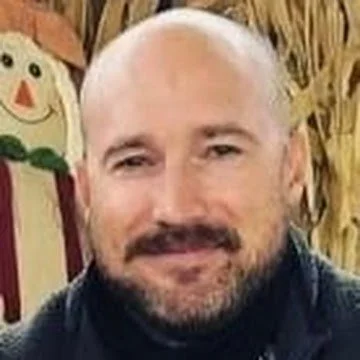
Photo of J. L. Tyrrell
BIO: J. L. Tyrrell is a U.S. Army veteran and writer living in St. Louis. His fiction inhabits the borderlands of faith, trauma, and the American landscape, where light and memory converge on redemption. His work appears on his Substack, What the Light Leaves.