daytona
by Henrick Karoliszyn
The silence wakes me like heat before a hurricane. The hot shirt pasted to my back, the springs in the mattress screeching, I crawl over the lumpy bed to the window and press my palm against the glass as if feeling for the world’s heartbeat.
At 3 a.m. on Cross Bay Boulevard, the bikes are already set along crooked lines. Engines idle low like they’re thinking about something. The streetlamps burn above them. The air is full of swamp stench, gas, and weed, which all enter the house when I open the window to walk out to the street.
I always know when my brother Danny’s ready to race. That kind of knowing isn’t about seeing or hearing. It’s a bone-deep feeling stuck in the body. Even though he swore he’d stop – on the Bible, on mama’s wedding ring, on the last bottle of JD – I knew better. The Ducati hadn’t been fired up in months, but some engines never forget their purpose, and certain people can never resist their call.
*****
The summer before everything fell apart, Danny had a plan.
We were standing behind our house, leaning against an old washing machine half-full of rainwater and mosquito larvae. The siding already peeled off the two-story like a sunburn. A busted radio in the kitchen window pissed static and fragments of a Motown song going in and out. Danny ripped from the joint and smiled.
“OK,” he said, exhaling, flicking ash into a corroded wine glass, then passing it to me. “We sell off the bikes. All of ’em. Pool the cash, buy a van. One with a bed and a fridge and curtains.”
He yanked out something he wrote on a faded Chinese takeout menu with a pencil stub. “We drive south to Daytona Beach,” he said.
I took a long drag, letting the weed do its trick.
The way he said it, Daytona sounded divine, a word that could break through the surrounding marsh, and everything we knew. “Palm trees, girls in cutoffs, jobs if we want ’em. You’ll be Mooky, I’ll be Don Juan Jones. New names, new lives, new starts.”
I exhaled, raised an eyebrow, feeling zooted.
“Yeah, yeah,” he laughed. “Mooky’s a dumb name. Pick your own name then. That’s the point. Start over.”
I wasn’t much for this type of dreaming, but when he looked at me like that, I almost believed in his vision.
Danny said he’d keep those intentions under his mattress along with his race gloves, a roll of quarters, and a few things that meant something to him.
Before he stashed it away, I saw one line scrawled in red Sharpie.
—Mack learns to ride the iron horse.
I’d never ridden anything faster than a Mongoose. That wasn’t what mattered. What mattered was that someone thought I could. For the first time in a long time, I did too.
*****
Our mother died with the Beach Boys on the tape deck and a switchblade under her pillow.
It was a Tuesday. I’d cut class to meet Eugene down by the sluiceway, and when I came home to steal a couple beers from the fridge, I found her face-down on the carpet. The blood pooled around her head looked almost neat, like a crown made of wet cinnamon. The tape kept playing Don’t Worry Baby, catching on the same line each time – don’t worry, baby, everything will be all right —like the reel was caught in purgatory.
I sat beside her listening until my legs went numb. I remember the refrigerator buzz growing into a human noise, the smell of copper. I don’t remember dialing the phone. I don’t remember punching the wall. I don’t remember the moment I stopped talking.
Danny came home as the cops arrived. He told them she’d been clean and stopped messing around with crack and the losers who came to her window. She didn’t want to get AIDS, he told them. He told them she’d turned things around. Lies said smooth, lies said cool.
Two months earlier, our old man had driven his Harley Road King into the side of a Q53 near the LIE ramp. People in the Channel called it suicide. I think it was just bad luck. Either way, the court didn’t care how it happened. Eighteen-year-old Danny got custody of his younger brother. No aunts nearby, no cousins stepping up, and no local heroes to save the day. It was just two boys, a decaying house, and a garage full of motorcycles.
A ’55 Indian Chief from our grandfather who used to ride while it in the NYPD. A Moto Guzzi our old man won on an injured horse at Aqueduct that Danny painted in green flames. A Goldwing with a cracked seat and a sticker that told drivers Loud Pipes Save Lives purchased from a police auction. The prized bike was the Ducati Monster 900, which Danny treated like a deity. He saved up from all his summer jobs and his full-time gig stocking shelves to make the purchase.
“It’s not just a bike,” he told me one night, cigarette ember flaring. “It’s the ultimate trade. Boredom for freedom.”
I didn’t answer, but it sounded poetic.
*****
When the Chrome Gypsy Relay returned that summer, it felt like the whole Channel held its breath. The race had been banned ten years earlier after a girl from Rockaway died in a pile-up, but rules fade fast when money shifts hands and cops turn their heads. By the time dusk fell, the streets were heavily congested with pot smoke, riders, and race fans.
Danny couldn’t stay away.
He pulled the tarp off the Ducati like a magician unveiling a new stunt. Checked the oil, bled the lines, polished the tank till he could see his reflection under the swaying garage light bulb. I stood in the garage doorway, arms crossed, still half asleep.
“One last time,” he said. “Swear to God.”
Danny clicked the bike into neutral and pushed it to the street. I followed him out there because I didn’t know what else to do.
The Relay looked like a carnival built from noise and pipe exhaust. Pirate Steve, who lost his leg in a collision years ago, played slide guitar on a lawn chair using a lighter. Jackie stood by an inherited Camaro in Danny’s camo jacket, her mouth painted orange. She winked at me like we shared a secret. It felt like a silent prayer for Danny’s safety.
Jody Cane—Jody the Rice Burner, they called him—was his challenger. Cane already wrecked three CBRs and thought himself immortal on Hondas.
Danny leaned close to me and said, “When I win, we start tomorrow. Pack it all. Daytona.”
A flare cracked into the sky. The crowd howled. Engines screamed and the bikes disappeared into light and darkness.
When the explosion occurred, two trees passed the wildlife refuge, I already knew.
Jackie found me near a beer cooler tent hours later, still holding Danny’s helmet. She touched my shoulder like she thought I might break. I didn’t ride with the EMTs. I didn’t go to the hospital. It would feel too real.
“They said he died fast,” Jackie whispered. “Didn’t feel it.”
I couldn’t speak. I just stared down the road where light bent around the curve. I thought if I waited long enough, he’d ride back out.
When the rest drifted off and the crime tape was removed and all the officers and paramedics and rubberneckers left, I stayed. I just sat on the curb until the sky turned violet, and the rest of the world woke up into their routines.
*****
After the funeral, people who hadn’t called in years arrived. An aunt from Pennsylvania brought a casserole and tears that didn’t fit her skinny face. A cousin brought a real estate agent who circled the house like a scavenger. Another uncle slipped me a pamphlet for a Catholic boarding school that promised healing through discipline.
They spoke about me as if I wasn’t there.
“He doesn’t talk no more,” one uncle said. “I think he’s retarded.”
“He’s in shock,” the crying aunt told him.
The social worker kept repeating the phrase selective mutism like a spell that might cure it.
Uncle Ron moved in after that—not because he wanted to, but because someone had to. He drank Coors from the can, watched Cops at full volume, and left sandwich crusts everywhere. The crumbs went to the mice. The bikes in the garage got tagged with orange tape that said: PROPERTY OF THE ESTATE. I always thought it was weird that anything involving our family could be called an estate.
Danny’s room stayed locked until one night I found the key behind the light switch.
The air upstairs was swollen with mildew and the smell of stale Kools. His bed was still unmade, a glass of Coke dried to syrupy sludge on the dresser. Ten pennies lined up on the windowsill, one for each race he’d survived.
Under the mattress was the shoebox he’d always kept. Inside, I saw the gloves, the roll of quarters, and then a water-damaged photo of us grinning beside the Moto Guzzi the day he painted it in green flames, and the takeout menu with DAYTONA scratched across the top in red Sharpie.
The plan was still there:
— Sell the bikes
— Get out of BC
— Mack learns to ride the iron horse
— Daytona
— Girls
— A life - HA
— Jobs?
It read like something from another world. It was all that was left.
I folded the paper and slid it into my hoodie pocket.
*****
After the funeral I couldn’t stand the house anymore. The sound of Cops echoing from the living room, Uncle Ron’s snoring, the fridge that never stopped that human humming. All of it felt depressing. I kept thinking if I could just get outside the walls I might get my voice back.
Eugene met me down by the sluiceway. Rain hung in the air, a thin coated mist that made everything smell like decomposition and bay weeds. The canal moved slow under us as we sat with our feet dangling.
“You look like hell,” he said, working a toothpick around his mouth. “You sleeping?”
I shrugged.
Eugene dug in his sock and came up with a small square of foil. “Two tabs. Good stuff. My brother’s guy up in Lefrak City.”
I unfolded it. Tiny white squares with blue dots stamped on them appeared. It looked like fake tattoos you spit onto your arm as a kid.
“You don’t gotta take it now,” he said. “Just when it feels right.”
I nodded and slipped them inside my jacket with the list. We didn’t talk after that. We just sat and listened to the tide slosh against the wooden pilings and the drift of traffic on the bridge. I thought of all the lucky sea creatures who never had to deal with human problems. Sometimes the whole world felt like it was water pushing at wood, just waiting for something to give.
*****
Three days later I walked to my old school they’d shut down years before. P.S. 47 was a squat of beat-down trailers scattered along uneven concrete. The fence around it was bent, the windows boarded. I sat on the cracked black top where they used to paint the kickball lines and put both tabs on my tongue.
It tasted like metal. The sky soon tilted, and the sound of the bay rolled in heavy. I lay back and looked behind my eyelids. After a while, she returned. My mother. Blood running backward from the crown on the carpet and into her head, her heart, her body. She suddenly gasped, picked herself up, races of red disappearing. She stood up, smoothed her skirt, and ran to the cassette player. The tape started again, clean this time. Don’t Worry Baby without the skip in the deck, only it was a Big Band rendition. She swayed to it, smiling in a way I hadn’t seen since before everything went wrong.
She reached out her hand. I reached back. When I touched her, she vanished.
*****
When I broke free of the trance, the sun was sharp and white. My throat was dry, and the taste of metal now clung to my teeth. I walked home slowly, every sound crisper in my ears. The hiss of tires, the rattle of cans, the far cry of a gull.
Inside, Uncle Ron was passed out on the couch, an empty beer can balanced on his chest. I wrote him a note on the back of a gas station receipt:
Don’t sell the bike. I already took it.
The garage smelled of oil and wet sod. I pulled the oily tarp off the Goldwing, the old warhorse, heavy and chipped. Everyone said it was the most worthless of the bikes.
I found the keys in Danny’s shoebox beside his gloves. The first twist of the starter gave nothing. The second caught. The engine stuttered, coughed, then settled into a rough, steady groaning.
The vibration came up through the seat and into my chest. I held the throttle the way I’d watched Danny do a thousand times.
I wasn’t looking for speed. I was looking for sound. Something loud enough to drown memory.
Cross Bay was empty that morning. The water shone flat and pale. I rolled past Jackie’s stoop, and her Camaro was gone. I kept on past Lucky’s Bar, where Pirate Steve was banned from playing guitar. Past the deli where Eugene bought Dutchmasters for blunts.
When I moved past the wildlife refuge, I cut the engine. The air smelled of salt and mud. The tree still stood crooked where Danny hit it, bark scarred black and red, and the spray-painted words Rest Easy Danny Boy. I put my hand on the space below it, the damaged wood, the dark shades inside it.
I climbed back on the bike and turned the key. The Goldwing caught, rough and sure.
I rode east up Cross Bay and took the highways until the sky cleared. The sun came up behind me, whitish and thin.
In Patchogue I stopped for gas. I bought a microwaved burrito, ate it standing by the pump. A man in a skull-print tee began eating licorice beside me.
“You headed somewhere,” he asked, “or just leaving?”
I shrugged.
He smiled. “Same thing for me, I guess.”
The Goldwing rattled all the way back toward Queens, coughing like an old dog, and when I put it back in the garage I knew.
*****
When morning came, I rode until I found the DMV school Danny had talked about once. Two days of cones, drills, and a written test. They handed me a laminated card with my name on it. It was the first official thing I’d owned, and I still had more “estate” money from the bike sales to take a road trip.
For the first time since he died, I felt something move inside me that wasn’t grief. Not joy exactly. It grew like invisible sand, like a space of my own to move through.
The days after blurred into heat and road sounds. I rode because I didn’t know what else to do. The farther I went, the easier it got to breathe. Every mile scraped a little of the past off me, every mile promised me my voice.
I didn’t have a plan beyond south. The words, if they came, would be enough.
Sometimes I talked to Danny in my head while riding. I told him about the weather, about the way the bike handled in the wind, about the smell of the refineries along the turnpike in Jersey. I never heard him answer, but the silence didn’t feel empty.
By the time I crossed into Virginia, the nights had grown warm even after rain. I slept behind truck stops and under overpasses, my jacket pulled tight, the list still folded in my pocket though I knew every line by heart.
There was no grand revelation, no clean break, no larger message from the beyond. The slow realization that I was still moving felt like enough.
By North Carolina the Goldwing had a cough I could feel in my knees. The clutch slipped if I pushed her, and the idle fell in and out like a smoker’s breath. She held together anyway, stubborn in that way old machines are when they understand they’ve got one job left.
Outside a town with a mill that looked shut for a decade, the engine gave a hollow pop and cut out. I coasted to the shoulder and waited to see if she’d change her mind. She didn’t. A crow watched from a fence post like I was the whole day’s show.
I walked the bike in neutral. Heat came up off the asphalt, and the air smelled like pine and old tar. Four blocks on, I passed a rusted sign wired to a chain-link fence: OTIS’S — WE FIX SHIT. There was a long yard full of cars without faces, a boat with its mouth open, and two Coke machines that didn’t work.
Inside the bay, a man with one clouded eye stood over a carburetor the size of a loaf of bread. He wore a hat that had once been blue and a shirt with OTIS stitched upside down. A dog that looked almost surprised to be alive lay under a workbench, tail thumping once.
“You ride it here like that?” the man said, like we’d been talking already.
“Pushed the last bit,” I said, remembering my voice, acting as if I had never stopped talking. A casual miracle.
“Then you didn’t ride it here,” he said, but he wasn’t unkind. He took a pull from an orange soda and pointed with the bottle. “Put her there.”
I rolled the Goldwing into the light. He gave her a look that was more listening than looking. He touched the headers and nodded like they’d told him something private.
“You on the run?” he said.
“Going south,” I said.
“That different?”
“I guess not.”
He set the soda down and scratched the dog between the ears.
“Tell you what. You help me three days, I’ll help you one. Fair?”
He said it as if that was the law.
“Fair,” I said.
The work was simple if you’d been taught to keep your hands moving. Sweepings. Tire stacks. Sorting spark plugs by thread count with a magnet on a string. Otis didn’t ask questions, and I didn’t give him any answers he didn’t need. The dog’s name was Milkshake. He slept like he’d worked a long shift.
At night I rolled a cot into a storage room that smelled like read newspapers and oil. There was a fan that clicked on every third turn with a stutter. You could hear the trains from there, one long line that reminded me highways are only one way of leaving.
On the second day, Otis had me hold the throttle while he listened. He closed his good eye and put his ear near the tank. “Hear that?” he said.
“What?”
“That’s her forgiving you,” he said. “Don’t waste it.”
That evening he leaned in the doorway, orange soda sweating in his hand. “You running or going?” he said again. Not a trick, just a way to talk, I assumed.
“I think I’m doing both,” I said.
He nodded like that matched something he understood.
“Whatever it is, keep doing it,” he said. “Stopping’s what kills a man.”
On the fourth morning he had the Goldwing apart to the point it looked like a diagram. He cleaned the jets, replaced what needed replacing, tightened what I’d been riding loose. He rolled her off the stand and it kicked. She caught like she’d been waiting for this savior.
“Don’t baby her,” he said. “Sometimes you gotta let an old thing work.”
I asked him what I owed. He looked at the yard, the busted Coke machines, the sky. “You swept right,” he said. “We’re even.”
Milkshake followed me to the edge of the lot and stood where the shadow ended. I scratched his head. Otis lifted a hand without taking his eyes off the bike. I rode until the town fell behind and the road went to long pine tunnels where the shade cooled everything you were thinking.
By Georgia my hands shook less. The bike and I had found a way to talk. She didn’t like crosswinds; I gave her shoulders. She liked steady throttle; I kept her fed. At night I leaned her against posts and put my jacket over the instruments. It wasn’t protection from anything real, just a habit, like checking the stove before bed in a house you can’t afford to lose.
Florida came with a change in light, flat and reduced like the world had been washed and hung back up wrong. Past Fernandina Beach I caught the ocean without meaning to. I pulled off and walked through a cut in the sea oats to a strip of sand that looked like every picture and none of them. The water was colder than I’d made up in my head. A gull skated the wind and cried the one note it knew.
I thought of Danny then. Not the crash or the helmet or the tree. I thought of him talking with his hands. How he liked balancing a cigarette on the windowsill and saying he could tune an engine by smell. The way he wrote my name on his list.
We’re gonna make our own damn sunshine, he’d said. I’d laughed at that. Standing there with my boots in my hand and the ocean pulling at my ankles, I didn’t laugh anymore.
*****
The garage I found was south of town and belonged to a man named Vi. He was missing two fingers in his left hand and didn’t bother hiding it.
“You know brakes?” he said.
“I know what they’re supposed to do,” I said.
“Close enough,” he said, and showed me where the rags were.
He paid cash on Fridays. He bought fried fish for the crew if we made our numbers. He didn’t ask for a social security number or a life story. Half the men there had accents and the other half had records. The shop smelled like a rubber fire and hot coolant. If you stayed too long in the side bay your throat turned raw.
There was a certification class the company paid for if you passed the first test. I signed the form. Nights I studied torque specs by the light of a flickering bulb and tried to teach my hands to feel what the book said they should feel. It turned out learning something late isn’t a miracle. It’s repetition and not quitting because you’re tired.
I rented a room over a bait shop that had been closed longer than it had been open. The stairs tilted to one side and the air conditioner dripped into a bucket you had to empty, or it overflowed exactly when you weren’t looking. The ceiling stain was the shape of Texas if you squinted. I didn’t care. It was mine.
Sometimes I opened the drawer by the bed and looked at the bent Kool I’d taken from Danny’s last pack. I lit it once, coughed until my eyes watered, laughed alone. It wasn’t about smoking. It was about holding something that had moved from his life into mine.
On Monday Vi handed me a stack of intake forms and said, “You can read customers now, right?” I told him I could try. There was a woman whose battery died every third day because someone had told her to save the car by not driving it. There was a man who thought squealing brakes were normal. There was a kid who had his nuts cross-threaded so tight it took both of us and a bar to loosen them. I kept my temper by thinking how many things I’d been wrong about once.
When I got the certificate, Vi made a joke about how he’d have to start paying me. I didn’t tell him I had slept on the floor the night before the exam because my head wouldn’t keep quiet. I didn’t tell him the questions on the test were easy compared to other things. I just put the paper in a drawer with the lease and the tool receipts and the one other thing in there.
I went to work in the morning, and a radiator hose split exactly where it should have. I cut it back and tightened the clamp and the man said thanks like I’d done something extra. I didn’t correct him. In the afternoon a teenager handed me keys and tried to act like he wasn’t scared of everything he was trying to become. I told him to keep an eye on the oil for a week and come back. He said he would.
That evening, I rode without a destination until the daylight weakened. The first green light turned to another until the wind moved under my jacket and across my chest. Far behind me and always close, I could feel the shape of the thing Danny wanted for us. It wasn’t a finish line or a list. It was a way to keep going.
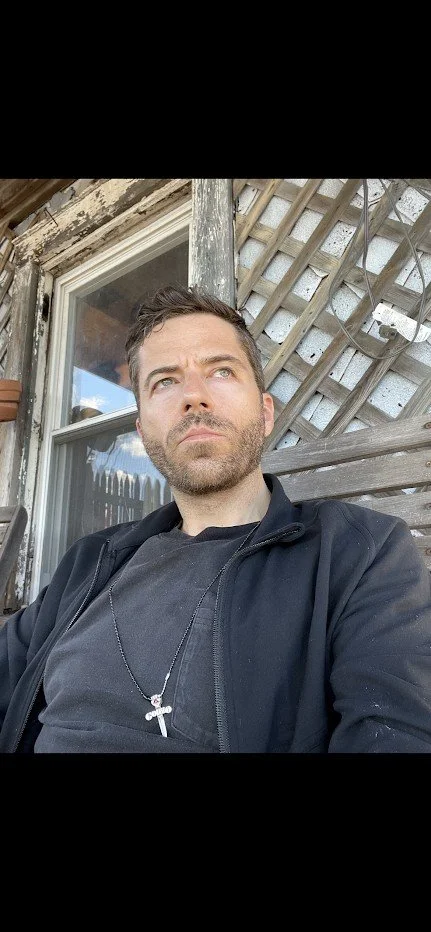
Photo of Henrick Karoliszyn
BIO: Henrick Karoliszyn is an award-winning crime reporter and Doctor of Social Work. His fiction was most recently selected by the Ernest Hemingway Foundation and published in the 2025 Hemingway Shorts literary anthology and slated for publication in upcoming issues of Flash Fiction Magazine and BULL magazine. He is at work on his debut short story collection, God is an Atheist on Karaoke Night. He lives in New Orleans.