charon
by Ken McRae
I worked at Acheron Transportation for nearly six days before I met Charon. Of course, I heard a great deal about him before then. No one seemed to know him well, but everyone knew of him.
Most of the rumors centered on how he came to Acheron at all. I came to believe, as did most of the employees, he had simply always been here. Not at Acheron, the company was barely forty years old. Here, in this deep, jagged valley. Or, at least, he always had access to this area. Charon may have roamed other worlds, but he seemed at home here.
Before the corporate headquarters were built here, before the labyrinth of sub-companies, holding companies, limited liability companies, and the like had been created, this site was an underground quarry. Our valley was famous for its deeply buried black granite. The stone was dark and beautiful, otherworldly almost. It was perfect for cornerstones and headstones, monuments and mausoleums. But it was hard to get at. The rock was buried deep, under layers of earth and lesser rock. And it was surprisingly fragile. It had to be manually quarried. It was not possible to use heavy equipment, the job required hand tools and patience.
Charon arrived with a warning. Hellfire Canyon quarry was not safe, not stable. Charon said the main shaft would collapse. He was hard to ignore, standing nearly nine feet tall with shoulders the width of two men and forearms swollen from millennia of steering a flat-bottomed skiff across treacherous waters.
The workers were scared by Charon’s words. They refused to return to the quarry. But the stone was rare, and valuable. The owner of the quarry, Edward Scrogs, wanted the precious granite. It did no good buried in the dark earth. Above ground it paid him a great fortune. So Scrogs ordered, and bribed, and, eventually, threatened the quarrymen until, at last, they returned. For another few months the quarry yielded a great bounty. Charon’s warning was forgotten as soon as the paychecks arrived.
One morning twenty-seven quarrymen descended underground to search for polished block monument rock. But they never resurfaced. Before lunch there began a dull roar from deep inside the quarry. The valley shook and shuddered as the cliffs above rumbled. The mountain collapsed in on itself. None survived.
The loss ripped through the community. Families were uprooted and torn apart. Adults struggled against the current of grief. Some never made it back out, losing themselves in strong drinks. Children stopped planning for college and began looking for work. Dreams were forever altered. Futures were reduced in order to survive the present. Their children grew up with less security than they had known before the collapse. Trauma rumbled forward.
For a while the town supported survivors. But people had lives to manage. Eventually they grew frustrated when survivors could not just move on with their lives.
One person did move on, Edward Scrogs. The quarry would never re-open. But Scrogs emerged with a plan. Less than a year later his new company, Acheron, rose from the ashes of Hellfire Canyon. The company was a source of pride for the community. A story of determination and perseverance. Around town people marveled at how Scrogs refused to stay down. Even when he lost so much, he continued forward.
Some forty years later, on a hot, cloudless Monday afternoon, I met Charon in the breakroom. He was standing in front of all three vending machines. He stooped slightly so his head didn’t hit the ceiling. He wore a dark brown shirt and thick canvas pants. Instead of a belt he had some kind of leather strap or sash wrapped around his waist, knotted in the front. His left arm displayed a fierce snake tattoo, with scarlet eyes and long, sharp fangs. His skiff pole leaned against the wall.
Around his shoulder hung a dull brown satchel. It appeared to be made of worn leather and it was stuffed nearly full of odd coins. They did not have any writing I could see. Charon shuffled the coins in his satchel and gazed at the vending machines. The machines didn’t accept coins. You had to swipe your ID badge through a scanner. The purchase price was automatically deducted from your paycheck. I was in a hurry to get back to the interns’ office and did not have patience for the ferryman to figure out how the machine worked. I didn’t want to be there if he decided to smash and grab some candy. I squeezed past him and swiped my badge for the third machine. I purchased two bags of red licorice whips. “Here” I grunted as I tossed one bag to Charon. I grabbed the second bag and sprinted back toward the office. The end of break alarm sounded before I turned the corner.
The other interns were at their desks when I returned. The supervisor walked past and paused. “Glad you made it back, we were starting to worry,” he said, in a stage whisper audible two doors down.
For the rest of my day I entered prices and quantities and weights and distances into spreadsheets and databases and calculators. Boxes and crates and pallets were picked up and dropped off as a result. I wasn’t told what was shipped, or who shipped it. I never asked, either. I punched keys on my keyboard and processed numbers. I made sure to be the last one to leave that night.
One more slip-up probably meant I would not be chosen for a permanent job. For a few weeks I avoided the vending machines. I brought lunch and ate at my desk. I stayed late. There were thirty of us in this internship purgatory, making minimum wage while earning a couple credit hours. At the end of the summer, three would ascend to permanent, well paid, jobs. Jobs with health insurance and retirement plans.
The odds were even worse because one of the interns was a great grand-nephew of the founder. His name was Braxton Scrogs. He had a guaranteed position at the end of the summer. Which left just two spots for the rest of us to fight over. I couldn’t afford to miss out on one of those opportunities.
Getting hired was not like winning the lottery, but it was close. Last year the winners bought matching convertibles. I walked past them on my way to and from the bus stop.
One Friday afternoon the intern manager asked for volunteers to work the next day. All the furniture had to be moved out of the executive offices and into storage so carpets could be replaced. It wasn’t worth any extra college credit, but you could dress casually.
Braxton snapped his fingers over his head and waved. “Yo, boss man. I was plannin’ on taking some of my guys and gals up to the lake house, so no can do this weekend.” Then he glanced at me. “Slick ain’t comin’ with us. They can do it.”
Everyone turned toward me. I looked at the intern manager. I wanted to object, I had plans to spend the weekend with my family. But I nodded softly. After work I called my parents to break the news.
I knew the odds were stacked against me, so I tried not to think about what getting one of the jobs would mean. But, on occasion, I let my mind wander. I decided against anything that matched Braxton. I would take a sensible car, though. Mom and dad were trying to save up for a new roof. I couldn’t buy them a mansion, but I could make their home a little more comfortable.
I did not bother to bring lunch on Saturday. No one else was working so there was no rush to get back. All morning, I was the only one in the office. No one could do any work without furniture, so the executives took the weekend off. A few minutes past noon I wandered down to the break room to grab an unhealthy meal. I settled on two bags of chips, a lemon-flavored tea, and a six pack of chocolate covered mini donuts.
I was surprised to see Charon walk into the break room. I was more surprised when he decided to come sit across from me. He had a large tumbler full of steaming hot coffee.
I finished off one bag of chips and started on the donuts.
Charon sat silently, rubbing his chin stubble with giant, thick fingers. I caught my reflection in his coal black eyes just as I was shoving an entire donut into my mouth. I decided to pass the last two donuts over to him.
“Putting in long hours I see.” He broke a donut in half and dunked it lightly in his coffee.
“Yeah. Only way to get ahead, ya know.” I tried to sound casual. But I was not at all sure if Charon knew what it took to survive in the corporate world.
Charon finished the donuts, breaking each into half and dunking it into his coffee. Then he leaned back in his chair. “So, is that the dream? To make it big here?” He spread his arms a motioned across the empty breakroom, his expression blank.
“Yeah, well, I guess so. I mean, that’s why I’m here this summer. To try and get a job.”
I finished the second bag of my chips. Then I was struck by a question that had never occurred to me. Before I could stop myself, I asked Charon, “do you work here? Like, do you have to turn in your revenues every week or anything?”
Charon took a long sip of coffee. “What revenues?”
“The coins. Don’t you charge two coins to take souls across the river? Does Acheron get that revenue that you earn?”
“Don’t charge for trips across the river. That’s a myth.”
“You just take people on their final journey for free?”
Charon leaned forward and crossed his arms on the table. He lowered his chin so his eyes were level with mine. For a moment he stared at me. “I take souls, not people. Journey costs three things: your past, your present, and your future. Coins are a metaphor. Far too valuable for there to be a price.”
“What about those?” I pointed at the satchel on the chair next to Charon.
Charon laughed so hard the room shook. I nearly fell backwards out of chair. The glass in the vending machines vibrated nearly to the point of breaking. “Those aren’t real. They’re just slugs, for the vending machines. That’s why they installed the ID scanners.” He slapped his thigh and laughed some more.
“You were stealing from the vending machines?”
“Stealing? Nah. The pay a nickel for candy they sell for two dollars. And where else can you go? I wasn’t stealing; I just wasn’t letting them rob me.” Charon winked a black eye at me, grabbed his skiff pole with his left hand, and started to walk away. He turned halfway back to me with a half-smile and said, “besides, ghosts can’t carry coins.” Then he headed off down the hall.
The next weekend the rest of the interns moved the furniture back into the appropriate offices. Management provided pizza and beer for their efforts. I got the weekend off.
Sunday afternoon I decided to take a hike through Hellfire Canyon. The trail from the parking wandered up the hillside. Tall oaks disappeared above; their branches intertwined to create a green ceiling. Occasionally breaks in the canopy created islands of sunlight on the floor. Young aspen and pine trees sprouted here among brilliant wildflowers. Butterflies soaked up the sun while bees worked among the flowers. Then the oaks closed in again, the sun faded to a filtered green light, and the air cooled.
I reached the crest of a hill and the landscape changed violently. The back of the hill I just climbed collapsed down to the valley floor, leaving a steep, rocky, barren slope. Loose rocks raced away with every step I took.
The landslide destroyed this part of the forest. Without plants covering the ground, any rain gouges deep ruts. Dead trees stick out at sharp angles or pile up in a mass grave at the bottom of the ravine. Floods and fires are a constant danger.
Twenty-seven men remain buried under the rubble. After the quarry collapsed all agreed it was too dangerous to try to bring them out. This barren hillside was left as it fell. No monument marks the site. The black marble they died digging out had all been promised to others. None was left over to remember them.
The forest might eventually return, but it will take generations. Grasses and wildflowers, clinging to islands of dirt marooned in this sea of jagged rock, start the process. Slowly their roots break down stone. Dirt from the top of the hill, and dust from the wind, settle into cracks and crevices. After forty years, some ragged gorse and shrubs have moved in. Slowly the low shrubs will take over the hillside. In one or two places their work had begun. In another twenty or thirty years, hearty trees, adapted for the landscape, may begin to stretch out above the bushes. If everything continues for three or four generations, if no fire rages through, if nothing triggers another rockslide, the forest will begin to close the wound. Oaks may eventually return. If things go just right.
Monday morning the manager made an announcement. Each intern would make a presentation to the executive team. We were expected to come up with our own topic. Since Acheron was a transportation company, the theme was “new roads.” That was all the guidance we were given. Present something to the entire executive committee on the theme.
The next week was set aside for presentations, six per day. I drew the first spot on Monday. This meant I had the least amount of time to come up with an idea. But it also meant I would be done first and able to relax the rest of the week.
The rest of the week was a whirlwind. Twenty-nine interns spent the week in a near panic. All but Braxton Scrogs. He acted as though he had known for weeks what he would present. Of course, his future was rock solid. The rest of us were fighting over two openings.
I decided the best course of action was a simple proposal I could show would make the company money. Nothing fancy or ornate, just a solid, realistic plan.
The company owned a fleet of semi-trucks and trailers. After all, Acheron transported goods for other companies. The company purchased in bulk, so they got a great price on all the trucks and trailers. For our long-haul business, the fleet worked well. All shipments had to be arranged in advance. Scheduling pick-ups and deliveries was how the company made its money.
But, for the local routes we ran in the area, those semi-trailers were inefficient. The short, on demand, routes did not get scheduled the same way. Most local runs were small. In the morning trailers were sent out mostly empty. The same thing happened in the afternoon.
My idea was to switch the local routes to smaller electric box trucks. They could handle the routes and were more efficient. The company could even brag about using green energy if it wanted to. I calculated the fuel and equipment savings would pay for the new trucks in about 18 months. After that, the company would see a sizeable return.
I prepared spreadsheets and route maps. I practiced my speech for my parents, in front of my mirror, and while I showered. It was not fancy, but it was solid.
I woke up at 3:30 Monday, and again at 4:45. I rolled out of bed at 5:35. My stomach only wanted half a bowl of cereal. I tried to keep a slow, steady coffee pace, but I found myself swallowing hot mouthfuls one after another.
By 8:30 my hands were shaky, and my forehead was damp with sweat. I began my presentation with a dry, creaky “thanks” after the manager introduced me. I remained serious throughout the speech. I resisted all temptation to make jokes. Instead, I displayed route maps and spreadsheets with savings calculations. I demonstrated by switching up a few local routes to short range electric trucks, Acheron could show a positive return in eighteen months. Given the life of the vehicle, I estimated savings would more than double the initial outlay.
I mentioned the option to use the new vehicles in some green marketing, but I did not focus on that aspect of the proposal. I knew the company brass did not hold any soft spots for environmentalism. So even that brief mention was framed around tax savings and public goodwill. I strenuously avoided the term “carbon footprint.”
After I finished, there were a few questions. I was able to give relatively coherent answers. Then I was done. The company vice-president for new projects asked if he could review my data. I handed it to him. He said, “your grandfather would be proud.” The room responded with polite applause.
I was dumbstruck. Acheron Industries never mentioned any of the victims. On the company grounds there were no reminders of them. They were ghosts in the shadows, unnamed and forgotten. The disaster was ignored. I knew that management was aware who I was. But no one had ever said anything to me about my family’s connection to the tragedy. I never expected them to acknowledge it publicly.
I could not focus on the rest of the presentations that day. Between my relief in being done, and the shock of what happened after, I did not have the capacity to pay any attention.
After work I called my mother. When I told her what happened there was a long silence. Her shock overwhelmed my own. In her lifetime there had never been any acknowledgment of what happened to her father. I could hear silent tears through the phone line.
Eventually she did gather herself. Mom wanted to know exactly what had been said, who said it, how the room reacted. I went over every detail I could remember.
We convinced ourselves I might be in the running for a permanent job. It did not make sense for Acheron to allow that reaction otherwise. For forty years the company had made no comments about my grandfather, or about any victim. The tragedy was not even whispered about. Acheron gave all appearances that no such event had ever occurred.
I made my mother promise not to share what happened with other families. Ultimately this was only a nice gesture. Nothing had changed. It was pointless for anyone to think otherwise. Mom agreed.
I watched the other presentations throughout the week. As the days passed, my self-assessed odds of landing a job increased. No other presentation garnered much of a reaction. Most were acceptable, but no one dazzled. In the intern office the stress caromed from desk to desk. Once an intern finished their presentation there was temporary relief. But then the second guessing and projections started. Screaming and crying were common. More than one stapler was launched across the room.
For the first time all summer fellow interns talked to me. The general sense was I secured a job.
Braxton wandered the office calling everyone “bud” and “slick”, just as he always did. To me he said, “nice one, ace.” I could not recall him spending any time working at his desk. I am not sure if he used his computer for anything other than making memes. But he was very proud of those. He would gather a crowd of groupies and show off his latest handiwork, waiting for the laughs to roll in.
Most of the interns made serious proposals, like I had done. They focused on new markets, or new products, for the company. Late Thursday afternoon one girl proposed building an artificial ski slope on the steepest of the hills surrounding Acheron headquarters. “If you’ve been to Vail, or Jackson Hole, it wouldn’t be anything like that. But it would be good enough for around here.” There was a low chuckle in the auditorium, but no one asked her any questions. The presentation was over in 15 minutes, so we got an extra break. I decided to grab a snack.
Charon was in the breakroom at his usual table. I bought a six-pack of mini donuts and sat across from him.
I finished the second donut and looked up at Charon. “Can I ask you something? About the quarry”
I grabbed a third donut and passed the rest of the package to Charon.
“Are you sure you want to know?” Charon popped a donut in his mouth and leaned back slowly, the chair balancing on its rear legs. Then he popped another donut and chewed it in two bites. His eyes, dark as midnight, kept a steady gaze on me.
“It’s just, I mean, why’d you do it? Warn them. I guess if you have to take everyone on the journey anyway, I’m not sure why you tried to stop them. What did you get out of it?”
Charon’s chair creaked a low groan as he brought it back to all fours. He lowered his massive arms onto the tabletop. “You think in terms of business. I do take everyone across the river, eventually. But I’m in no hurry to make a sale. There is no profit to be had. Life itself is a sacred journey, too.”
I stared at my fingertips, looking for patterns in the sticky sugar particles, unsure of how to respond. When I decided to look up, Charon was still watching me.
“Do you regret saying anything? I mean, since it didn’t matter?”
“Why do you think it didn’t matter?” His voice was curious, not defensive.
“Well, because they went back in. They died anyway.” My heart was beating in my throat. My voice creaking.
“Do you know what I am asked the most on the way across the river?”
I shook my head and wiped my sleeve across my eyes.
“Can I get more time? A day? A week? Just an hour? I couldn’t prevent their deaths. Death is inevitable. They stayed out of the quarry for a couple weeks. They got more time. I tried. Things may be better because I did. Can we ask anymore?”
Charon lifted his frame from the table. He popped the last donut in his mouth, picked up his skiff pole, and ambled out of the break room.
By lunch on Friday, I was relaxed. There were three presentations left. I received the best response of anyone so far, which I interpreted to mean I was leading on the judges’ scorecards. Of course, Braxton’s presentation was irrelevant. He was assured a job as a birthright.
Two other presenters remained, and two jobs. If I finished ahead of one of those two, I would be fine. Allison Smith was scheduled after Braxton. She nearly dropped out of the internship program when she learned about the presentations. During the morning break she spilled coffee on her white shirt. As a result, her left sleeved looked like a Rorschach test. At lunch she dropped a tomato wedge on her yellow skirt.
Tommie Wilson was given the final presentation slot. Tommie was bright and ambitious, but outspoken. He alone pushed back when Braxton made outlandish suggestions. Once, Tommie got into a shouting match with human resources over holiday pay. The interns had been expected to work over a long weekend. Tommie demanded to be paid for all the hours he worked plus holiday pay for the time he should have had off. He even referred to some labor regulations off the top of his head. Every one of the interns held Tommie in high regard after that incident. Not the least because we all received the extra pay. But it was unclear how badly Tommie had burned bridges with the company.
Braxton was late for his presentation. He was stuck in traffic getting back from lunch. The company president, who had been stuck in traffic with Braxton, began the afternoon session fifteen minutes late. Tommie interrupted Braxton’s introduction to make sure that he and Allison would be allowed full time. Allison spilled ginger ale on her notes while Tommie argued the point.
“We need more cool shi, errr, stuff to do around here.” Braxton waited for the muted laughter to die down after his inappropriate beginning. “Kids have nothing going on all summer. We have an abandoned hillside. It’s not making us any money, and it doesn’t even have any trees on it. Which, actually, will save us money, when we build this . . .”
Braxton nodded slowly as he glanced across the front row. Then he clicked a button and a giant screen dropped from the rafters behind him. An artist’s rendering of the Hellfire Canyon rockslide sight covered with a hillside water park flashed up. “Totally kick ass water slide!” Braxton talked about the wave pool and the lazy river he wanted to build at the bottom of the canyon. About how he would have lifeguards in red bikinis and waitresses in purple bikinis. He posted pictures of bikini models to drive the point home. A couple of the interns clapped.
Next Braxton went through each of the four water slides he wanted to build. A beginner’s slide called “The Prospector.” More adventurous slides called “Rushing Rapids” and “White Water.” Someone asked why the White Water slide was red plastic. Braxton didn’t have an answer. No one asked about where the water would come from, or how much it would cost to pump it to this remote location, or where families would park when they came. Even Tommie felt it unnecessary to point out the flaws in this plan.
Finally, Braxton clicked over to his fourth and final water slide. It began two or three stories above the top of the hillside which required a climb up flights of stairs. The polyurethane slide was nearly vertical from the start until reaching a series of violent switch backs and concluded by hurling riders through a corkscrew turn and into a deep pool. The slide was called “The Avalanche”. The finishing corkscrew was “Dead Man’s Curve.” The design was ludicrous. It was a Rube Goldberg contraption that served no eventual purpose.
The room sat silently staring at the design, trying to understand the slide’s complicated pathway. Suddenly a low, guttural voice cried out from the back. “You dishonor sacred ground!”
The voice filled the room, echoing around the chamber. It came from another world, a level of pain and grief that was unknown to all those in the room, but one. Everyone jumped in their seats. Heads swiveled around, trying to find the source of this disturbance.
I was standing in the center aisle, shaking all over and pointing directly at Braxton. “Twenty-seven men died there!” I shouted. “Twenty-seven bodies are buried there! How could you even dare to suggest this! It’s bad enough this company has never even recognized their sacrifice, but now you want to mock them with this stupid crap?”
I was lifted from the ground by two immense arms, tawny and earth scented. They held me firmly, but I did not feel any pain. I could see the scales of a vast serpent winding down one bulging arm. As Charon pulled me to the auditorium exit, I fired my last salvo. “That is sacred ground! Not some shitty amusement park! You ridiculous ass!”
I could see Braxton silhouetted on the stage. He stood motionless, mouth agape. Before I was forced out the double doors, one of the executives managed to flip off the projector and take down the image of Braxton’s Avalanche.
I did not stay for the last two presentations. I grabbed my belongings from the intern office and went home.
My guidance counselor from school called me late the next morning. She was apparently working on a Saturday. Word had already made it to the undergraduate program. My counselor informed me that I would still be able to graduate if I was willing to withdraw my application for a permanent job. Acheron was willing to sign off on my participation in the internship program and the school was willing to give me full credit for the summer.
I was relieved to accept the deal. The lack of a job concerned me, but I would still earn a degree. In all likelihood Acheron did not want anyone to know what happened because it meant acknowledging what happened to the twenty-seven workers. To my grandfather. I knew the company would tell no tales.
Before she hung up, my counselor asked me one question. Would I be interested in enrolling in the graduate philosophy program? An ethics professor needed a graduate assistant, someone with a moral compass and a willingness to speak out. Maybe, she said, I would be a good fit.
I’ve spent the past few years studying for a PhD in ethical behavior in organizational settings. To pay for school I work as a forest ranger at the new park above and along Hellfire Canyon. Acheron gifted the land to the county a few weeks after my summer internship ended. I lead tours through the park. The highlight is the black stone monument with twenty-seven names etched across its face. After a couple of summers I saved enough for a downpayment on a small car. It isn’t new, but it is mine.
Every couple weeks I stop by Acheron at lunchtime. On the way up to the headquarters, I pass several electric trucks buzzing up and down the hilly roads, brightly painted with the Acheron logo. Occasionally, I bump into Tommy, now an associate vice-president. But I go to see Charon. I make sure to bring a couple large bags of snacks for us to share. Charon gives me a few metal slugs in return. I use them for the parking meter.
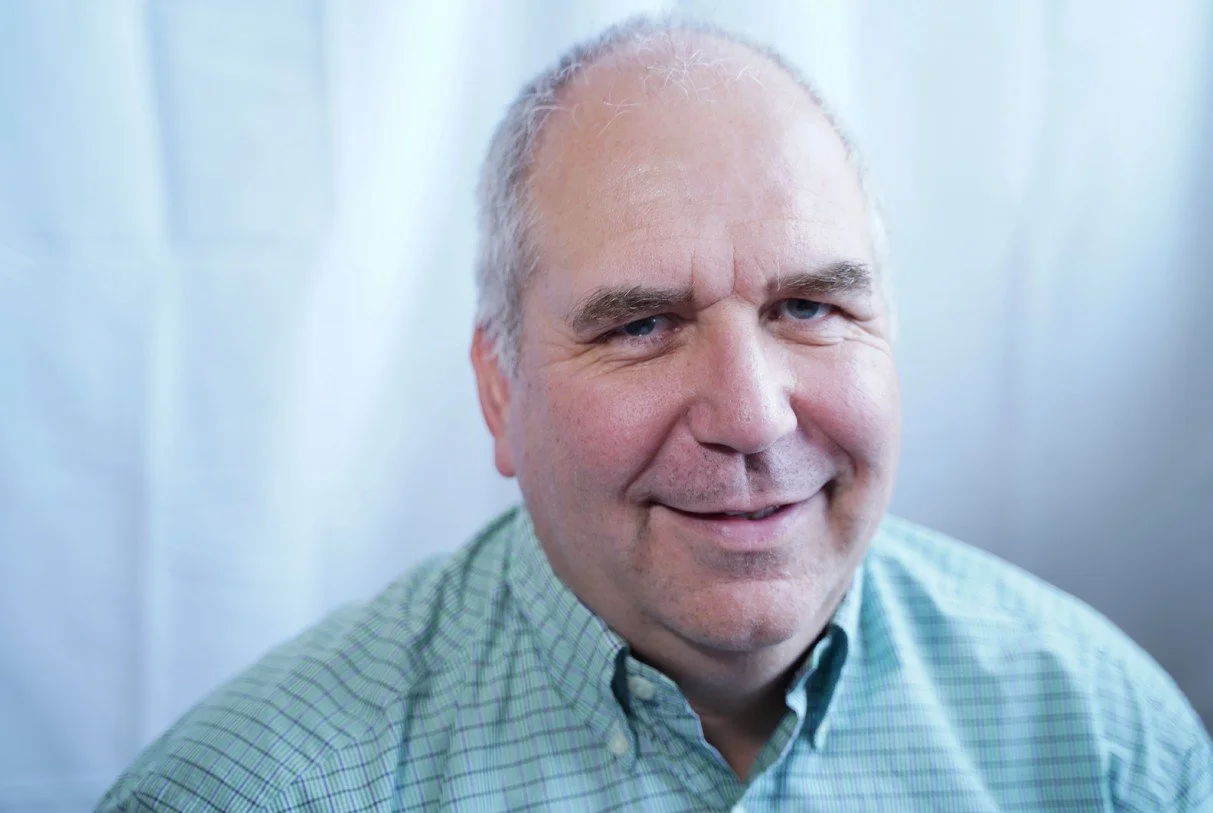
Photo of Ken McRae
BIO: Ken McRae began dabbling with fiction in lieu of a mid-life crisis. When he is not at work, or at his computer, you can find him with his wife Susan; kids, Rachel and Jake; and/or his dog, Hank.