a tourist in green
by Brandon Yu
All Americans are welcome in the Land of a Thousand Hills.
Our Hanoi Hilton is just one of many exceptional hotels in the North Vietnam area that caters specifically to our American guests. They are here on an all-expenses paid trip from Uncle Sam, and special care must be taken to ensure they receive our utmost hospitality.
As our nickname suggests, we offer more than a thousand different hiking trails in the lush jungles of North Vietnam. Visitors are free to explore them, taking time out of their hectic schedules to admire the local flora and absorb the captivating beauty of mother nature one step at a time.
American backpackers love to share their creativity with us. They scrawl quotes on the sides of their steel helmets, tailoring them to their personalities with timeless lines and witty aphorisms such as “HILL 875, THE SMELL OF DEATH NOV 12 1967” or “WAR IS HELL” or “Ohio, U.S.A.”
Like all tourists, they constantly look for new ways to broaden their horizons. They love to collect souvenirs, but sometimes it can go too far.
Some of them take severed ears, scalps, and thumbs from dead VC and make necklaces out of them, which—even I have to admit—is a little tacky. They are not us, of course. Tourists can be rude sometimes, but the ones that aren’t can be delightful to have. Just last week, I had the pleasure of meeting a young American skydiver with an extraordinary tale of how he came here: a U.S. reconnaissance plane.
The locals spotted him over Duong Lam. They greeted their new sightseer with shouts, scattered small-arms fire, and the metered percussion of a 57 mm Soviet anti-aircraft battery. Puffs of black flak began to erupt behind his plane at staggered intervals, plotting points against the clear blue sky. A wispy trail of smoke appeared in the jet’s fuselage, marking its descent as it suddenly arced downward and disappeared behind a stand of trees.
The locals let out an uproarious cheer as the American skydiver drifted down in his parachute. He was clearly having the time of his life, and the villagers were so excited to meet their new visitor that they ran after him in a pell-mell stampede, young and old, splashing across the rice paddies in their conical hats, leather sandals, and black tunics, rifles and machine guns held at high port. Pajama party!
His jet was in flames, but our American skydiver remained unscathed. He was caught in the upper branch of a maple tree, his legs dangling from his harness. When our civilian ambassadors arrived, he was understandably confused. He began to struggle, probably worried he wouldn’t arrive at his hotel on time. Thankfully, he would be delighted to know our check-in policy was available twenty-four hours a day.
The moment we cut him down, our guest freed his arms from his straps and unholstered his M1911. “Back! Stay back!” he said, waving his pistol around.
More locals appeared in the clearing. The skydiver glanced around, terrified. When he realized how far from home he really was, he was struck by an overwhelming pang of homesickness, and he turned the gun on himself, placing the barrel underneath his chin. He squeezed his eyes shut, making a noise somewhere between a scream than a growl, but one of our ambassadors wrestled the gun away from him just in time. Americans are so crazy.
It feels good to save a life. They brought him to the Hanoi Hilton last night and told me all about his story. Since it isn’t every day that an American skydiver shows up at your doorstep, I specifically requested an interview with him. I was so excited. They put us in a bare conference room with nothing between us but silence and a steel table.
He is wearing a white t-shirt and one of those cool steel necklaces that are all the rage in NATO travel agencies. Each one of them is personalized, like a kitschy gift shop keychain. His name is James Moore. He is nineteen years old. He goes to church on Sundays. I ask him where I can get one of those necklaces with my name on it, but he just told me to go fuck myself.
James is not in a good mood. Since our lackluster interview, I have provided him with the best of our authentic North Vietnamese cuisine: maggot-infested rice, thin gruel, and fire ants. He still complains about our poor customer service, which makes me feel terrible.
I am trying my best to make everyone feel included. This morning, I even brought him a can of Coca-Cola. Americans love Coca-Cola. How can he not love Hanoi Hilton after this? We even provide complimentary room service and mandatory outreach programs, but he doesn’t seem to enjoy them as much as I hope.
We pamper him. My staff even treated him to a pedicure last night, but they are outrageously terrible at their jobs. They keep removing the entire fingernail, I don’t know why. I am considering firing them.
After three more weeks of spa treatments, we take him into the conference room again. James is a different man now, more quiet and introspective than before. Clearly, our traditional Eastern values have made an impression on him. However, I am deeply appalled by how my staff have treated him. He looks like he has not eaten in days, and half his face is swollen into a massive purple bruise.
He stares at the floor. I am worried he will not be in the mood for his assignment today, but he shuffles forward and sits down anyways. Luckily, I thought ahead and typed up a script for him. In the hotel business, customer testimony is essential.
Beside his script is a microphone, which is attached to a bulky radio set, which is attached to the rest of North Vietnam via radio waves. In two minutes and forty seconds, he will decide whether or not I get to keep my job. While he stares miles deep into his script, I bring him a glass of water. I check my wristwatch. When it’s time, I lean over and press a button on the microphone.
James says nothing. One of my staff members nudges him with the barrel of an AK-47. He clears his throat. In an exhausted, droning monotone, he begins to speak.
“I, James Moore, an airman for the United States of America, state that the Vietnamese prison camps are a safe haven for captured prisoners of war. We are treated humanely. We are fed three times a day. We are given adequate clothing and shelter, and protected in accordance to Article 15, Code IV of the Geneva Convention. Living under communist rule has been a blessing. I have no intention of ever returning to a democratic society again and never will.”
I push the glass of water towards him when he is done. It seems like hard work, and James is left deflated, his eyes lost and empty.
I can tell he doesn’t feel comfortable expressing such a glowing review of our establishment so early in his guided tour of Vietnam—after all, there are so many other hotels around here I’m sure do an even better job catering to American tourists than I can—but our hotel rewards program offers an excellent package deal I’m sure will leave him more than satisfied: for every positive testimony James makes in favor of our hotel, he gets a free Marlboro.
He sticks one between his lips. I push a match across the desk, but his hands are palsied. I light the cigarette for him instead.
So far it seems like James is having a miserable experience at Hanoi Hilton. In spite of my best efforts, he still finds his action-packed North Vietnam adventure rather underwhelming. I don’t blame him. Not that it’s any excuse on my end, but I’m afraid the quality of our services declined sharply ever since the American tourist boom two years ago.
Recently, James has complained about missing items, including several of his teeth. He is terrified of my staff members. I suspect they are thieves, but none of my other guests have lodged a formal complaint so far. Although I am always open to feedback, I don’t want to make heavy-handed assumptions about my staff during the busiest time of year. I’m short-handed as it is.
I inspected the hotel rooms last night. James has his very own luxury suite, which is specifically soundproofed by three inches of concrete for the comfort of our guests. Some of them can be very light sleepers.
I want his stay at the Hanoi Hilton to be comfortable. But when I glance inside his door slot, I am shocked to discover black mold growing on the ceiling. It is a fundamental breach in our hotel-guest agreement. Additionally, his room still lacks the basic amenities any self-respecting hotel establishment should have. Where are the fluffy white towels? Where is his Sony color TV?
I have requisitioned for one to be sent to his room, but so far I have not heard back from Khanh Nguyen, the owner of the hotel. He is currently moonlighting as a North Vietnamese tour guide for Hill 876, and he’s fully booked for the season.
It’s a popular destination for our locals, not least because the trip also offers a free arts-and-crafts station for the kids to assemble improvised explosives and smear human shit on sharpened bamboo spears while the adults head out for the main attraction. Included in this limited-edition package deal is a handful of assorted ammo, a Soviet or Chinese-manufactured rifle, and a complimentary sidearm that will be provided to our sightseers on a first-come-first-serve basis.
I should mention there is also an exclusive promotion avaliable only for this month. With a pledge of undying loyalty to their country, Vietnamese tourists will get a front-row seat to Hill 876’s interactive 4-D fireworks show, which uses tracer rounds and star flares to create unforgettable new experiences they will cherish for as long as they live.
Khanh sent me a telegram last week to tell me how excited he is for the next guided tour. He says the American backpackers are pitching in more often now, wowing us with fiery displays of napalm and white phosophorus. It’s a proven crowd-winner, often eliciting hearty Oohs and Aaaaaaahhhhs!!! from amazed locals.
The spectacle makes the Hill 876 experience an absolute treat for any potential tourist in North Vietnam. I think Khanh really outdid himself here. Ho Chi Minh even gave it a glowing endorsement on the underground radio, so be sure to check that out.
James is rewarded with two more Marlboros in the next two weeks, but he never comes out of his room unless one of my staff members checks in on him. I can tell he is growing depressed. I want to cheer him up, but depressed people tend to isolate themselves. My former psychiatrist told me that.
One day Bao Le—one of the other hotel managers—gives me a call. Apparently, his guests are having the same issues. Suddenly, I have a brilliant idea.
“Hàng Đẫy stadium,” I say. “You, ten staff members, and all of your American guests. Be there at eight a.m.”
I know this is crazy. But I have to take James out of his comfort zone. His mental health may be at risk.
We head out the next morning in an old canvas-backed shuttle. My American guests are silent, but I know how travel exhaustion can take a toll on even the best of us.
I just want to show them how grateful we are to have them in our country. When James discovers the positive impact his presence has had on our close-knit North Vietnamese community, I am sure he will feel a renewed sense of discovery and self-growth as he embraces the local culture.
The stadium is packed, and the cheers from the crowd are deafening. They must love Americans more than I do. For the first time in months, I feel like I am truly making a difference. I spot Bao in a throng of hotel staff, screaming at his guests with a megaphone. I push my way towards him.
“Great publicity!” I tell Bao. “I didn’t expect so many visitors to show up, but I’m glad they’re here. Did you organize the breakfast buffet yet? I was hoping I could give my guests a taste of the local cuisine, not just the processed crap my hotel prepares. I could kill for some green bean mochi balls right now.”
Bao gives me a strange look. Before he can say anything, he turns back to his guests and raises his megaphone. They begin to line up in pairs, staff members flanking them on either side.
The crowd is growing impatient. They start to chant, hammering at the sky with their fists in ragged synchrony. I’m glad they’re excited, but it’s starting to feel a little hectic here. As we parade our guests out of the stadium and down the street, the crowd expresses their enthusiasm by sprinkling rock confetti on us.
It’s starting to feel like a real festival. James glances around brightly, his eyes never stopping in one place. He is making new memories, and the very sight fills my heart with warmth. Perhaps all he needed was a change of scenery. I admit there was bit of a culture shock at first—after all, he nearly died from medical shock during his first spa treatment in the Hanoi Hilton—but now he almost seems to be enjoying himself.
A team of foreign correspondents walk backwards in front of the slow-moving parade, capturing this extraordinary moment of cultural immersion with their video cameras and microphones. It’s amazing. Even the Vietnamese spectators are engaging with our guests.
A stick-thin old man runs along the waist-high metal partitions, throwing English phrases at the slow march of American tourists in a bold effort to bridge the cultural gap and make new connections. He can’t contain his joy, he’s so happy.
“You kill my son! I kill you! I kill you American Jee-eyes! Jee-eye Joe, look at me! Look at me!” he wails. A bottle of Saigon Beer flies towards James and disintegrates against his skull. He crumples to the ground, clutching his head with both hands.
Oh my god. Oh my god. This is terrible.
One of my hotel staff prods James in the nape of his neck with his bayonet. James painstakingly staggers to his feet. His buddy drags him along by the chain attached to their wrists.
The crowd begins to close in on us. Then they burst through the partition and surge towards us, and that is the end of everything.
“How did you fuck this up, Tuân?” Khanh says, blowing a heady stream of cigar smoke through his nostrils. “I ask you to do one job. ONE JOB! Next thing I know, Ho Chi Minh himself is breathing down my neck, waiting for heads to roll.”
“I just wanted to boost morale,” I say, staring at my feet.
“Fifteen prisoners mauled or beaten to death,” Khanh says. He gestures at me with his cigar blearily, describing a wispy circle of smoke in the air. “This mess—this whole damn thing—is a sick joke.”
“I can still fix this,” I say.
“You know what the New York Times calls me now?” Khanh says, flying into a sudden fury. “A sadist. A monster. Like I actually enjoy torturing American boys for fun.”
“All I need is one Sony color television,” I say. “Give me a chance, Khanh.”
“You are not to appropriate bourgeois luxuries for your own use,” Khanh says. He leans back in his seat, his enormous gut pooching over his belt like a sack of coins.
“Er—actually, it’s for my guests.”
Khanh glares at me. Then his eyes widen, and he squints at me slightly, effecting a look of catastrophic bewilderment.
“You imbecile,” he says. “Treating our prisoners like human beings completely destroys the purpose of re-education.”
“Since when did we start offering classes?” I say. “On second thought, that doesn’t sound half bad. Maybe a creative writing program is just what they need for them to attain a more positive frame of mind.”
Khanh studies me carefully, as if I might be insane. He slaps a manila folder on the desk like a poker player with a trump card. “Your file,” he says.
“Sir, I fail to see how my military records are relevant to managing a hotel.”
“Not military,” Khanh says. “Hospital.”
An icy shock of terror runs through my veins. “What?”
For the first time since his visit, Khanh seems to look like he may be enjoying himself. The corner of his lip twitches in a barely concealed grin. He leans forward, his hands clasped together in a gesture of overbearing diplomacy.
“See, while you were organizing your little freakshow, one of your men told me a secret. You haven’t showed up to a single interrogation in the past three weeks. So I did a little research into your background. You don’t have one.”
“I have no idea what you’re talking about.”
Khanh splits open the folder. “January 3rd, 1961,” he says. “You had a nervous breakdown while reciting the National Anthem in officer school. You were hospitalized at the Hanoi Psychiatric Hospital for an indefinite period of time while the doctors kept you under observation. Should I continue?”
I say nothing. Khanh licks his fingertip and turns the page.
“Later, your psychiatrist diagnosed you with narcissistic psychopathy. You exhibited symptoms of delusional grandeur, superficial charm, and a complete detachment from reality. Had he not provided a name for your condition, I would have suspected you were just an American!”
Khanh slaps the folder on the table and wheezes laughter.
“I’d love to send you back, Tuân,” Khanh says, wiping a tear from the corner of his eye. “I heard a frontal-lobe lobotomy does wonders for anti-revolutionary sentiments and any other strange ideas you might have. Doesn’t leave room for much else, though.”
“Khanh, managing a hotel is all I ever wanted to do.”
“So that’s what you’re calling it now. Well, you got your wish,” Khanh says, smiling at me. “And all it took was a civil war to make it happen.”
“Please don’t fire me.”
Khanh lets out a long sigh. “Ho Chi Minh needs someone to blame. Otherwise, it’s my ass.”
Two of my own employees appear behind me, assault rifles held at low port. Khanh gives them an imperceptible nod. They grab me by the elbows and rip me out of my seat. “Wait a minute,” I sputter. “You—you can’t—”
“Tuân, I just made you an officer of the NVA,” Khanh says. “If anything, I should expect a little gratitude from a man who was an escaped mental patient five seconds ago.”
“You can’t do this to me!” I scream. “I love Vietnam!”
“Thank you for your service,” Khanh says dryly. The guards drag me into the courtyard before I can make a scene.
It slowly dawns on me that I’m being fired. My privileges are being revoked, and I didn’t even get to say goodbye to my guests. It’s a crying shame, but I like to consider myself a glass half-full person in times like these. No matter how bad it gets, it can always be worse.
My severance package is one Marlboro and one blindfold, which my former employee insist I put on right now. I want to be brave, but that’s easy to say until you’re standing in front of a pockmarked stone wall with five loaded rifles pointed at your chest.
It’s dark beneath this sweat-stained rag. Somehow, I can still see James being torn apart by the crowd. I can still see him lying on the concrete with blood coursing down his scalp. His eyes are glassy and wide, as if he can’t quite believe how disastrous his North Vietnam adventure turned out to be.
A dog barks. Somewhere nearby, I can hear the fuzzy male voice of an underground radio broadcasting slogans on an endless loop, telling me the same thing it has been telling me since I was in high school: Death to all Americans.
My blindfold is making my ears itch. I want to take it off, but it won’t make a difference. I’ve lived with a blindfold on my entire life.
As if to commend me for my sudden insight, the firing squad showers me with applause—five claps, like a string of Roman candles—and a camera flashbulb goes off inside my blindfold. It’s as if someone took a picture inside my head. For one brief, infinitesimal moment, I can see myself standing in the courtyard, frozen in tableau in the biggest PR disaster in North Vietnamese history.
As my job termination becomes official, I suddenly remember bringing James Moore a Coca-Cola on his first morning in North Vietnam, and my heart breaks in two. No matter what the future holds in store for the Hanoi Hilton, I want the world to know that I put my customers’ needs before all else.
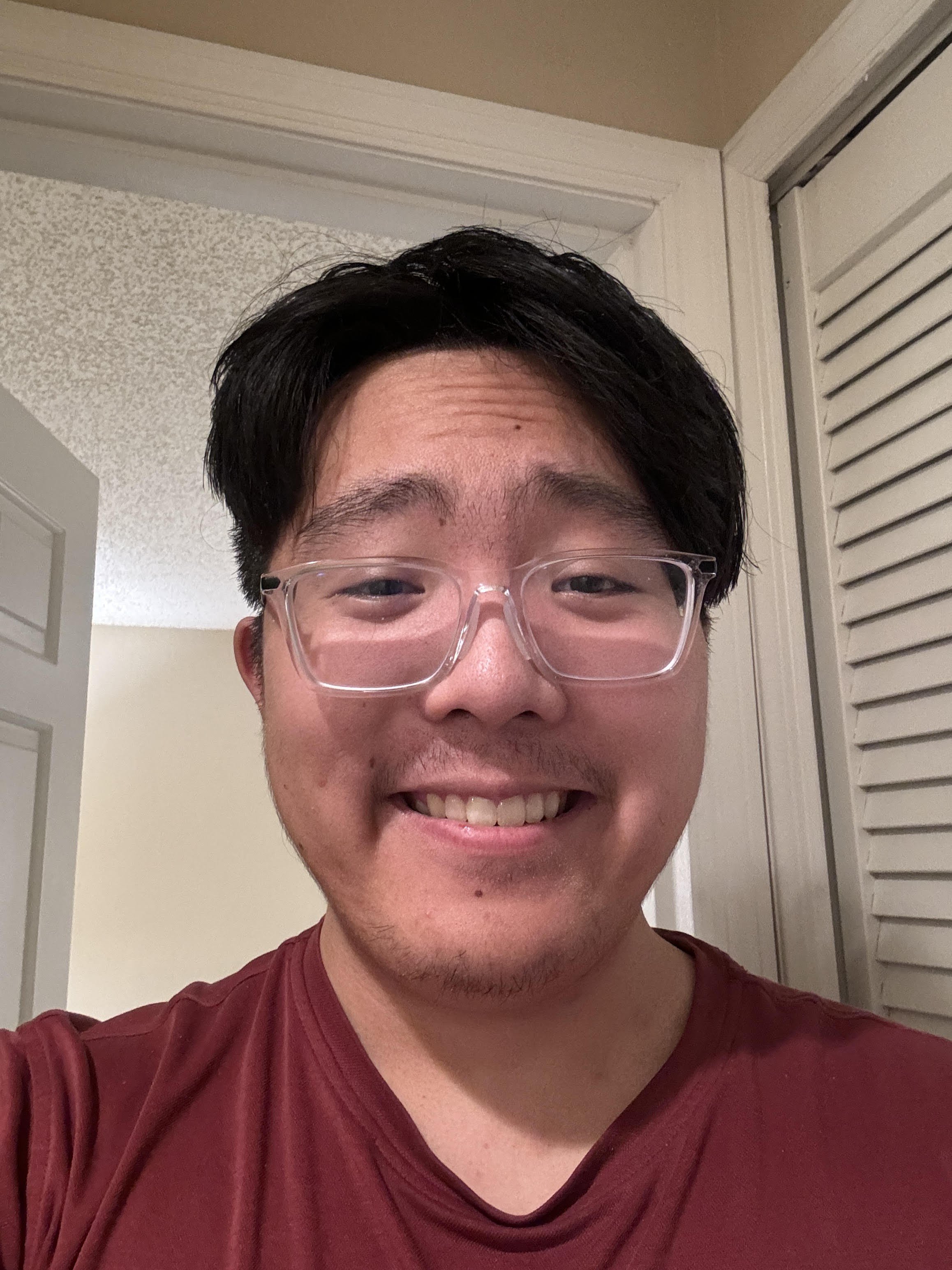
Photo of Brandon Yu
BIO: Brandon Yu is a writer and poet from South Florida with a passion for storytelling. His work has been published in Soup Can Magazine, Fabula Argentea, Oyster River Pages, the Washington Square Review LCC, the Gordon Square Review, the Dead Mule School of Southern Literature, and elsewhere.